Essential Compliance Checklist for Memory Care Facilities in West Virginia
Essential Compliance Checklist for Memory Care Facilities in West Virginia: A Family’s Guide to Quality and Safety
Placement in a memory care setting raises urgent questions about safety, legal compliance, and daily quality of life for a loved one with Alzheimer’s or dementia. According to the Alzheimer’s Association, over 6 million Americans are living with Alzheimer’s disease, with West Virginia having one of the highest prevalence rates in the nation. This guide explains what “compliance” means for memory care facilities in West Virginia, why it matters to families, and how a WV-specific compliance checklist can reduce risk and improve outcomes. You will learn which state agencies oversee memory care, the licenses and codes that matter, how to verify regulatory history, the staffing and training standards to expect, and the physical design and clinical safeguards that protect residents. The article also walks through resident assessment and individualized care plan requirements, health and infection-control expectations, resident rights and transparency obligations, and practical next steps for families preparing to visit or evaluate a facility. Throughout, practical checklists, EAV tables, and example questions will help you apply this West Virginia memory care compliance checklist during searches, calls, and tours as of 10/2025.
What Are the Key Regulatory Bodies Governing Memory Care Facilities in West Virginia?

Regulatory oversight in West Virginia centers on agencies that license, inspect, and enforce rules for long-term care settings, forming the backbone of any compliance checklist for memory care facilities. These bodies set staffing, safety, reporting, and resident-rights obligations that facilities must meet to operate legally and safely. Understanding which agencies govern memory care helps families know where to verify licensure, review inspection histories, and escalate complaints when necessary. The next subsections define the primary agencies, the license types they issue, and the state codes families should review when assessing a facility’s compliance record.
Which Roles Do the WV Department of Health and Human Resources and OHFLAC Play?
The West Virginia Department of Health and Human Resources (DHHR) oversees public health policy and long-term care programs, while the Office of Health Facility Licensure and Certification (OHFLAC) executes licensing, inspections, complaint investigations, and enforcement actions. OHFLAC inspects facilities, documents violations, and can require corrective action or levy sanctions, creating the primary public record families should consult. According to the DHHR, over 90% of memory care facilities in West Virginia undergo annual inspections to ensure compliance with state standards. Knowing these roles helps families interpret inspection outcomes and understand the pathway for formal complaints or follow-up questions to regulators. The following subsection explains the common license categories facilities hold and how each affects resident services.
What Types of Licenses Are Required for Memory Care Facilities in West Virginia?
Memory care in West Virginia can operate under different license classifications such as Assisted Living Residence (ALR), Residential Care Community (RCC), or specifically designated Alzheimer’s/Dementia Special Care Units, and each license defines permitted services and staffing structures. License type affects medication management authority, scope of clinical oversight, and whether a facility can admit residents with certain medical needs; understanding the license clarifies operational constraints. Families should ask facilities which specific license they hold and then confirm that information with state records to ensure the setting matches the resident’s care needs. The next subsection summarizes the key state codes and rules that guide these licenses.
What Are the Relevant West Virginia State Codes and Rules for Memory Care Compliance?
West Virginia administrative rules and state codes specify licensure standards, staffing minimums, care-plan requirements, and facility safety features—commonly cited in memory care guidance under Title 64, including rule series that address residential care and assisted living standards. These codes set minimum training expectations, assessment timelines, medication protocols, and resident-rights protections that form a statutory compliance baseline. Families should reference the cited code sections when reviewing inspection reports so they can match violations or citations to the specific regulatory text. Understanding the legal framework enables more informed questions during tours and sharper interpretation of inspection histories and complaint records.
How Can Families Verify Licensing and Accreditation of WV Memory Care Facilities?
Verifying licensure and accreditation is a stepwise process families can complete before or during a visit; following a structured checklist reduces uncertainty and surfaces important documents and patterns in compliance history. Start by checking which agency issued the license, confirm current status, review inspection and complaint summaries, and request the facility’s documentation and accreditation statements. A practical EAV table below maps license types to what they cover and where families should verify status when conducting a West Virginia memory care compliance checklist. After the table, a short numbered verification checklist and red-flag indicators help families interpret records and prepare questions for facility staff.
License TypeWhat It CoversWhere to VerifyAssisted Living Residence (ALR)Non-medical assistance with ADLs, medication assistance policies, residential servicesState licensure records showing ALR designation and inspection historyResidential Care Community (RCC)Residential care with defined supports; may include dementia-specific programmingOHFLAC inspection reports and certification statementsAlzheimer’s/Dementia Special Care UnitPurpose-designed memory care with environmental and staffing safeguardsFacility designation documents and regulator notes confirming special unit status
This compact comparison helps families translate legal designations into service expectations and confirms where to look for verification. Next, follow the step-by-step checklist to confirm a facility’s current status and accreditation claims.
Families can use the following numbered checklist to verify licensure and accreditation, phrased so it can be read when contacting regulators or used during a visit.
Confirm the facility’s exact license type and current status with the licensing authority.
Request recent inspection summaries and review any cited deficiencies or corrective action plans.
Ask the facility for copies of accreditation certificates or third-party audits and request dates and scope.
Review complaint histories for patterns or repeated citations rather than isolated incidents.
Request sample policies or documentation that demonstrate compliance with medication, staffing, and safety rules.
After completing these steps, families should look for patterns in the inspection history; the next section describes how to spot meaningful red flags in regulatory records.
How to Confirm Current WV DHHR Licenses and Accreditation Status?
To confirm license and accreditation status, families should obtain the facility’s legal name and license number, request the most recent licensure letter or certificate, and ask regulators for the official status record and inspection summaries. When speaking with facility staff, use direct wording such as “Please provide your current license designation and the date of your most recent inspection” to reduce ambiguity. Verify whether the facility claims any third-party accreditation and request the accreditor’s name and date of award so regulators or the accreditor can confirm validity. Performing these checks ensures the facility’s public claims align with state records and sets a factual basis for further questions about care quality.
What Should Families Look for in Regulatory History and Complaint Records?
When reading inspection reports and complaint records, families should prioritize recurring violations, unresolved corrective actions, or problems that directly affect resident safety such as medication errors, staffing shortfalls, or environmental hazards. Single, older citations that were promptly corrected often have different significance than repeated instances of the same deficiency across inspection cycles. Look for timeliness of corrective action, explanations provided by the facility, and whether follow-up inspections confirmed remediation; these patterns reveal operational capacity to sustain compliance. Identifying these patterns frames the right follow-up questions to ask during a tour or when requesting documentation.
How Does Braley Care Homes Demonstrate Licensing Compliance and Transparency?
Braley Care Homes presents licensure transparency as part of its family-facing practices and welcomes verification requests from families evaluating placement options, aligning with best practices for WV memory care compliance. As West Virginia’s only free-standing Alzheimer’s and dementia care facility and a 16-bed home purpose-built for memory care, the facility emphasizes inviting families to review licensure or inspection materials during tours or assessments. Braley’s approach to transparency helps families confirm regulator records and inspect documentation firsthand, which in turn supports informed placement decisions. For families planning a visit, asking how the facility facilitates access to licensure documents and recent inspection summaries provides a clear next step.
What Are the Staffing and Training Requirements for Dementia Care in West Virginia?

Staffing and training standards in WV establish minimum protections for residents and shape daily safety and quality of care; a compliance checklist must include verification of training hours, CPR/First Aid status, and ongoing dementia-specific education. According to a 2023 report by the West Virginia Health Care Association, facilities with higher staff training hours report 25% fewer adverse events. Minimum staffing ratios, required direct care hours per resident, and the scope of licensed clinical oversight affect response times, personalized care plan implementation, and emergency capacity. Families should compare documented state requirements to facility practices and request training records or summaries to evaluate whether staff preparation meets the resident’s needs. The following EAV table clarifies staff roles, required credentials, and typical facility practices to help families translate regulatory text into observable expectations.
Staff RoleRequired Training/CertificationTypical Facility PracticeDirect Care WorkerBasic training per WV rules; dementia-specific modulesRegular in-house dementia training and shift-based supervisionLicensed Nurse (RN/LPN)State nursing license and oversight hours as requiredScheduled clinical oversight and medication reviewsAdministrator/DirectorManagerial credential and compliance trainingOngoing regulatory education and inspection liaison
This comparison helps families see where state minimums meet practical facility routines and what documents to request for verification. Next, we summarize minimum staffing expectations and how to evaluate them during visits.
What Are the Minimum Staffing Ratios and Direct Care Hours per Resident?
West Virginia rules establish baseline staffing expectations rather than rigid numerical ratios in some license categories, and families should request the facility’s staffing plan, shift schedules, and on-call clinical coverage details to assess adequacy. Assessing staffing requires asking who covers nights, how many direct-care staff are scheduled per shift relative to resident acuity, and whether licensed nursing support is available as needed. When reviewing staffing plans, families should ask for examples of coverage during peak need times and how the facility adjusts staffing for higher-acuity residents. Verifying staffing transparency during a tour helps families judge whether daily operations match stated policies.
West Virginia Dementia Care Regulations: Hours of Personal Care
Sixteen states license or certify dementia care units within residential care personal care per person per day; Texas and Virginia require 2.5 hours; and West Virginia requires 2.25 hours of personal care per resident per day, according to the West Virginia DHHR.
What Dementia-Specific Training Is Required for Memory Care Staff?
Dementia-specific training requirements in WV typically mandate initial and ongoing modules covering communication strategies, behavior management, abuse prevention, and recognizing changes in health status; facilities must document training completion. Families should request summaries of training curricula, the number of training hours per staff member, and how competencies are assessed in practice. Best-practice programs go beyond minimum hours to include scenario-based learning, supervised practice, and periodic refreshers tied to quality improvement. Asking to see training logs or certification summaries during an assessment provides concrete evidence of staff readiness.
West Virginia Licensed Dementia Care Units and Staff Requirements
If they work in one of the 13 licensed dementia care units in the state, staff are required to have a West Virginia medical license number and complete specialized dementia care training, as mandated by state regulations.
Why Are CPR and First Aid Certifications Essential for Memory Care Staff?
CPR and First Aid certifications ensure immediate, competent response to common medical emergencies and are fundamental safety components for any memory care setting where residents have higher vulnerability to falls and acute medical events. Regular recertification maintains skill currency, and families should confirm the percentage of staff currently certified and the facility’s recertification schedule. These certifications complement broader emergency planning and ensure that initial responses stabilize residents until higher-level clinical care is available. Inquiring about certification documentation during a visit reveals whether emergency preparedness is treated as a practical priority.
How Does Braley Care Homes Exceed WV Staffing and Training Standards?
Braley Care Homes highlights dementia-focused staff preparation and references staff training examples that exceed state minimums, including a noted 30 hours of Alzheimer’s and dementia care training for staff as part of the home’s approach. The facility’s small, 16-bed model supports a staffing structure designed for closer observation and consistent caregiver-resident relationships, while administrators invite families to review training records during tours or free assessments. By making training documentation available and emphasizing dementia specialization, Braley positions itself to demonstrate how staffing and learning practices translate into safer day-to-day care. Families reviewing training claims should ask for specific logs and recent training topics to confirm ongoing staff development.
What Facility Standards Ensure Safety and a Dementia-Friendly Environment in WV Memory Care?
Physical design and safety features are critical for reducing harm and supporting independence in dementia care; the compliance checklist should include secure entries, wandering-prevention systems, environmental wayfinding, and emergency preparedness documentation. Design elements such as contrast lighting, clear signage, non-slip flooring, and accessible bathrooms support activities of daily living and reduce disorientation. Surveillance and monitored access systems protect resident safety while outdoor spaces and courtyards provide therapeutic access to fresh air in secure conditions. The following EAV table links safety features to their regulatory rationale and gives examples of how facilities implement them so families know what to look for on tours.
Safety FeatureRegulatory RationaleExample ImplementationSecure entrances/exitsPrevent elopement and unauthorized accessKeypad-locked doors with staff monitoring and visitor sign-inSecure outdoor courtyardAllows supervised outdoor access without wander riskEnclosed courtyard with visual supervision and safe walking pathsVideo surveillanceSupports monitoring and incident reviewDiscrete common-area cameras with retention policies
This table shows how design elements translate into daily safeguards and what documentation or observations families can request during a visit. Next, review how secure systems and wandering prevention are implemented in practice.
How Are Secure Entrances, Wandering Prevention, and Surveillance Implemented?
Facilities implement secure entries and wandering-prevention through controlled access points, alarmed doors, and monitored circulation paths designed to reduce the risk of unaccompanied egress. Families should ask to see how staff monitor entry points, the visitor sign-in process, and how alarms are managed to avoid resident distress. Surveillance typically covers common areas for safety and documentation purposes; inquire about privacy policies, camera locations, and who reviews footage. Observing these systems during a tour, and requesting a description of response protocols, helps families evaluate whether the physical safeguards are both effective and resident-centered.
What Dementia-Friendly Design Elements Support Resident Well-Being?
Dementia-friendly design prioritizes wayfinding cues, consistent visual landmarks, contrast in flooring and fixtures, and accessible bathrooms to support independence and reduce confusion. Natural light, quiet activity areas, and predictable circulation routes also reduce agitation and support daily routines. Families should look for clear sightlines, comfortable communal spaces, and whether décor or signage is designed for cognitive accessibility rather than institutional appearance. Seeing these elements in person and asking staff how design supports specific resident activities will clarify whether the environment is purpose-built for dementia care.
What Emergency and Disaster Preparedness Plans Must Facilities Have?
Regulations expect facilities to maintain written emergency and disaster plans that cover evacuation procedures, staff assignments, communication with families, and continuity of care during power outages or severe weather events. Facilities must document drill frequency, participant lists, and corrective actions from exercises; families can request summaries of recent drills and examples of how residents with dementia are safely evacuated or sheltered in place. Confirming notification protocols for families and how the facility secures medications and medical records during emergencies ensures that contingency plans translate into practical protection. The next subsection illustrates how a local WV facility’s design aligns with these standards.
How Does Braley Care Homes’ Facility Design Meet and Exceed These Standards?
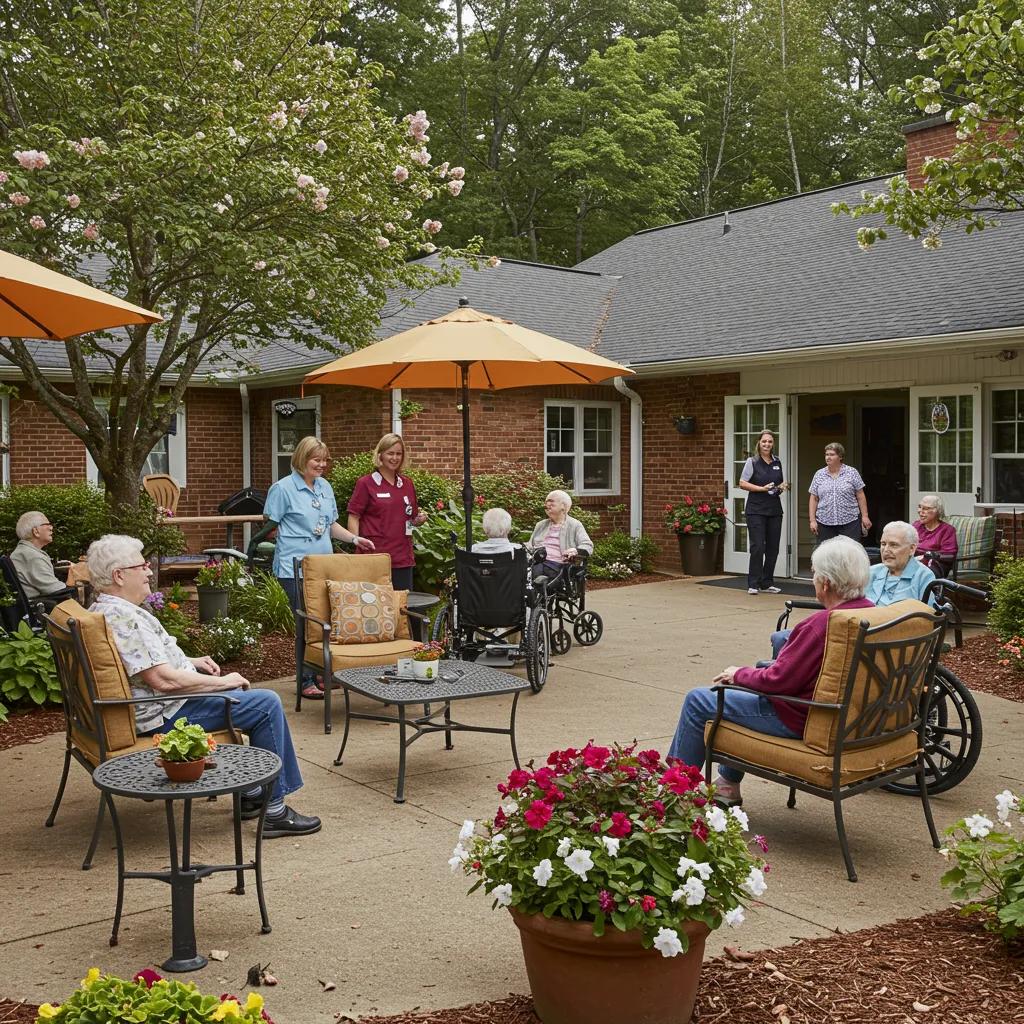
Braley Care Homes describes a purpose-built environment for Alzheimer’s and dementia care that includes 24/7 locked security, a secure outdoor courtyard, and design features to minimize wandering risks while promoting a home-like atmosphere. As a single-site, 16-bed memory care home, Braley emphasizes environmental strategies and admission practices intended to match resident needs to the setting. Families are encouraged to view floor plans, request a virtual or in-person tour, and observe safety systems in operation to verify that design commitments are operationalized. Asking facility staff about recent drills and how the courtyard is supervised provides practical confirmation of emergency readiness.
How Are Resident Assessments and Individualized Care Plans Regulated in West Virginia?
Pre-admission assessments and individualized care plans are regulatory cornerstones that determine safe placement and ongoing care in memory care settings; they document medical, psychosocial, cognitive, and functional needs that guide daily support. Rules require timely development and periodic review of care plans with family involvement and documented consent, forming a basis for medication management, behavioral interventions, and activity programming. Families should request sample assessment forms, timelines for plan creation and review, and examples of how families are included in planning decisions. The subsections below list assessment contents, the care-plan lifecycle, and how Braley Care Homes approaches personalization.
What Is Included in the Comprehensive Pre-Admission Assessment?
A comprehensive pre-admission assessment covers medical history, medication review, cognitive and behavioral evaluation, functional ability in activities of daily living, nutrition and mobility screening, and psychosocial needs. This assessment informs risk stratification, identifies triggers for behavioral interventions, and helps match the resident to an appropriate level of supervision and activity programming. Families should ask who conducts the assessment, which licensed clinicians are involved, and whether the facility documents specific goals and measurable outcomes. Reviewing a recent sample assessment during a tour clarifies whether the evaluation process is thorough and individualized. For more information, families can visit Braley Care Homes’ care assessment page.
How Are Individualized Care Plans Developed, Implemented, and Reviewed?
Care plans are developed by an interdisciplinary team that typically includes nursing, direct caregivers, and administrative staff, incorporating family input and medical provider recommendations; plans should specify goals, interventions, monitoring parameters, and timelines for review. Regulations require timely creation after admission and periodic reassessment—families should verify the facility’s stated timeline for initial plan development and routine reviews. Implementation includes staff training on plan specifics, documentation of interventions, and measurable outcome tracking to adjust approaches as needs change. Asking to see how changes are recorded and communicated to families demonstrates how the plan functions in daily care.
How Does Braley Care Homes Personalize Care to Meet Resident Needs?
Braley Care Homes states that individualized care plans, pre-admission assessments, and personalized activities form the core of its memory care approach, with staff trained to “step into the resident’s reality” and adapt routines accordingly. Families are invited to request a sample care plan during assessment and to discuss preferred routines, triggers, and meaningful activities that support dignity and engagement. This transparency enables families to evaluate whether the facility’s personalized approaches translate into daily practice and whether staff document outcomes and adjustments. During a tour, requesting examples of activity schedules and documented plan changes provides concrete evidence of personalization.
What Health, Wellness, and Infection Control Measures Are Required in WV Memory Care?
Health monitoring, medication administration protocols, and infection-prevention practices are fundamental elements of a compliance checklist and directly influence resident safety and quality of life. State rules require facilities to maintain accurate medication administration records, perform regular wellness checks, have documented infection-control policies, and ensure access to licensed clinical oversight. Families should request medication policy descriptions, MAR samples, and recent infection-control procedure summaries to verify practice alignment with regulatory expectations. The subsections below explain medication management, infection-control essentials, and how Braley Care Homes addresses resident wellness.
How Are Medication Administration and Regular Health Monitoring Managed?
Medication administration in memory care relies on clear MAR documentation, licensed oversight for complex regimens, protocols for PRN medications, and routine medication reviews to identify interactions or changes in need. Families should request examples of MARs, ask who signs off on medication changes, and inquire how MAR discrepancies are handled and communicated. Regular wellness checks, weight and nutrition monitoring, and timely clinician consultations are part of safe medication oversight and early detection of clinical decline. Confirming these processes during an assessment ensures medication safety is actively managed.
Dementia Care Benefits and Personal Care Hours in West Virginia
Knowing whether a resident will benefit from dementia care personal care per person per day; Texas and Virginia require 2.5 hours; and West Virginia requires 2.25 hours of personal care per resident per day, according to the West Virginia DHHR.
What Infection Control Practices Must Memory Care Facilities Follow?
Infection-control practices include documented cleaning and disinfection procedures, staff PPE policies and training, vaccination recommendations, outbreak response plans, and family notification procedures to limit transmission risk. Facilities should be prepared to describe recent infection-control updates, their outbreak escalation protocols, and how they protect vulnerable residents during communal activities. Families can ask for examples of recent sanitation audits and policies that balance infection control with resident quality of life. Reviewing these policies reveals whether a facility updates practices based on current guidance and local public-health conditions.
How Does Braley Care Homes Ensure Resident Health and Wellness?
Braley Care Homes reports structured medication programs, routine wellness checks, and access to licensed clinical oversight as part of its resident health approach, and the home invites families to discuss clinical oversight during free assessments or tours. By offering direct conversations about medication management and wellness monitoring, the facility enables families to evaluate clinical protocols and documentation. Reviewing recent wellness-check summaries or medication-review logs during a visit provides families with evidence of consistent clinical oversight. Asking specific questions about recent clinical interventions and follow-up demonstrates how health practices translate into ongoing resident care.
What Resident Rights, Transparency, and Family Communication Are Mandated in WV Memory Care?
Resident rights, disclosure requirements, and transparent family communication are mandated to protect dignity, informed consent, and continuity of care; these elements must be part of any West Virginia memory care compliance checklist. Facilities must provide clear disclosures on services, costs, transfer procedures, and complaint mechanisms while ensuring residents’ privacy and decision-making rights. Families should request the resident-rights statement, service agreements, and examples of communication logs or family-update protocols. The subsections that follow summarize rights protections, disclosure expectations, and how Braley Care Homes approaches family communication.
What Are the Resident Rights and Protections Under WV Regulations?
Key resident rights include privacy, dignity, freedom from abuse and neglect, informed consent for care decisions, access to personal records, and the right to file complaints without retaliation; facilities must communicate these rights clearly to residents and families. Plain-language explanations and posted statements help ensure families understand complaint pathways and grievance timelines. Observing how staff and administrators reference resident rights during tours offers insight into how rights are practiced day-to-day. The next subsection explains what documentation families should request to confirm transparency.
How Should Facilities Communicate Policies, Costs, and Transfer Procedures?
Facilities should provide a written service agreement, fee schedule, transfer and discharge policy, and a complaint/grievance procedure prior to admission, allowing families to compare costs and contingencies across providers. Families should request copies of these documents, note any conditional charges, and ask how transfer decisions are made when clinical needs exceed facility scope. Transparent communication includes regular family updates, accessible care logs, and clear escalation pathways for concerns. Requesting examples of routine family communications and a recent sample service agreement helps families evaluate practical transparency.
How Does Braley Care Homes Uphold Resident Rights and Foster Open Family Communication?
Braley Care Homes states a commitment to dignity, respect, and open family communication and encourages families to review communication protocols and request examples of care logs during tours or assessments. By inviting families to participate in assessments and to view sample documentation, the facility supports transparent decision-making and collaborative care planning. Families should ask how the home documents family contacts, how often updates are provided, and what channels exist for urgent communication. Observing the facility’s willingness to share protocols and examples offers practical assurance of communication practices.
What Are the Next Steps for Families Seeking Compliant Memory Care in West Virginia?
When a family is ready to act, a checklist of next steps streamlines comparison across providers and ensures focused evaluation of compliance and fit: verify licenses, review inspection records, ask targeted staffing and safety questions, observe the environment on a tour, and request sample documentation. Preparing documents and prioritized questions before a visit helps maximize the value of a tour or free assessment. The final subsections provide instructions for scheduling a tour or free assessment at Braley Care Homes and a printable list of top questions families should bring to evaluate compliance effectively.
How Can Families Schedule a Tour and Obtain a Free Assessment at Braley Care Homes?
Braley Care Homes offers facility tours and free assessments to families considering placement, and prospective families are encouraged to request a tour or assessment to review licensure documents, training records, and sample care plans in person. When preparing for a visit, bring a written list of medical conditions, medications, and recent assessments that will help staff evaluate fit and develop an individualized plan. Ask the facility to show where safety systems are located, request examples of MARs and training logs, and request to observe communal spaces during typical activity times. Scheduling a dedicated assessment visit provides a structured opportunity to verify compliance and observe staff-resident interactions firsthand. Families can start the process by visiting the contact page.
What Questions Should Families Ask When Evaluating Memory Care Compliance?
Below is a prioritized list of core questions families should ask during calls and tours to evaluate licensing, staffing, safety, health, rights, and costs, designed to be taken into a visit or used as a printable checklist.
What specific license does this facility hold and when does it expire?
Can you provide recent inspection summaries and corrective action documents?
How many direct-care staff are scheduled per shift and what is on-call clinical coverage?
What dementia-specific training hours do staff complete initially and annually?
How are medications managed, and can we review a sample MAR?
What are your infection-control policies and family notification procedures?
How do you communicate daily updates and incident reports to families?
Can we see your emergency and evacuation plans and recent drill documentation?
What is your fee schedule and what conditions would trigger a transfer?
Who is the primary contact for questions about licensing or resident rights?
Using these questions as a checklist helps families compare facilities objectively and prioritize issues that affect safety and quality. The article’s EAV tables and stepwise verification processes equip families to follow through confidently when they schedule visits, request documents, and evaluate compliance evidence during assessments.
Frequently Asked Questions
What should families consider when touring a memory care facility?
When touring a memory care facility, families should observe the environment, staff interactions, and overall atmosphere. Look for signs of resident engagement and comfort, such as activities in progress and the presence of staff. Ask about daily routines, safety protocols, and how staff handle emergencies. Additionally, inquire about the facility's approach to personalized care and how they involve families in care planning. Taking notes during the visit can help families compare facilities later and make informed decisions.
How can families assess the quality of care provided in memory care facilities?
To assess the quality of care in memory care facilities, families should review inspection reports, staff training records, and resident feedback. Observing staff interactions with residents during a visit can provide insights into the level of care and attention given. Families should also ask about the facility's approach to individualized care plans and how they monitor resident health and well-being. Engaging with current residents' families can offer additional perspectives on the facility's strengths and weaknesses.
What are the common red flags to look for in memory care facilities?
Common red flags in memory care facilities include frequent complaints about staff turnover, unresolved inspection violations, and lack of transparency regarding care practices. Families should be cautious if they notice poor staff-resident interactions, unclean or unsafe environments, or inadequate emergency preparedness. Additionally, if a facility is reluctant to provide documentation or answer questions about care plans and resident rights, it may indicate deeper issues. Trust your instincts and prioritize facilities that demonstrate openness and commitment to quality care.
How can families ensure their loved one's rights are protected in memory care?
To ensure a loved one's rights are protected in memory care, families should familiarize themselves with the resident rights outlined by West Virginia regulations. This includes rights to privacy, dignity, and informed consent. During visits, families should ask how the facility communicates these rights to residents and staff. Regular communication with facility staff about any concerns or incidents is crucial. Families should also encourage their loved ones to express their needs and preferences, ensuring they are actively involved in their care decisions.
What role do family members play in the care planning process?
Family members play a vital role in the care planning process for residents in memory care facilities. They provide essential information about the resident's history, preferences, and specific needs, which helps staff create personalized care plans. Families should be actively involved in discussions about care goals, interventions, and any changes in the resident's condition. Regular communication with staff ensures that family members are informed about their loved one's progress and can advocate for necessary adjustments to the care plan as needed.
What should families do if they have concerns about a memory care facility?
If families have concerns about a memory care facility, they should first address the issue directly with the facility's management. Documenting specific incidents or patterns can help clarify the concerns. If the facility does not respond satisfactorily, families can escalate the issue to the West Virginia Department of Health and Human Resources or the Office of Health Facility Licensure and Certification. Reporting violations or unsafe practices is essential for protecting residents and ensuring compliance with state regulations.
How can families stay informed about changes in regulations affecting memory care?
Families can stay informed about changes in regulations affecting memory care by subscribing to updates from the West Virginia Department of Health and Human Resources and other relevant agencies. Joining local support groups or online forums for families of individuals with dementia can also provide valuable insights and shared experiences. Attending workshops or informational sessions hosted by advocacy organizations can further enhance understanding of current regulations and best practices in memory care, empowering families to advocate effectively for their loved ones.
