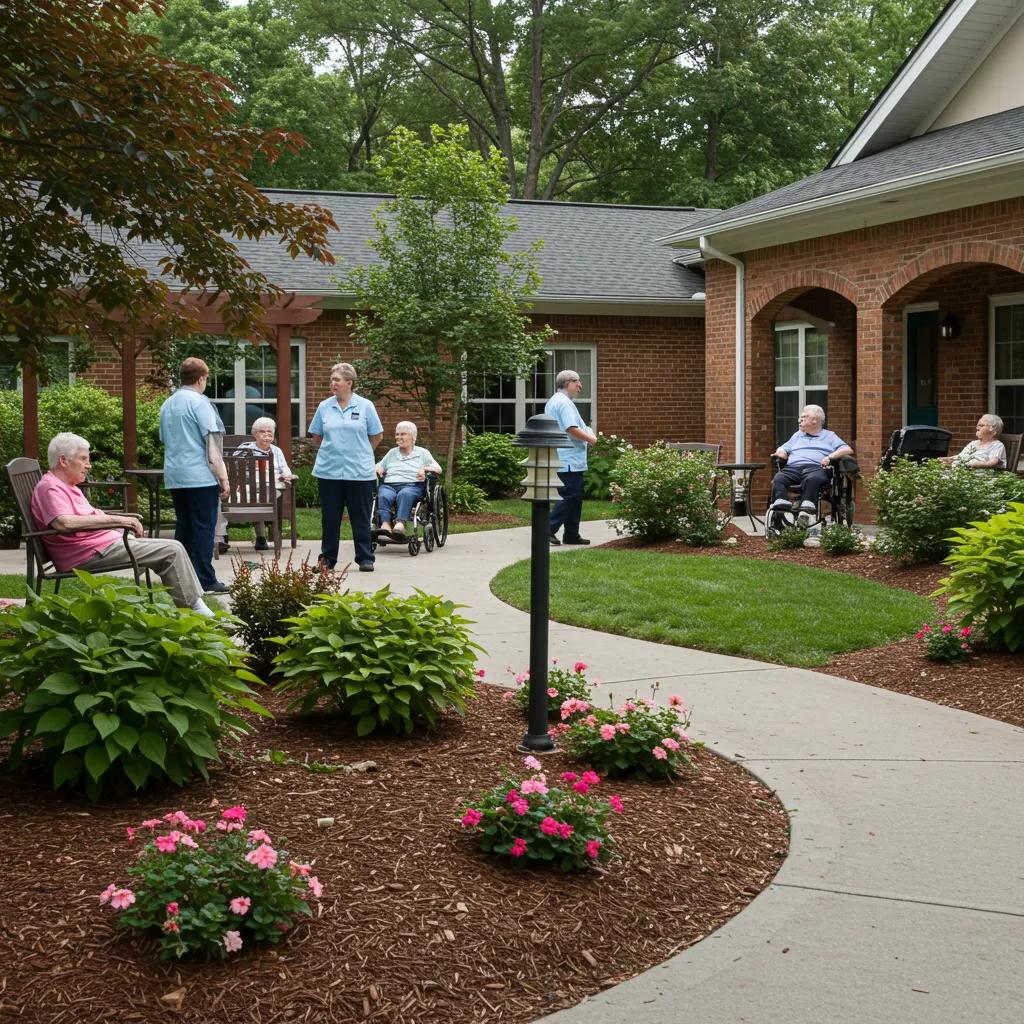
How West Virginia Memory Care Handles Health Crises
How West Virginia Memory Care Facilities Manage Medical Emergencies and Ensure Health Monitoring
Memory care facilities in West Virginia combine structured emergency protocols with continuous health monitoring to protect residents living with Alzheimer's disease and other forms of dementia. This article explains how facilities define immediate-response steps, assign staff roles, deploy monitoring technologies, and communicate with families so that readers understand both preventive measures and the actions taken during crises. Families researching "how do West Virginia memory care facilities handle medical emergencies and health monitoring" will find clear protocols for falls, choking, behavioral crises, medication safety, infection control, and individualized care planning. The guide maps common emergency scenarios to step-by-step responses, outlines 24/7 clinical and technological monitoring practices, and describes how multidisciplinary teams develop and update care plans. Each H2 section contains practical checklists, comparison tables, and communication templates that help caregivers evaluate facility readiness and ask informed questions during visits and assessments. Read on for actionable protocols, monitoring details, and guidance on what to expect from a dedicated memory care setting in West Virginia.
The increasing prevalence of dementia underscores the critical need for specialized care. According to the Alzheimer's Association, more than 6 million Americans are living with Alzheimer's, and this number is projected to rise to nearly 13 million by 2050 [1]. This growing demand highlights the importance of robust emergency preparedness and continuous health monitoring in memory care settings.
What Are the Key Medical Emergency Protocols in West Virginia Memory Care Facilities?

Medical emergency protocols in memory care facilities are standardized sequences that prioritize resident safety by assessing, stabilizing, escalating, and documenting every urgent event. These protocols work by defining immediate on-site actions (such as airway checks and basic life support), assigning specific staff roles for assessment and communication, and establishing criteria for activating EMS and hospital transfer. The result is faster clinical decision-making and clearer lines of accountability during falls, choking episodes, stroke-like symptoms, or severe behavioral incidents. Facilities also practice these protocols through regular drills and training to reduce response times and improve outcomes. Understanding these baseline steps helps families evaluate a provider's competence and readiness when touring memory care homes.
Falls are a leading cause of injury among older adults, with one in four Americans aged 65 and older falling each year [2]. For residents in memory care, robust emergency protocols are critical to mitigate these risks and ensure prompt, effective responses.
Assess and secure airway, breathing, and circulation while ensuring the environment is safe.
Stabilize through basic first aid and monitor vital signs while a designated staff member notifies clinical leadership.
Activate EMS if signs indicate serious injury or threat to life, and prepare a transfer brief with current medications and recent vitals.
Notify family contacts promptly and document the event, interventions, and follow-up plan for continuity of care.
Conduct post-event review and update the resident’s care plan and preventive measures to reduce recurrence.
These five steps summarize the core emergency workflow and set expectations for what families should observe during a crisis.
Before the table below, note that the table compares immediate on-site responses and typical timelines to help families quickly scan how facilities handle common events.
Emergency TypeImmediate On-Site ResponseTypical Timeline / OutcomeFall with possible injuryAssess responsiveness, immobilize if head/neck injury suspected, check vitals, call nurse/physicianOn-site stabilization within minutes; EMS activation within 5–15 minutes if seriousChoking / airway obstructionPerform Heimlich or back blows as appropriate, call for clinician support, if airway not restored call EMSImmediate first aid; EMS within minutes if airway remains compromisedStroke-like symptomsRapid neurologic assessment (FAST), maintain airway, call EMS immediatelyEMS activation within minutes; expedited transport to ED for imagingBehavioral crisis with aggressionRemove other residents, use verbal de-escalation, implement behavior support plan, request clinical medications only if authorizedDe-escalation in minutes; medication or transfer if severe and unsafe
How Do Facilities Prepare for Common Medical Emergencies Like Falls and Choking?
Facilities combine environmental design, staff vigilance, and resident-specific prevention plans to reduce the incidence of falls and choking. Prevention includes removing trip hazards, using non-slip surfaces and clear sightlines, and tailoring mealtime supervision for residents with swallowing difficulties; these measures reduce the frequency of acute events and support safer daily living. During an event staff follow a tiered response: immediate assessment of breathing and consciousness, basic first aid or airway maneuvers, rapid clinical notification, and EMS activation criteria when needed. Post-event steps include monitoring for delayed complications, documenting the incident in the chart, and notifying family members within the facility’s communication timeline. Regular staff training on fall prevention and dysphagia recognition ensures that prevention and response remain current and effective.What Roles Do Staff Play in Emergency Response and Crisis Management?
Role clarity is central to effective emergency response: first responders secure the scene and perform immediate first aid, clinical staff assess and stabilize, and a designated communicator contacts family and external services. Certified caregivers and nurse aides typically perform initial checks and initiate basic life support; licensed practical nurses (LPNs) and registered nurses (RNs) provide clinical assessment and decision-making, while the licensed independent clinical social worker (LICSW) supports behavioral and family communication needs. Documentation and incident reporting are assigned to a recorder to ensure accurate clinical records and compliance with regulatory expectations. Shift-to-shift handoffs include incident summaries and revised care tasks to prevent information gaps and improve follow-up care.
How Are Behavioral Crises Managed During Medical Emergencies?
Behavioral crises require a combined clinical and non-pharmacologic approach that keeps safety and dignity at the forefront while addressing underlying medical triggers. Staff apply proven de-escalation techniques—calm verbal guidance, redirection, removal of potential stressors—and implement individualized behavior support plans developed on admission and reviewed regularly. Medication for acute agitation is a last resort and is used under clinician orders with careful monitoring for side effects and interactions; family preferences and advance directives guide decisions whenever possible. Facilities also create safe zones to protect other residents and staff during incidents, and post-event reviews adjust care plans to prevent recurrence and ensure continuity of care.
How Do Memory Care Facilities Coordinate with Hospitals and Emergency Services?
Coordination with EMS and hospitals follows a clear transfer checklist that includes the resident’s current vitals, medication list, recent clinical notes, and a brief care-plan summary to expedite handoff and clinical decision-making at the receiving facility. Staff ensure that identification, allergy information, advance directives, and family contact details accompany the resident to the ED to minimize delays and errors during acute care transitions. Facilities often assign a staff member to accompany or meet EMS to review pertinent clinical history and medications, improving continuity and reducing duplication. After hospital transfer, facilities document the event, debrief the team, and update the resident’s care plan based on discharge recommendations to ensure safe return and follow-up treatment.
How Is 24/7 Health Monitoring Conducted in West Virginia Dementia Care Facilities?

Twenty-four-seven health monitoring in memory care integrates routine clinical checks, staff observation, and technology to detect changes early and respond promptly. Continuous monitoring works because defined measurement routines (vitals, weight, cognitive screens) are combined with staff training to recognize subtle changes, enabling early interventions that prevent escalation to emergencies. The clinical purpose of this approach is to maintain physiological stability, identify infection or dehydration early, and ensure medication adherence for residents with cognitive impairment. Monitoring also supports tailored care-plan adjustments when trends indicate decline, leading to better long-term outcomes. Below is an EAV table that clarifies monitoring methods, responsible roles, and clinical purposes.
Early detection of health changes can significantly improve outcomes for individuals with dementia. Studies show that continuous monitoring can reduce hospitalizations by identifying issues like dehydration or infection before they become critical [3]. This proactive approach is a hallmark of quality memory care.
Before the table, this paragraph explains that the table helps families understand who performs each monitoring task and why it matters clinically.
Monitoring MethodFrequency / Responsible RoleClinical Purpose / Alert ThresholdVital signs (BP, temp, pulse)Daily or more often; RN/LPN responsibleDetect infection, dehydration, cardiac changes; temp >100.4°F triggers assessmentWeight and intake monitoringWeekly weight, daily intake checks; nurse aide documents, RN reviewsIdentify malnutrition, fluid loss; >5% weight change prompts evaluationCognitive and behavior screensMonthly cognitive checks and ongoing observation; LICSW and activity staffDetect decline or delirium; sudden change in baseline triggers clinician reviewSensor alerts (door, motion)Continuous; monitored by staffIdentify wandering or unusual activity; door alarm triggers immediate staff response
Vital signs and daily checks form the backbone of early detection systems in memory care.
Behavioral and cognitive tracking by LICSWs and activity staff identifies non-physiological triggers for decline.
Technology-based alerts complement human observation to close gaps during off-peak hours.
These monitoring components work together to create a safety net that reduces the likelihood of unrecognized clinical deterioration.
What Vital Signs and Cognitive Assessments Are Performed Daily?
Daily monitoring typically focuses on key vitals—temperature, blood pressure, pulse—and includes observation for signs of pain, appetite, and hydration status; documentation of these metrics creates trends that clinicians use for early detection. Cognitive checks and brief orientation or delirium screens are conducted at regular intervals to spot sudden changes that can indicate infection, medication effects, or metabolic disturbances. Weight is measured on a scheduled basis, and any unexplained weight loss or reduced food/fluid intake triggers a nutritional and clinical evaluation. These routine assessments aim to catch issues before they become emergencies and inform care-plan revisions that address emerging risks.How Do Registered Nurses and Licensed Practical Nurses Support Health Monitoring?
Registered nurses (RNs) take primary responsibility for clinical assessment, interpreting trends, making physician contacts, and prescribing or recommending changes in care based on clinical judgment. Licensed practical nurses (LPNs) and nurse aides perform routine checks, record vitals and intake, and escalate deviations to the RN for evaluation, ensuring continuous observation across shifts. Teams coordinate through standardized documentation in the resident chart so that trends and care adjustments are visible to all clinicians, minimizing errors. Clear escalation pathways define when LPNs should involve RNs and when RNs contact external clinicians or arrange transfers, creating reliable workflows for timely intervention.
What Technologies Are Used for Resident Health Tracking and Safety?
Facilities commonly use a mix of sensor systems, basic wearable alerts, room motion sensors, and camera surveillance in common areas (with privacy considerations) to enhance human observation and provide early warning. Integration of these alerts with clinical workflows allows staff to receive prioritized notifications and respond according to established protocols, while EHR systems capture documented events for continuity. Each technology carries tradeoffs: sensors increase detection but require policies to protect privacy and dignity, and camera surveillance supports communal safety without intruding on private care activities. The goal is to use technology as an augmentation to—rather than a replacement for—trained clinical staff who interpret context and act appropriately.
How Are Changes in Resident Health Detected and Addressed Promptly?
Early detection follows a detect → assess → escalate → intervene → document pathway where frontline staff note deviations, clinical staff assess significance, and escalation protocols trigger interventions or external referrals. Example triggers include temperature spikes, significant weight loss, new or worsening confusion, and changes in mobility; each has an associated timeline for clinician review based on severity. Once detected, the RN evaluates, communicates with the resident’s physician if necessary, adjusts the care plan, and updates family members per communication protocols. Documentation closes the loop, enabling trend analysis and preventing repeat incidents through targeted interventions.
What Are the Medication Management and Safety Practices in WV Memory Care Facilities?
Medication management in memory care emphasizes secure storage, accurate administration, regular pharmacist review, and vigilant monitoring for interactions and side effects to minimize harm in a population at high risk for polypharmacy. The mechanism combines locked dispensing systems, documented administration processes (MAR/EHR entries), double checks at critical times, and scheduled medication reconciliation. Benefits include reduced dosing errors, improved adherence, and earlier detection of adverse effects that can mimic or worsen cognitive symptoms. Below is an EAV table that outlines specific medication safety measures, who performs them, and the clinical benefit of each practice.
Medication errors are a significant concern in elderly care, with estimates suggesting that adverse drug events cause over 700,000 emergency department visits and 120,000 hospitalizations annually in the U.S. [4]. Effective medication management is therefore paramount in memory care settings to ensure resident safety and well-being.
Before the table, this paragraph explains that the table is designed to help families evaluate how well a facility controls medication risks and maintains accurate records.
Medication Safety MeasureWho / HowBenefit / Risk MitigationLocked medication room and access logsNursing staff control access; signed logs at shift changePrevents unauthorized access and diversion; audit trail for accountabilityScheduled administration with MAR/EHR documentationRNs/LPNs administer; entries include time and refusal notesEnsures timely dosing and clear audit trail for missed or refused medsPharmacist review and reconciliationPharmacist performs periodic reviews; RN/LPN initiate reviews when meds changeDetects interactions and optimizes regimens to reduce polypharmacy riskSide-effect monitoring and reportingNursing staff observe and report; RN evaluates and notifies physicianEarly identification of adverse reactions reduces hospital transfers
How Is Medication Administered and Monitored for Memory Care Residents?
Administration follows a clear checklist: verify the right resident, right medication, right dose, right time, and right route; observe for immediate reactions and document precisely in the MAR or EHR. Staff record refusals or swallowing difficulties and implement alternative strategies—such as crushing meds only when ordered and safe—under clinician guidance. Nursing staff monitor for side effects and efficacy, escalating concerns to the physician or pharmacist for review and adjustment. These checks and balances reduce medication errors and help clinicians tailor therapy to the resident’s tolerability and response.
What Measures Ensure Secure Storage and Accurate Medication Delivery?
Secure medication storage includes locked rooms or carts with controlled staff access, inventory reconciliation at shift changes, and restricted keys or codes to limit handling. Dispensing protocols often require two-person checks for high-risk medications and documented reconciliation during transfers or after hospitalizations. Technology such as barcode scanning or electronic MARs reduces human error and timestamps administration to support audits. These measures collectively reduce the risk of wrong-dose administration, lost medications, and unauthorized access.
How Are Medication Interactions and Side Effects Reviewed?
Scheduled pharmacist consultations and medication reconciliation processes review interactions, duplications, and opportunities for deprescribing, especially important in dementia populations prone to polypharmacy. When new symptoms emerge that could be medication-related—such as increased confusion, falls, or gastrointestinal changes—staff report findings immediately to the RN who initiates a medication review and physician contact. Documentation of reviews and family communication is standard practice to ensure informed decisions and transparency. This continuous oversight helps minimize adverse drug events and supports safer medication regimens.
How Do West Virginia Memory Care Facilities Prevent Falls and Wandering?
Preventing falls and wandering combines thoughtful facility design, individualized risk assessments, and sensor-based monitoring to reduce hazards while preserving resident independence. Design elements like non-slip flooring, clear wayfinding, secure outdoor courtyards, and unobstructed views from nurse stations reduce environmental risk and support staff supervision. Personalized fall-prevention plans and sensor strategies tailor interventions to each resident’s mobility and cognitive profile, balancing safety with dignity. The following EAV table summarizes design features, monitoring devices, and individualized assessments that work together to mitigate risk.
Wandering is a common and serious concern for individuals with dementia, affecting up to 60% of residents at some point [5]. Effective prevention strategies are vital not only for physical safety but also for reducing anxiety and maintaining dignity, ensuring residents can move freely within safe boundaries.
Before the table, this paragraph explains that the table gives families a quick comparison of infrastructure, technology, and assessment practices used to reduce falls and wandering.
Safety ElementImplementationOutcome / BenefitSecure outdoor courtyardGated, supervised outdoor spaceSafe access to outdoors reduces agitation and wandering attemptsNurse station sightlinesCentral placement with unobstructed viewsFaster staff detection of unsafe behaviors and quicker interventionsSensor-based door and motion alarmsPassive sensors and door alarms routed to staffImmediate alerts for exit attempts prevent elopement incidentsNon-slip surfaces and handrailsFlooring and corridor fixturesReduced slip-and-fall incidents and improved safe ambulation
What Facility Design Features Enhance Resident Safety?
Effective facility design uses clear sightlines to nursing stations, thoughtfully arranged furniture to reduce confusion, and calming color schemes to minimize agitation; these elements lower the cognitive load for residents and support safer navigation. Secure entry and exit controls prevent unsupervised elopement while allowing scheduled access to safe outdoor courtyards that provide fresh air and activity opportunities. Non-slip flooring, well-lit corridors, and handrails reduce fall risk, and unobstructed nurse-station views enable rapid staff response. Together, these design choices create a home-like environment that balances safety with quality of life.
How Are Sensor-Based Monitoring and Tracking Devices Used?
Sensor systems—passive motion detectors, door alarms, and wearable alert devices—are selected according to resident risk profiles and privacy preferences, with alerts routed to on-duty staff for immediate response. When a sensor triggers, staff follow an established workflow: verify the alert source, locate the resident, and implement the appropriate response while documenting the event. Technology augments but does not replace human oversight; staff training emphasizes interpreting false positives and maintaining resident dignity. Policies governing sensor use clearly communicate privacy tradeoffs to families and obtain informed consent where required.
How Are Individualized Fall Risk Assessments Conducted?
Individualized assessments combine medical history, mobility testing, medication review, and prior fall records to create a risk profile that informs interventions such as physical therapy, assistive devices, and environmental modifications. Assessments occur on admission and at regular intervals, with triggers for reassessment after events like hospitalizations, medication changes, or new neurologic signs. Results translate into a tailored prevention plan that might include exercise programs, gait training, or closer supervision during transfers. Regular reassessment ensures that interventions adapt to changing clinical status and reduce future fall risk.
How Are Infection Control and Wellness Programs Implemented in WV Memory Care?
Infection control and wellness programs protect residents by combining standard hygiene protocols, staff screening, vaccination policies aligned with state guidance, and daily wellness activities that support hydration, nutrition, and mobility. The mechanism pairs preventive practices—cleaning, PPE use when indicated, and outbreak response steps—with proactive wellness programming like structured exercise and hydration monitoring to lower illness risk. The benefit is fewer infectious outbreaks, improved resilience to illness, and maintenance of functional status among residents. Families evaluating facilities should look for documented infection-control policies, routine staff training, and wellness schedules that demonstrate ongoing preventive care.
Infection control is a cornerstone of resident safety, especially for vulnerable populations. The Centers for Disease Control and Prevention (CDC) emphasizes that robust infection prevention practices are essential in long-term care facilities to prevent outbreaks and protect residents [6].
Routine disinfection of high-touch surfaces and communal areas reduces pathogen transmission.
Staff screening and appropriate PPE use during outbreaks protect vulnerable residents and staff.
Wellness programming—exercise, cognitive activities, and hydration monitoring—supports overall health and reduces hospitalization risk.
These combined actions form a comprehensive approach that prevents infection and promotes daily well-being.
What Infection Control Protocols Are Followed to Protect Residents?
Standard infection control protocols include routine cleaning and disinfection of shared spaces, staff health screening, appropriate PPE use during suspected outbreaks, and clear policies for isolation when clinically indicated. Facilities align practices with state guidance to ensure consistent standards and timely reporting when necessary. Staff receive ongoing training in hygiene, handwashing, and outbreak management so that procedures are implemented reliably across shifts. Family notification procedures are in place to communicate risk and protective steps during any infectious event, allowing caregivers to remain informed and engaged.
How Do Wellness Programs Support Resident Health and Hydration?
Wellness programs target nutrition, hydration, mobility, and cognitive engagement to maintain physical and mental health—key factors in preventing illness and preserving independence. Scheduled activities include daily exercise sessions adapted to resident ability, structured meal plans with hydration monitoring, and cognitive stimulation that supports appetite and routine. Staff document intake and participation, and RNs review trends to address declines promptly. These programs not only reduce acute illness risk but also support long-term functional outcomes and quality of life.
How Are Personalized Care Plans Developed and Reviewed in West Virginia Memory Care Facilities?
Personalized care plans are multidisciplinary documents that specify safety goals, medical treatments, behavioral supports, and daily routines tailored to each resident’s needs; they function by consolidating input from clinicians, activity staff, social workers, families, and physicians. The result is coordinated care that addresses physical health, cognition, behavior, and personal preferences while providing measurable goals and regular review cadence. Care plans also document emergency preferences and communications protocols so that staff act consistently during urgent events. Clear processes for creation and review ensure the plan evolves with the resident’s changing needs.
Who Is Involved in Creating Multidisciplinary Care Plans?
Care plans are created by a team that typically includes RNs, LPNs or nurse aides, the licensed independent clinical social worker (LICSW), an activity coordinator, the resident’s physician, and family caregivers who provide personal history and preferences. Each member contributes domain expertise: nurses report clinical status, the LICSW addresses behavioral and psychosocial needs, activity staff plan engagement strategies, and families offer insight into routines and triggers. This collaborative approach ensures that interventions are realistic, individualized, and aligned with resident values. Regular team meetings keep all contributors informed and accountable.
How Often Are Care Plans Reviewed and Updated?
Care plans are reviewed on a standard cadence—commonly quarterly—and more frequently following significant events such as hospitalizations, medication changes, or behavioral incidents. Reviews use current assessment data, monitoring trends, and family input to revise goals, interventions, and safety measures. Documentation of changes is shared with staff and families to ensure continuity and adherence, and interim updates occur whenever clinical triggers indicate a need for rapid adjustment. This dynamic review process keeps care responsive to evolving needs.
How Is Physician Oversight Integrated Into Ongoing Care?
Physician oversight is integrated through scheduled visits, telehealth consultations when appropriate, and prompt communication for changes in clinical status or medication orders. Nurses implement physician orders, document responses, and confirm follow-up plans, creating a closed-loop system that tracks effectiveness and side effects. When complex changes are required, the multidisciplinary team discusses options with the physician to align medical treatment with behavioral and functional goals. This integration keeps medical decision-making timely and grounded in the resident’s overall care plan.
How Do West Virginia Memory Care Facilities Communicate with Families During Medical Emergencies and Health Monitoring?
Communication with families balances prompt emergency notification with regular health updates to keep caregivers informed without causing unnecessary alarm. Protocols define priority contacts for emergency notifications, typical timelines for initial and follow-up updates, and the content families can expect in each contact to maintain transparency and trust. Regular reporting—daily or weekly summaries, quarterly care conferences, and ad-hoc updates for changes—creates predictable touchpoints that involve family in decision-making. Educational resources and briefings help caregivers understand monitoring practices and emergency plans so they can participate effectively in care planning.
Effective communication with families is not just a courtesy; it's a critical component of person-centered care. As noted by the National Institute on Aging, "Family caregivers are often the primary decision-makers and advocates for individuals with dementia, making clear and consistent communication essential for coordinated care" [7].
What Are the Protocols for Emergency Family Notifications?
Emergency notification protocols identify primary and secondary contacts, the staff responsible for outreach, and the timeline for initial and subsequent updates, ensuring families receive timely and accurate information. Initial notifications focus on the resident’s condition, immediate actions taken, and whether EMS was involved; follow-up messages include assessment results, next steps, and instructions for hospital coordination if applicable. Facilities document contact attempts and outcomes in the resident record to maintain accountability. Clear templates and staff training standardize notifications so families receive consistent information during stressful events.
How Are Regular Health Updates Shared with Families?
Regular updates are shared via scheduled formats—daily notes for immediate care items, weekly summaries for broader trends, and quarterly care conferences for comprehensive plan reviews—so families know when and how to expect information. Written summaries and in-person or virtual meetings provide both snapshot data and contextual interpretation by clinicians, enabling informed decisions about care changes. Families can request ad-hoc updates when concerns arise, and staff are trained to respond promptly to reasonable requests. This layered communication strategy supports transparency and ongoing collaboration.
How Are Caregiver Support and Education Provided?
Facilities offer caregiver education through one-on-one briefings, written materials, and scheduled workshops that cover medication management, behavior strategies, emergency procedures, and what to expect during health monitoring. Education empowers family caregivers to recognize early warning signs and to participate in care planning effectively, reinforcing continuity between the facility and home. Social workers and activity coordinators often provide tailored coaching to families based on the resident’s unique needs and behavior support plans. This ongoing support strengthens family confidence and improves outcomes by aligning home and facility approaches.
Research Spotlight: The Growing Need for Unobtrusive Monitoring for Dementia Caregivers
Dementia is recognized as a major global health challenge, creating an immense rise in demand for care [8.1]. In 2019, the number of people with dementia worldwide was estimated at 50 million, a figure set to increase to 152 million by 2050 [8.2]. However, the quantity of available professional caregivers is not expected to increase along with the growing demand from an aging society [8.3]. Consequently, people with dementia will increasingly be encouraged, when possible, to live at home for longer [8.1]. Although extended independent living is preferred by people with dementia [8.4], this places more pressure on their informal and formal support network [8.5]. Most care for people with dementia is provided by unpaid informal caregivers such as spouses or relatives [8.6] who can feel heavily burdened by their care responsibilities, often resulting in stress-related illnesses [8.5, 8.7], putting them at risk of becoming the so-called “invisible second patient.” On the other side, formal caregivers involve
The increasing prevalence of dementia presents a significant global health challenge, driving a substantial rise in the demand for care services. This growing need, coupled with a projected shortage of professional caregivers, places increased pressure on both informal and formal support networks, highlighting the importance of effective monitoring strategies.
For families ready to explore these practices in person, remember that facility-level details matter: staffing models, secure design features, and a dedicated focus on memory care can significantly influence safety and continuity. Braley Care Homes Inc., West Virginia’s only freestanding Alzheimer's, dementia, and memory care facility, highlights features often sought by families, including 24-hour locking and secure outdoor courtyard access, tailored activity and behavior programming, video camera surveillance in common areas, and a nurse's station with unobstructed views. The facility also emphasizes 24/7 professional staffing that includes nurse aides, AMAPs, LPNs, RNs, and an LICSW, and it offers medication administration, assistance with ADLs, individualized activities, daily exercise, and a free assessment to help families determine fit. If you value a specialized, home-like memory care model with integrated medical and behavioral supports, inquire about scheduling a tour or requesting the free assessment to review emergency protocols and monitoring practices firsthand. To learn more about their offerings and the facility itself, visit their website.
Frequently Asked Questions
What types of training do staff receive for emergency response in memory care facilities?
Staff in memory care facilities undergo comprehensive training that includes emergency protocols, first aid, and specific techniques for managing residents with cognitive impairments. Training often covers scenarios such as falls, choking, and behavioral crises, ensuring staff can respond effectively. Regular drills and simulations are conducted to reinforce skills and improve response times. Additionally, staff are educated on the unique needs of residents with dementia, enabling them to provide compassionate care while maintaining safety during emergencies.
How do memory care facilities ensure the privacy of residents while using monitoring technologies?
Memory care facilities prioritize resident privacy by implementing strict policies regarding the use of monitoring technologies. This includes using passive sensors and cameras only in common areas, with clear guidelines on data access and usage. Facilities obtain informed consent from families and residents, ensuring transparency about monitoring practices. Staff are trained to respect personal space and dignity, balancing safety needs with the right to privacy. Regular audits and family communication help maintain trust and accountability in monitoring practices.
What role do families play in the development of care plans for residents?
Families play a crucial role in developing care plans for residents in memory care facilities. Their insights into the resident's history, preferences, and unique needs are invaluable for creating personalized care strategies. Family members are encouraged to participate in care plan meetings, providing input on goals and interventions. This collaborative approach ensures that care plans reflect the resident's values and lifestyle, fostering a sense of partnership between families and care staff, which can enhance the overall quality of care.
How are medication errors prevented in memory care facilities?
Medication errors in memory care facilities are minimized through a combination of secure storage, double-check systems, and thorough documentation practices. Staff follow strict protocols for medication administration, including verifying the right resident, medication, dose, time, and route. Regular pharmacist reviews and medication reconciliation help identify potential interactions and ensure appropriate prescribing. Continuous staff training on medication management and monitoring for side effects further enhances safety, allowing for timely interventions when issues arise.
What are the benefits of wellness programs in memory care facilities?
Wellness programs in memory care facilities provide numerous benefits, including improved physical health, enhanced cognitive function, and increased social engagement among residents. These programs typically include structured exercise, nutrition monitoring, and cognitive activities tailored to individual abilities. By promoting regular physical activity and mental stimulation, wellness programs help reduce the risk of illness and hospitalization. Additionally, they foster a sense of community and belonging, which can significantly enhance the quality of life for residents living with dementia.
How do facilities handle transitions of care when a resident is hospitalized?
When a resident is hospitalized, memory care facilities follow a structured transition of care process to ensure continuity. This includes preparing a comprehensive transfer summary that outlines the resident's medical history, current medications, and care preferences. A designated staff member often accompanies the resident to the hospital to facilitate communication between healthcare providers. After discharge, the facility reviews the hospital's recommendations and updates the resident's care plan accordingly, ensuring a smooth reintegration and ongoing support for the resident's health needs.
References
Alzheimer's Association. (2023). 2023 Alzheimer's Disease Facts and Figures. Retrieved from https://www.alz.org/alzheimers-dementia/facts-figures
Centers for Disease Control and Prevention. (2023). Facts About Falls. Retrieved from https://www.cdc.gov/falls/facts.html
National Institute on Aging. (n.d.). Monitoring Health in Older Adults. Retrieved from https://www.nia.nih.gov/health/monitoring-health-older-adults
Agency for Healthcare Research and Quality. (2017). Medication Errors and Adverse Drug Events. Retrieved from https://www.ahrq.gov/patient-safety/resources/medication-errors.html
Alzheimer's Society. (n.d.). Wandering and getting lost. Retrieved from https://www.alzheimers.org.uk/get-support/daily-living/wandering-getting-lost
Centers for Disease Control and Prevention. (2023). Infection Control in Healthcare Facilities. Retrieved from https://www.cdc.gov/infectioncontrol/healthcare-facilities/index.html
National Institute on Aging. (n.d.). Communicating with a Person with Alzheimer's Disease. Retrieved from https://www.nia.nih.gov/health/alzheimers-caregiving/communicating-person-alzheimers-disease
Based on: Van der Velden, R., et al. (2021). Unobtrusive Monitoring for Dementia Caregivers: A Scoping Review. Sensors, 21(16), 5490. (Original citations within the blockquote refer to: [8.1] World Health Organization, 2017; [8.2] Prince et al., 2015; [8.3] Gaugler et al., 2014; [8.4] Alzheimer's Society, 2014; [8.5] Gaugler et al., 2014; [8.6] Alzheimer's Association, 2019; [8.7] Schulz & Beach, 1999).
