Social Activities for Alzheimer’s Patients in West Virginia
Social Activities for Alzheimer’s Patients in West Virginia: Engaging Programs and Benefits for Memory Care Families
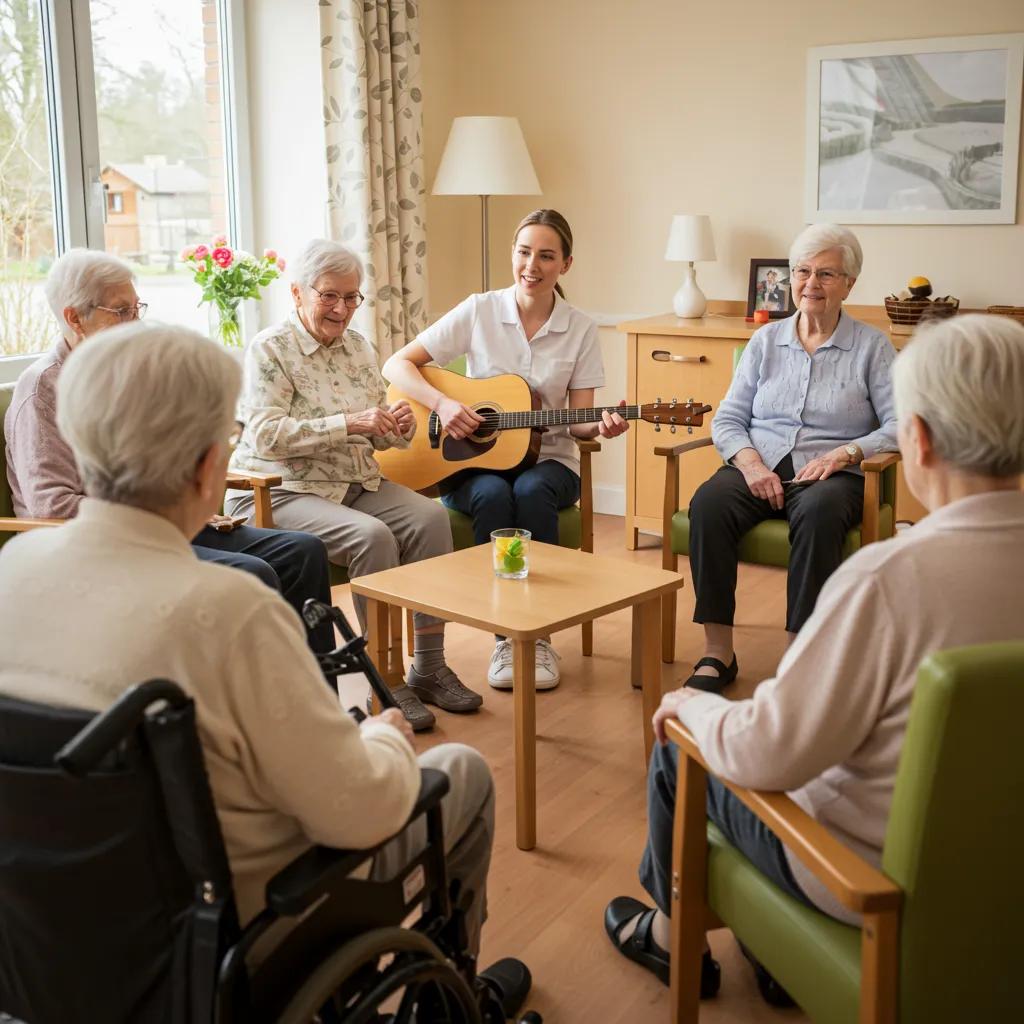
Social activities for Alzheimer’s patients are structured interactions designed to stimulate cognition, reduce isolation, and preserve daily function through meaningful engagement. This article explains why social engagement matters, which activities work best at different dementia stages, and how families and providers in West Virginia can implement effective programs. Many families struggle to find stage-appropriate, safe, and locally relevant options that balance stimulation with comfort; this guide promises practical, evidence-aligned strategies plus examples families can use today. You will find clear benefits of social interaction, stage-by-stage activity recommendations, facility-level program descriptions, caregiver tips for at-home engagement, and common questions answered for quick decision-making. Throughout, the focus is on actionable ideas—music, art, pet therapy, outdoor time, and reminiscence—woven with local context and program design principles that optimize cognitive, emotional, and physical outcomes. Read on to learn which activities fit early, mid, and late dementia, how to measure progress, and how memory care providers like Braley Care Homes operationalize personalized engagement in a home-like West Virginia setting.
What Are the Key Benefits of Social Interaction for Alzheimer’s Patients?
Social interaction supports multiple domains of health in Alzheimer’s care by providing cognitive stimulation, emotional regulation, and opportunities for light physical activity, which together contribute to quality of life. Mechanistically, regular social engagement triggers cognitive challenge and routine that promote neuroplasticity, reduces stress hormones that worsen memory, and encourages movement that maintains mobility. Families and care teams see outcomes such as improved mood, reduced agitation, better sleep patterns, and increased participation in daily routines when social activities are consistent. The following table distills common social activity types, their primary impact, and typical measurable outcomes seen in clinical and community settings.
Different social activities deliver targeted benefits that families can use to prioritize programming.
Activity TypePrimary ImpactTypical OutcomeGroup music sessionsEmotional regulation & memory cueingReduced agitation; increased smiling and singingReminiscence groupsIdentity and language activationImproved conversational engagement; more autobiographical recallLight group exercisePhysical mobility & sleep regulationBetter gait confidence; improved nighttime sleepPet-assisted visitsCalming sensory engagementLower anxiety and short-term mood boostSensory boxesComfort and groundingReduced distress during care routines
This comparison clarifies why a mix of cognitive, sensory, and physical social activities produces broader gains. Understanding these benefits helps families decide what to prioritize, which leads naturally into stage-specific activity planning and practical examples for early, mid, and late dementia.
How Does Social Engagement Improve Cognitive Function in Dementia?

Social engagement improves cognitive function by supplying novelty, conversation, and structured challenge that stimulate attention, language, and executive processes in the brain. Interaction with others requires retrieval of names, sequencing of thoughts, and turn-taking—activities that exercise memory networks and reinforce synaptic connections. Practical examples include small-group discussion prompts, simple puzzles done in pairs, and guided reminiscence sessions that cue autobiographical memory; these activities combine cognitive demand with social motivation for stronger participation. Recent studies indicate that socially embedded cognitive activities tend to produce more sustained engagement than solitary cognitive tasks, suggesting that the social context amplifies cognitive benefit and therefore should be prioritized in any care plan.
Research indicates that personalized psychosocial interventions, including pleasant activities with social interaction, can effectively treat behavioral and psychological symptoms of dementia in care home settings.
Personalized Psychosocial Interventions for Dementia Symptoms
There was good evidence to support the value of personalized pleasant activities with and without social interaction for the treatment of behavioral and psychological symptoms of dementia (BPSD) in care homes. This updated systematic review will focus on studies reporting the effect of personalized psychosocial interventions on key BPSD in care homes.
The value of personalized psychosocial interventions to address behavioral and psychological symptoms in people with dementia living in care home settings: a …, I Testad, 2014
What Emotional and Physical Benefits Do Social Activities Provide?
Social activities provide emotional benefits such as decreased loneliness, lower depression scores, and increased feelings of belonging through shared experiences and positive feedback from peers. Physically, group activities encourage light movement, improved balance, and better appetite and sleep patterns when scheduled regularly as part of a daily routine.
Measurable indicators include increased frequency of social interactions, longer participation time in activities, and caregiver reports of reduced nighttime wandering or agitation. These emotional and physical gains often synergize—improved mood increases willingness to participate in physical tasks, which in turn supports overall health—so planning should include both social and movement-based elements.
Why Is Social Interaction Critical for Quality of Life in Alzheimer’s Care?
Social interaction preserves identity, dignity, and meaningful roles by allowing individuals with Alzheimer’s to express preferences, recall life stories, and participate in rituals that anchor daily life. Person-centered engagement reinforces a sense of self through familiar songs, communal meals, or role-based tasks like setting a table, and these rituals strengthen relationships between residents and families. When activities are tailored to life history and preferences, residents demonstrate greater calm, clearer communication, and sustained attention, which directly improves quality of life. A focus on dignity-driven programming ensures that social activities act as more than entertainment—they become a core strategy for sustaining emotional well-being and relational continuity.
Studies suggest that while Alzheimer's damages memory formation areas, other brain regions responsible for personality, decision-making, memory, and emotion remain partially intact, highlighting the potential for social engagement to positively impact quality of life.
Social Engagement and Quality of Life for Dementia Residents
The parts of the brain that aren’t primarily damaged by Alzheimer’s are the orbital frontal cortex, which is responsible for personality and decision-making, and the temporal lobes, which are responsible for memory and emotion. The hippocampus, which is responsible for forming new memories, is also damaged by Alzheimer’s. The parts of the brain that aren’t primarily damaged by Alzheimer’s are the orbital frontal cortex, which is responsible for personality and decision-making, and the temporal lobes, which are responsible for memory and emotion. The hippocampus, which is responsible for forming new memories, is also damaged by Alzheimer’s.
Improving quality of life (QoL) for dementia residents in long-term care (LTC) through social-based leisure engagement, 2024
Which Social Activities Are Best for Alzheimer’s and Dementia Patients in West Virginia?
Selecting activities by dementia stage ensures that tasks match ability, provide an achievable challenge, and maximize meaningful engagement in a West Virginia community context. Early-stage programming emphasizes cognitive challenge and social roles, mid-stage approaches center on reminiscence and sensory-rich group activities, and late-stage work focuses on comfort, familiarity, and one-on-one contact. The table below maps activity types to best stages, explains the therapeutic mechanism, and gives concrete examples that families or facilities can adapt to local settings.
Stage-specific activities help families and providers choose appropriate engagement strategies quickly.
Activity TypeBest Stage(s)Why It Helps (Mechanism)Example in WV ContextBook or discussion clubsEarlySustains language and executive function through dialogueSmall library group with reading aloud and local history topicsMusic therapy & sing-alongsEarly–MidMemory cueing via familiar songs; mood regulationAppalachian folk playlists for group sessionsSimplified arts & craftsMidEngages creativity with structured successLarge-print, guided painting in a communal roomPet-assisted visitsMid–LateSensory comfort and calming tactile engagementScheduled and supervised animal visits in a secure areaSensory comfort (familiar scents, tactile items)LateSoothes via familiar sensory cuesSensory boxes with wool, photographs, and soft textiles
These mappings show how local cultural elements—music, regional reminiscence topics, outdoor horticulture—can be woven into therapeutic programming. Next, concrete recommendations for each stage offer practical templates families can follow at home or look for when touring facilities.
What Activities Are Recommended for Early-Stage Alzheimer’s Patients?
Early-stage activities should preserve independence and cognitive skills by offering social roles, complex games, and learning opportunities that are naturally social and purposeful. Examples include book clubs with guided discussion, volunteer-style roles such as helping organize a community bulletin, gardening clubs that combine planning and conversation, and group puzzles that require collaboration. Frequency of sessions should balance challenge and fatigue—short, regular meetings (30–45 minutes) two to three times weekly often work well—while adaptation tips include breaking tasks into steps and offering prompts to support recall. These activities build cognitive reserve and social identity, making them ideal first-line choices.
Which Therapeutic Activities Support Mid-Stage Dementia Engagement?
Mid-stage programming emphasizes music, simplified art projects, movement, and structured reminiscence to connect residents with memories and emotions in a group setting. Music sessions use curated playlists tied to decades of life history, sing-alongs, and instrument play to stimulate recall and reduce agitation. Art therapy focuses on process rather than product—collage, finger-painting, or themed crafts that allow success with minimal fine-motor demands. Templates include a 30-minute music warm-up, a guided reminiscence prompt, and a 20-minute hands-on craft to close the session, supported by staff prompts and visual cues to scaffold participation.
Research comparing music therapy to general recreational activities for individuals with dementia in nursing homes indicates a potential benefit of music therapy in reducing agitation.
Music Therapy vs. Recreational Activities for Dementia Agitation
This study aimed to compare the effects of music therapy with general recreational day activities in reducing agitation in people with dementia, residing in nursing home facilities.
The effect of music therapy compared with general recreational activities in reducing agitation in people with dementia: a randomised controlled trial, 2013
What Sensory and Comfort Activities Help Late-Stage Dementia Patients?
Late-stage activities prioritize safety, comfort, and emotional connection through gentle sensory stimulation and individualized contact that preserves dignity. Approaches include familiar music played softly, tactile comfort items like weighted lap pads or soft blankets (used per facility policy), hand massage with approved lotions, sensory boxes containing meaningful objects, and brief one-on-one pet interactions. Sessions are short—often 10–20 minutes—focused on presence rather than performance, and staff monitors for signs of overstimulation. These interventions calm distress, encourage brief social reciprocity, and support caregiver bonding during care tasks.
How Does Braley Care Homes Personalize Activity Programs for Residents?

Braley Care Homes uses person-centered assessment and life-history mapping to build individualized activity plans that align with each resident’s preferences and abilities. The process begins with a detailed preference assessment and input from families to identify meaningful music, past hobbies, and daily rhythms, followed by multidisciplinary team reviews to match activities to cognitive stage and safety needs. Examples of personalization include tailoring playlists to a resident’s formative years, adapting art materials for limited dexterity, and scheduling pet visits for residents who respond positively to animals. Regular review meetings track engagement and adjust plans, ensuring activities evolve with changing needs and continue to promote dignity and social connection.
How Does Braley Care Homes in West Virginia Support Social Engagement for Memory Care Residents?
Braley Care Homes operationalizes social engagement through signature programs—music therapy, art therapy, pet-assisted visits—and a secure, home-like environment designed to encourage safe social interaction. Staff roles include licensed clinicians and trained activity facilitators who scaffold sessions, use life-history cues to personalize content, and measure participation to inform care plans. The facility’s secure courtyard and communal spaces enable safe outdoor time and small-group gatherings that reinforce routine and spontaneous social moments. Below is a table summarizing key programs, responsible staff, frequency, and expected benefits to clarify how these components produce measurable engagement outcomes.
This table clarifies program logistics and the staff roles that make social engagement consistent and therapeutic.
ProgramProvider/Staff RoleFrequency / FormatExpected BenefitMusic & sing-alongsActivity facilitator, clinical input3× weekly group sessionsMood lift; increased verbalizationArt projectsArt facilitator with assistants2× weekly small-groupCreative expression; sense of achievementPet therapyTrained handlers, supervised visitsWeekly individual or small-groupCalming effect; tactile comfortOutdoor courtyard timeNursing staff oversightDaily supervised walksMobility maintenance; sensory stimulation
These structured programs, combined with measurement of engagement, create predictable opportunities for social interaction that families can observe during visits. For families interested in seeing programs in person, Braley Care Homes offers free assessments and tours to review activity plans and observe sessions firsthand by scheduling a visit via phone; this helps families confirm how social programming aligns with their loved one’s needs.
What Are the Signature Music and Art Therapy Programs at Braley Care Homes?
Signature music sessions focus on familiar regional selections and era-specific playlists that trigger autobiographical memory and encourage group participation through singing and clapping. Music sessions follow a predictable structure: warm-up with familiar tunes, guided sing-along or instrument prompts, and a calming close to reinforce routine. Art therapy emphasizes process-oriented projects where success is guaranteed through simplified steps and staff support, encouraging social interaction without performance pressure. Facilitators adapt materials and pacing by stage, enabling residents to experience consistent accomplishment and social belonging.
How Is Pet Therapy Implemented to Enhance Resident Well-Being?
Pet therapy at the facility is delivered through supervised visits with trained animals and handlers that prioritize resident safety, consent, and gentle interaction. Sessions are scheduled based on resident preference and staff assessment, with handlers briefed on infection control and resident-specific contraindications to ensure comfort. Pet visits are typically brief, one-on-one or in small groups, and aim to elicit calm, tactile pleasure, and spontaneous smiles or vocalizations. Staff monitors responses to tailor future sessions, opting for repeat visits with animals that produced positive engagement.
What Outdoor and Community Activities Are Available for Residents?
Outdoor and community activities use the secure courtyard for gardening, seasonal events, and supervised walks, and adapt local outings to resident ability with careful planning and transportation support. Gardening connects residents to tactile tasks and sensory stimulation, while seasonal celebrations and small community partnerships invite safe, structured social exposure. Outings and courtyard time are designed to minimize overstimulation, use consistent staff-to-resident ratios, and include contingency plans for weather or fatigue. These outdoor options reinforce routine, provide sunlight for circadian regulation, and create familiar, restorative experiences.
How Does the Home-Like Environment Foster Social Interaction?
A home-like environment fosters social interaction by arranging smaller communal rooms, open kitchens, and shared mealtime experiences that promote natural conversation and spontaneous connections. Design choices—comfortable seating, activity nooks, and visible calendars—serve as social triggers that cue participation and reduce institutional feel. Daily rhythms such as shared breakfast, scheduled activity times, and casual tea hours create predictable opportunities to interact, and staff are trained to facilitate inclusion rather than simply supervise. This environment supports continuity of identity, lowers anxiety, and encourages repeated social engagement that becomes part of residents’ daily lives.
How Can Families Support Social Engagement for Loved Ones with Alzheimer’s at Home?
Families can sustain social engagement at home by creating short, repeatable routines, using familiar music and reminiscence prompts, and collaborating with care professionals to maintain consistency across settings. Small, manageable activities—ten to twenty minutes—reduce fatigue and increase success, while regular scheduling helps establish expectation and comfort. The following numbered list offers practical, evidence-aligned steps families can implement immediately to boost daily engagement and emotional connection at home.
Simple, repeatable actions help families embed social stimulation into daily routines.
Play familiar music for 10–20 minutes to cue memories and calm mood.
Use a single reminiscence prompt (a photo or object) and ask open-ended questions.
Break tasks into micro-steps (folding one towel) to create purposeful roles.
Schedule short social outings or coffee with one supportive person weekly.
Rotate sensory boxes with tactile items tailored to preferences.
What Are Effective Ways to Engage Alzheimer’s Patients in Daily Activities?
Effective daily engagement uses short durations, predictable structure, and meaningful content that reflects past roles or interests to maximize participation and decrease frustration. Examples include folding laundry together for 10–15 minutes, playing a favorite song during grooming routines, or using tactile objects while chatting about familiar stories. Session length should be adjusted based on stamina, and caregivers should emphasize success by simplifying steps and offering gentle prompts rather than corrections. These strategies reduce resistance, support autonomy, and maintain social connection in everyday moments.
Where Can Families Find Caregiver Support Groups and Resources in West Virginia?
Families should connect with local chapters of national organizations, community caregiver groups, and facility social workers to access education, respite, and peer support tailored to West Virginia communities. Local support groups offer emotional validation, practical tips for activity planning, and referrals to community events that are dementia-friendly. Reaching out to a facility social worker can produce region-specific resources and introductions to caregiver networks, enabling families to share strategies and locate specialized programming. Joining these networks reduces isolation and improves the capacity to sustain meaningful social engagement at home.
How Can Families Collaborate with Braley Care Homes for Personalized Care?
Families collaborate with Braley Care Homes through initial assessments, life-history interviews, and ongoing care-plan meetings that integrate family knowledge into activity design and daily routines. Sharing favorite music, hobbies, and significant life events during assessment helps staff create personalized activity plans that reflect the resident’s identity. Families can provide feedback after visits or participate in events to reinforce continuity between home and facility. To explore collaboration, families may schedule a free assessment or tour to review individualized programming and observe social activities in action by contacting the facility directly.
What Are the Most Common Questions About Social Activities for Alzheimer’s Patients?
Caregivers frequently ask which activities are appropriate at different stages, how social engagement reduces anxiety, why person-centered care matters, and whether social engagement can slow cognitive decline. Short, direct answers help families prioritize immediate actions and find the right support. The list below maps common questions to succinct, actionable responses to capture quick needs and guide further reading within this article.
Common quick answers help families get immediate guidance before deeper planning.
Activities by stage: Early—discussion clubs, complex hobbies; Mid—music, simplified art; Late—sensory comfort, one-on-one pet contact.
Reducing anxiety: Structured routine and calming sensory inputs decrease agitation and improve cooperation.
Person-centered care importance: Individualized plans align activities with identity, improving participation and dignity.
Impact on decline: Regular social engagement supports function and mood but is not a cure; it preserves quality of life.
What Activities Are Good for Alzheimer’s Patients at Different Dementia Stages?
Selecting activities by stage ensures success and reduces frustration by matching complexity to ability, with early-stage options emphasizing cognitive challenge, mid-stage focusing on reminiscence and simplified creative tasks, and late-stage prioritizing comfort and sensory connection. Families should aim for repeated, short sessions and rely on familiar cues to encourage participation. This stage-based mapping supports careful progression and helps providers plan transitions as needs change.
How Do Social Activities Reduce Anxiety and Behavioral Issues?
Social activities reduce anxiety by providing structure, meaningful distraction, and opportunities for emotional expression in safe settings; techniques include calming music, one-on-one presence, and tactile comfort items. These approaches shift attention away from internal distress, lower stress hormones through soothing interaction, and replace negative behaviors with purposeful engagement. Regular scheduling and predictable routines are core components of this effect.
Why Is Person-Centered Care Important in Memory Care Activities?
Person-centered care ensures activities reflect each person’s history, preferences, and abilities, which increases relevance and willingness to engage and preserves dignity. The process involves assessment, preference mapping, small-group matching, and iterative plan adjustments based on observed engagement. Families should expect personalized plans that honor life stories and provide consistent opportunities for meaningful participation.
How Can Social Engagement Slow Cognitive Decline in Alzheimer’s Patients?
Social engagement does not reverse Alzheimer’s, but consistent, structured social and cognitive activities can slow functional decline by maintaining neural connections through repeated stimulation and routine. Evidence indicates that socially embedded cognitive tasks produce better adherence and emotional reward, which supports sustained practice. Realistic expectations emphasize improved daily functioning and mood rather than a cure, and persistence over months yields the most measurable gains.
Why Choose Braley Care Homes for Specialized Social Activities and Memory Care in West Virginia?
Braley Care Homes positions itself as West Virginia’s dedicated free-standing Alzheimer’s and Dementia care facility, offering a home-like environment, individualized activity programming, and trained staff who prioritize dignity and measurable engagement outcomes. Led by Chris Braley, a Licensed Independent Clinical Social Worker (LICSW) with recognition for dementia coaching, the facility integrates a clinical perspective into daily social programming. Families seeking a specialized setting can schedule free assessments and tours to observe activity sessions and review personalized plans directly with staff by contacting the facility; this step helps confirm fit and understand how social engagement will be implemented for a loved one. Choosing a dedicated memory care setting with focused programs and clinical oversight supports consistent social stimulation and family collaboration that often proves difficult to replicate elsewhere.
What Makes Braley Care Homes the Only Free-Standing Alzheimer’s Facility in WV?
Being a free-standing Alzheimer’s facility means services and environments are devoted specifically to memory care rather than being a unit within a larger, general nursing facility, enabling more consistent programming, specialized staff training, and environmental design tailored to dementia needs. This focus allows for concentrated resources—secure courtyards, activity nooks, and staff roles dedicated to memory support—that enhance social engagement opportunities. Families benefit from a singular mission focus where daily routines and programs are intentionally aligned with dementia care best practices.
How Does Chris Braley’s Expertise Enhance Resident Care and Activities?
Chris Braley brings clinical leadership as a Licensed Independent Clinical Social Worker, guiding program development, staff training, and individualized care approaches that connect therapeutic principles to everyday activities. His background in dementia coaching informs curriculum choices like life-history mapping, structured music interventions, and family collaboration procedures. This clinical grounding ensures activity programs are not only engaging but also grounded in strategies that support behavior management, emotional regulation, and relational continuity.
What Free Assessments and Tours Are Available to Explore Social Programs?
Families can arrange a free assessment and tour to observe social activities, review individualized programming, and discuss life-history preferences with the care team, providing an opportunity to see how music, art, pet therapy, and outdoor time are scheduled and adapted. During a visit, families should note the home-like layout, staff-resident interactions, sample activity rhythms, and personalization efforts. Scheduling a visit by phone allows staff to prepare relevant materials and identify the most informative sessions to observe, making the assessment a practical first step toward personalized memory care.
Frequently Asked Questions
What types of social activities are most effective for Alzheimer's patients?
Effective social activities for Alzheimer's patients include music therapy, reminiscence sessions, art projects, and pet-assisted visits. Music therapy, particularly with familiar songs, can evoke memories and improve mood. Reminiscence sessions encourage conversation and connection to past experiences. Art projects allow for creative expression without the pressure of performance, while pet-assisted visits provide comfort and emotional support. Each activity should be tailored to the individual's cognitive stage to maximize engagement and enjoyment.
How can families create a supportive environment for social engagement at home?
Families can foster a supportive environment for social engagement by establishing consistent routines that incorporate familiar activities. This can include playing favorite music, engaging in simple reminiscence prompts, or participating in light physical activities together. Creating a calm and inviting space for these interactions is essential. Additionally, families should encourage participation by breaking tasks into manageable steps and celebrating small successes to enhance the individual's sense of accomplishment and connection.
What role do caregivers play in facilitating social activities for Alzheimer's patients?
Caregivers play a crucial role in facilitating social activities for Alzheimer's patients by providing structure, encouragement, and support. They help create a safe and engaging environment, adapt activities to meet individual needs, and monitor responses to ensure comfort. Caregivers can also introduce new activities based on the patient's interests and preferences, fostering a sense of agency and participation. Their involvement is key to maintaining consistency and enhancing the overall effectiveness of social engagement efforts.
How can social activities be adapted for individuals with late-stage Alzheimer's?
For individuals with late-stage Alzheimer's, social activities should focus on comfort and sensory engagement. Activities can include gentle music sessions, tactile experiences with familiar objects, and one-on-one interactions that prioritize emotional connection. Short, structured sessions are ideal, allowing for meaningful engagement without overwhelming the individual. Caregivers should be attentive to signs of overstimulation and adjust activities accordingly, ensuring that the experience remains positive and supportive of the individual's dignity and comfort.
What are some community resources available for families of Alzheimer's patients in West Virginia?
Families of Alzheimer's patients in West Virginia can access various community resources, including local support groups, educational workshops, and caregiver networks. Organizations such as the Alzheimer's Association offer resources tailored to specific regional needs, including respite care options and information on dementia-friendly events. Additionally, families can connect with facility social workers for personalized guidance and referrals to local programs that promote social engagement and support for both patients and caregivers.
How can families measure the effectiveness of social activities for their loved ones?
Families can measure the effectiveness of social activities by observing changes in their loved ones' mood, engagement levels, and overall well-being. Keeping a journal to track participation frequency, duration, and responses during activities can provide valuable insights. Additionally, families should look for improvements in social interactions, reduced anxiety, and increased willingness to participate in daily routines. Regular communication with caregivers and staff can also help assess the impact of activities and make necessary adjustments for better outcomes.
