Visit us: Mon - Fri: 9:00 - 18:30
Braley Care Homes 6192 US 60 Hurricane, WV 25526
Resources
Memory Care Activities for Seniors to Boost Engagement
Memory Care Activities for Seniors to Boost Engagement and Well-being
Memory care activities for seniors are structured, person-centered programs designed to preserve cognitive function, reduce behavioral symptoms, and enhance overall quality of life for people living with dementia and Alzheimer's. This guide explains why purposeful activities matter, which approaches are most effective, and how to adapt programs across dementia stages to maximize engagement and safety. Families and caregivers will learn practical physical, cognitive, creative, sensory, and social activity ideas plus evidence-based facilitation tips they can use at home or evaluate when touring facilities. The article also maps how individualized programming, staff training, and secure environments support consistent participation, and it highlights what to ask when choosing a memory care provider. Throughout, you'll find actionable examples, comparison tables, and checklists to help translate research into day-to-day routines that promote dignity, connection, and meaningful engagement.
Why Are Memory Care Activities Essential for Seniors with Dementia and Alzheimer's?
Memory care activities refer to intentional, therapeutic, and routine-based engagements that stimulate cognition, regulate emotion, and foster social connection. These activities work by providing predictable structure, multi-sensory cues, and personally relevant content that cue long-term memory and reduce stress-related behaviors. As a result, seniors often experience improved mood, less agitation, better participation in daily tasks, and preserved abilities for longer periods. Current research shows that targeted cognitive and social interventions slow functional decline and reduce caregiver burden when implemented consistently.
What Cognitive, Emotional, and Social Benefits Do Memory Care Activities Provide?

Memory care activities support three primary domains: cognitive maintenance, emotional regulation, and social connection. Cognitively, exercises that target attention, recall, and sequencing help maintain neural pathways and support daily functioning. Emotionally, predictable routines and familiar stimuli lower anxiety and depressive symptoms by creating safe, anchored experiences. Socially, group-based and intergenerational activities reduce isolation and encourage conversational exchange, which reinforces identity and belonging. These combined effects produce measurable improvements in mood and participation that translate to better quality of life for residents and clearer communication for families.
How Do Therapeutic Activities Reduce Anxiety and Behavioral Issues in Seniors?
Therapeutic activities reduce anxiety and behavioral issues by replacing uncertainty with structured engagement and sensory anchors that soothe the nervous system. Predictable routines decrease agitation by minimizing confusing transitions, while sensory and reminiscence work offer calming familiar cues that de-escalate stress responses. Staff-guided interventions—when tailored to an individual’s history and preferences—can lower the need for PRN medication and reduce frequency of disruptive behaviors. Implementing consistent, short sessions throughout the day also prevents overstimulation and helps stabilize emotional rhythms.
Why Is Personalized Activity Programming Important in Memory Care?
Personalized activity programming increases participation by aligning tasks with a person’s lifelong roles, hobbies, and retained abilities. The personalization process typically uses a social history intake to identify meaningful themes—career, family roles, favorite music, and pastimes—and converts those into replicable activities that trigger positive memories. Tailoring complexity, time limits, and cueing strategies ensures safety and success across dementia stages. When programs honor identity and adapt to changing abilities, residents show higher engagement and feelings of competence.
After reviewing these evidence-based benefits, many families want a facility that translates research into daily practice. Braley Care Homes Inc. focuses on individualized activity programming and offers free care assessments to discuss meaningful engagement strategies with families. Their approach centers on trained staff and tailored routines that prioritize safety and identity-based activities while inviting families to participate in planning.
What Are the Best Physical Activities for Seniors with Dementia to Improve Mobility and Mood?
Physical activities for seniors with dementia combine safety, repetition, and social elements to support circulation, balance, and mood. Movement increases neurovascular health, releases endorphins that lift mood, and helps reduce restlessness and wandering behavior. To be effective, physical programs should be predictable, supervised, and adapted for joint limitations and fall risk. Staff supervision, simple cueing, and short, frequent sessions produce better adherence than long, infrequent classes.
Which Chair Yoga and Light Resistance Exercises Are Safe and Effective?
Chair yoga and light resistance exercises improve flexibility, core stability, and confidence without exposing seniors to undue fall risk. Simple moves—seated spinal twists, shoulder rolls, ankle circles, and gentle resistance-band rows—support range of motion and posture when performed for 10–20 minutes, two to three times weekly. Modifications include reducing range of motion, using thicker bands, and offering hand-over-hand assistance to complete repetitions. Staff should monitor breathing, joint pain, and fatigue and pause activity if discomfort occurs.
How Does Supervised Walking Help Reduce Restlessness and Improve Circulation?
Supervised walking programs decrease pacing, provide safe opportunities to expend energy, and support cardiovascular health. Short, timed walks along secured indoor paths or in a courtyard use a buddy system or staff escort to maintain safety and social interaction. Sessions of 10–20 minutes daily, adjusted for pace, improve circulation and often reduce agitation later in the day. Documenting distance, mood changes, and any mobility warnings helps staff iterate routes and supports gradual increases in duration as tolerated.
What Role Does Regular Physical Exercise Play in Cognitive Function?
Regular physical exercise supports cognition by improving blood flow to the brain, promoting neurotrophic factors, and preserving functional independence. Aerobic activity, balance training, and strength work together to reduce fall risk and sustain activities of daily living (ADLs). Consistency—short bouts most days of the week—yields greater cognitive benefits than sporadic intensive sessions. Facilities should pair exercise with cognitive tasks and social encouragement to amplify both physical and mental gains.
Before the table below, this comparison provides quick guidance for staff and families to choose appropriate physical activities by dementia stage and safety considerations.
ActivitySuitable Dementia StagePrimary Benefit(s)Safety NotesChair yogaMild–ModerateFlexibility, relaxationUse sturdy chairs and cue movementsLight resistance bandsMild–ModerateStrength, ADL supportMonitor joint pain; begin low tensionSupervised walkingAll stages (with adaptation)Mood, circulationUse escorts, safe routes, footwearBalance exercises (tandem stance)MildFall preventionClose supervision; begin seated progressions
This table helps caregivers quickly match activities to ability and safety needs while prioritizing supervised, repetitive practice.
How Can Cognitive Stimulation and Brain Games Enhance Memory and Attention in Seniors?
Cognitive stimulation and brain games target specific skills—working memory, attention, and problem solving—through structured tasks that are staged to ability. These activities work by reinforcing retrieval pathways, providing errorless learning opportunities, and using cues to compensate for declining short-term memory. When delivered in short, enjoyable sessions with clear prompts, brain games can preserve function, reduce apathy, and provide measurable engagement that staff can track. Adapting difficulty, time limits, and support levels extends participation across stages.
What Are Effective Brain Games for Seniors with Memory Loss?
Effective brain games are simple, high-salience tasks that encourage success and repetition, such as picture matching, large-piece jigsaw puzzles, and picture bingo. Games should emphasize familiar themes—local landmarks, family photos, or hobbies—to increase relevance and retrieval. Facilitation tips include slowing pacing, offering multiple-choice cues, and using hand-over-hand support where needed. Frequent, short sessions (10–15 minutes) promote focus and reduce frustration, while tracking responses guides progression.
How Do Trivia and Word Searches Support Reasoning Skills?
Modified trivia and simplified word searches stimulate recall and reasoning by cueing semantic networks and reinforcing language pathways. Use interest-based trivia—occupational topics, era-specific music, or sports—to elicit story-telling and validation. Simplify word searches with larger fonts, fewer words, and highlighted borders; provide visual cues or category prompts to scaffold success. Group trivia fosters conversation and peer validation, while one-on-one formats allow targeted cueing and pacing.
How Are Cognitive Activities Adapted for Different Dementia Stages?
Adapting cognitive activities requires adjusting complexity, sensory supports, and time-on-task by stage: mild participants can handle sequencing and short multi-step puzzles; moderate-stage activities rely more on recognition and matching; severe-stage engagements emphasize sensory cues, hand-over-hand participation, and validation. Staff should monitor fatigue and signs of frustration, shifting to shorter, more sensory-based tasks when attention wanes. Documentation of responses and small measurable goals ensures activities remain meaningful and safe.
Before the next section, this EAV table summarizes brain games, targeted skills, and practical implementations for staff and family use.
Activity/GameCognitive Skill TargetedAdaptations for Dementia StageExample ImplementationPicture matchingRecognition memoryUse fewer, high-contrast cards for moderate–severeMatch family photos with namesLarge-piece jigsawVisuospatialFewer pieces, edge-first support12–20 piece puzzles with staff cueingPicture bingoRecall & attentionUse themed cards and verbal promptsSing-song calling style with prizesSimplified crosswordLanguage retrievalProvide word bank and visual cues5–6 clue grids on weekly topics
This table gives practical, stage-aware choices staff can implement during activity planning and family visits.
What Creative Arts and Music Therapy Activities Foster Joy and Emotional Expression?

Creative arts and music therapy provide nonverbal pathways for self-expression, emotional regulation, and social bonding. Art and music access procedural and emotional memory systems often preserved longer than episodic memory, allowing residents to participate even as verbal skills decline. Programs using low-mess materials, familiar songs, and simple instruments reduce barriers and create repeatable rituals that promote mastery and social connection. Trained facilitators scaffold activities to evoke positive feedback and sustain participation.
How Does Painting, Drawing, and Crafting Support Self-Expression?
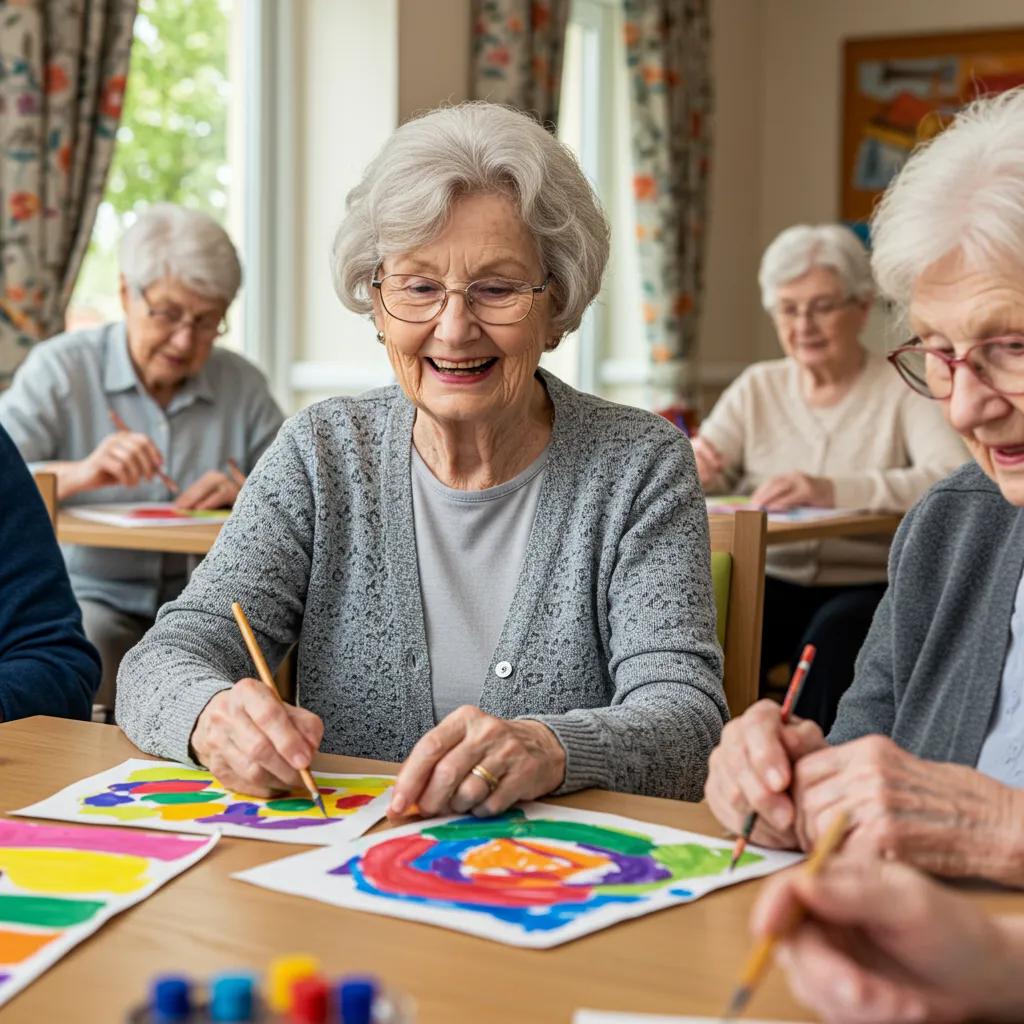
Painting, drawing, and crafting enable residents to communicate feelings and preferences without heavy verbal demands, offering visible outcomes that boost esteem. Use washable paints, adaptive grips, and pre-cut templates to accommodate fine motor limits and reduce frustration. Projects tied to themes—seasons, family events, or local history—encourage storytelling and sharing. Facilitators should celebrate process over product and use art as prompts for conversation during and after sessions.
What Are the Benefits of Music Therapy for Alzheimer's and Dementia Patients?
Music therapy leverages rhythm, melody, and lyrics to access long-term memories and regulate emotion, frequently reducing agitation and prompting social engagement. Group sing-alongs, individualized playlists, and rhythmic movement activate procedural memory and can trigger autobiographical recall. Clinical evidence supports music’s role in lowering stress hormones and improving mood during and after sessions. Offering both group and individualized formats ensures broad access and maximizes therapeutic benefit.
How Do Sing-Alongs and Simple Instruments Help Access Long-Term Memories?
Sing-alongs and simple instruments provide rhythmic cues that anchor lyrics and evoke procedural recall, permitting residents to participate even when language retrieval is limited. Selecting culturally and personally familiar songs—hymns, era-specific hits, or folk tunes—improves accessibility and sparks conversation. Instruments like shakers and tambourines encourage active participation without fine motor demands. Facilitators should pair music with photo prompts or dance to strengthen memory associations and social connection.
How Do Purposeful Life Skills Activities Promote Independence and Self-Worth?
Purposeful life skills activities—simple tasks related to daily living—promote dignity, routine, and a sense of contribution. These activities connect to identity by enabling residents to perform meaningful roles such as setting a table or folding towels, which reinforce competence and routine. When tasks are broken into safe, manageable steps and supervised respectfully, residents maintain confidence and motor skills that support ADLs. Purposeful tasks also create natural moments for social interaction and family involvement.
What simple tasks, like folding laundry and setting tables, are beneficial?
Folding laundry and setting tables provide repetition, fine motor practice, and visible accomplishment in short segments that support engagement. Simplify tasks by reducing item counts, using larger textiles, and demonstrating each step slowly: fold in thirds, place items one at a time, and count aloud. These activities can be scheduled daily or several times per week to build routine and provide sensory feedback. Staff facilitation emphasizes praise and independence while ensuring safety.
How Does Light Gardening and Cooking Support Routine and Purpose?
Light gardening and supervised cooking connect residents to sensory experiences and short-term goal attainment, enhancing mood and providing meaningful outcomes. Projects like potted herbs, seed sowing, or no-bake recipes engage touch, smell, and taste while requiring simple sequencing and turn-taking. Safety adaptations include seated tasks, pre-measured ingredients, and tool modifications. Completing a small project supplies a sense of ownership and an opportunity for sharing with peers and family.
Why Are Life Skills Activities Important for Maintaining Daily Living Abilities?
Life skills activities preserve functions directly related to independence by exercising coordination, sequencing, and decision-making in practical contexts. Regular, supported practice sustains motor patterns and task confidence, translating into slower loss of ADL abilities. Monitoring performance and gradually adjusting task complexity allows staff to maintain dignity while increasing support only when necessary. Families benefit when these skills translate into safer, more successful visits and daily routines.
What Are Reminiscence and Sensory Activities That Connect Seniors with Their Past and Present?
Reminiscence and sensory activities use familiar stimuli to cue autobiographical memory and stabilize mood by anchoring residents in meaningful experiences. These interventions can be brief, multisensory sessions using photos, music, scents, and tactile objects that evoke stories and calm agitation. When implemented with validated facilitation techniques—slow pacing, open-ended prompts, and validation—reminiscence work reinforces identity and produces observable improvements in engagement and behavior. Sensory tools should be sanitized, safe, and tailored to individual preferences.
How Do Photo Albums and Familiar Music Aid Memory Recall?
Photo albums and familiar music act as multimodal retrieval cues that connect images and melodies to autobiographical narratives. Using chronological or themed albums with clear labels helps residents follow a story arc, and pairing photos with favorite songs enhances recall through associative networks. Family members can contribute captions and stories to make sessions more personal. Short, guided reviews of albums encourage conversation, validate experience, and often reduce anxiety by re-establishing continuity.
Multisensory Environments and Reminiscence Therapy for Dementia
ABSTRACT: AbstractIntroduction:Dementia significantly impacts elderly quality of life, necessitating innovative non-pharmacological approaches. This study aimed to identify key design elements for multisensory environments integrated with reminiscence therapy in Indonesian contexts.Methods:This qualitative study used an exploratory descriptive design through focus group discussions with 10 elderly participants, 2 family caregivers, and 5 healthcare professionals. Participants were selected through purposive sampling based on inclusion criteria established for this research protocol. Data were analyzed using Braun and Clarke's six-phase thematic analysis framework to identify key patterns related to the development of multisensory environments.Results:This study revealed five main themes from a comprehensive data analysis of therapeutic environments for the Indonesian population. These themes are: 1) the importance of positive reminiscence triggers to effectively stimulate memory
The development of a harmony multisensory space based on reminiscence therapy to improve quality of life for older adults with dementia: A qualitative study, FAM Mendrofa, 2025
What Sensory Tools Like Scent Jars and Tactile Objects Calm and Engage Residents?
Scent jars, tactile objects, and memory boxes provide immediate, nonverbal stimuli that can soothe or invigorate residents depending on the selection. Recommended scents include family-associated aromas—baked goods, lavender, or coffee—while tactile items like soft fabrics, textured balls, or weighted lap pads promote grounding. Safety notes include avoiding allergens, using sealed scent jars for control, and ensuring small parts are inaccessible to those with swallowing risk. Sensory kits should be cleaned regularly and individualized.
How Do These Activities Reinforce Identity and Reduce Agitation?
By stimulating autobiographical memory and sensory familiarity, reminiscence and sensory activities re-anchor a person’s sense of self and reduce the disorientation that contributes to agitation. Familiar cues create predictable emotional responses—comfort, recognition, and narrative recall—that stabilize mood cycles. Tracking which stimuli evoke positive engagement supports ongoing personalization and informs future activity planning. Over time, these interactions preserve personhood and reduce episodes of distress.
How Does Social Engagement Through Group Activities and Pet Therapy Reduce Isolation?
Social engagement through group programming and pet-assisted activities reduces loneliness and supports emotional health by encouraging repeated, structured interactions. Group activities offer routine social roles and shared enjoyment, while pet therapy introduces nonjudgmental, tactile comfort that elevates mood and prompts conversation. Together, these approaches lower isolation-related depression and create predictable opportunities for residents to practice communication and cooperative behavior. Careful planning ensures inclusion and safe participation for all cognitive levels.
What Group Games and Holiday Celebrations Encourage Community Building?
Group games—wheel-of-fortune style spins, themed bingo, and sing-alongs—paired with seasonal celebrations foster community identity and shared ritual. Frequency recommendations include daily short group interactions and larger weekly or monthly events for holidays or birthdays. Adaptations include visual cues, simplified rules, and multiple participation levels so residents of varying abilities can join meaningfully. These celebrations reinforce routines, offer family-friendly engagement, and increase resident visibility within the community.
How Does Pet Therapy with “Sweetie” Improve Mood and Interaction?
Pet therapy with a calm, familiar animal like “Sweetie” offers immediate tactile and emotional benefits that often translate into increased smiling, verbalization, and social approach behaviors. Animal contact lowers cortisol and raises oxytocin, promoting relaxation and trust during visits. Typical sessions include supervised petting, short walks with the animal, and themed activities that incorporate the pet into group routines. Staff should screen for allergies, supervise interactions, and integrate pet visits into regular programming for sustained benefit.
Why Is Social Connection Vital for Emotional Well-being in Memory Care?
Social connection buffers against depression and supports resilience by providing predictable relational experiences that affirm worth and belonging. Structured social programs reduce isolation-related cognitive decline and create observable improvements in daily mood and cooperation. Measuring engagement—attendance, mood scales, and anecdotal notes—allows programs to evolve and emphasize activities that produce the greatest emotional returns. Intentional social design makes the care environment a place of relationship, not only supervision.
How Does Braley Care Homes Personalize Memory Care Activities to Meet Individual Needs?
Braley Care Homes Inc. personalizes memory care activities through a social-history driven process, trained staff, and a dedicated activity coordinator who tailors programming to individual interests and abilities. The facility emphasizes a “step into their reality” approach: staff work to understand each resident’s lifeworld and design activities that match preserved skills and preferences. Staff composition includes licensed social work leadership and nursing support to ensure medical and psychosocial factors inform activity selection. Families can request a free care assessment to discuss personalized activity planning and see programming in action via their care assessment service.
What Is the “Step Into Their Reality” Strategy for Activity Planning?
The “Step Into Their Reality” strategy involves meeting residents where they are cognitively and emotionally—adapting language, pace, and context to the resident’s current perception of the world. Practically, staff use validation techniques, recreate meaningful contexts (a mock kitchen for a former cook), and scaffold tasks to align with the resident’s perceived age or role. This approach reduces conflict, increases engagement, and often results in calmer, more cooperative participation. An anonymized example might show a former teacher more engaged during a literacy-themed sing-along than during a generic craft session.
How Does the Activity Coordinator Tailor Programs Based on Social History?
The activity coordinator collects a detailed social history at intake—hobbies, occupations, favorite music, spiritual practices, and daily routines—and translates that data into individualized weekly plans. The workflow follows intake → social history → program design → monitoring → adaptation, with regular documentation of response and modifications. Activities are matched to preferences and ability levels and supplemented with family-supplied cues when available. Monitoring outcomes informs staff about what to scale up or adapt, creating a living program that evolves with the resident.
Personalization ElementHow It's CollectedHow It's AppliedOutcome/GoalLife roles & hobbiesIntake social historyCreate themed activities (e.g., gardening club)Increased participationMusic preferencesPlaylist from familyIndividualized playlists for mood regulationReduced agitationADL historyCare assessmentIntegrate purposeful tasks into routineMaintained independence
What Training Do Staff Receive to Support Effective Memory Care Activities?
Staff training emphasizes dementia communication, behavior de-escalation, and activity facilitation under clinical leadership. Training topics include validation therapy, cueing strategies, safe mobility support, and documentation of engagement outcomes; ongoing coaching ensures fidelity to program methods. Leadership by a licensed social worker (LICSW) and clinical nursing staff supports integration of medical considerations into activity planning. Continuous education and team debriefs help staff refine techniques and maintain consistent, compassionate delivery.
What Should Families Look for When Choosing a Memory Care Facility with Quality Activity Programs?
Choosing a memory care facility should focus on staff training, individualized programming, a safe home-like environment, program diversity, and family involvement opportunities. These criteria ensure activities are meaningful, consistently delivered, and flexible enough to change with the resident’s needs. During tours, families should ask specific questions about activity assessment, measurement of engagement, frequency of programming, and opportunities to contribute personal items or stories. Facilities that invite family participation and offer free care assessments demonstrate transparency and partnership.
Look for trained staff and ongoing dementia education to ensure safe, effective facilitation.
Confirm individualized programming driven by social histories and documented adaptation.
Ensure the environment is secure yet home-like, with indoor/outdoor wandering areas and accessible courtyards.
Families touring Braley Care Homes Inc. can expect to discuss these exact criteria during a free care assessment or scheduled tour; contact options include calling Chris Braley at 304-767-4033 or emailing chris@braleycarehomes.com via their contact page to arrange a visit or request more information. Braley Care Homes is located at 6192 US 60 Hurricane, WV 25526 and emphasizes individualized programming, trained staff, and a secure, home-like environment.
Why Are Staff Training and Specialized Activity Programs Critical?
Trained staff reduce risk and enhance engagement by using evidence-based communication, appropriate cueing, and safety protocols that prevent injuries and escalation. Specialized programs reflect an understanding of dementia trajectories and include measurable outcomes and documentation. When evaluating a facility, ask about the frequency of staff training, examples of program measurement, and how individualized plans are adjusted over time. These practices differentiate facilities that provide routine activities from those that tailor purposeful, therapeutic engagement.
How Does a Secure, Home-Like Environment Enhance Engagement?
A secure, home-like environment fosters comfort and predictability that reduce confusion and promote participation in daily routines. Features such as safe wandering paths, an enclosed courtyard, and cozy communal spaces encourage exploration without risk. Families should observe whether furniture and décor reflect a homelike scale, whether outdoor spaces are accessible, and how staff use the environment to prompt spontaneous engagement. Comfortable, familiar settings encourage residents to join activities organically.
How Can Families Schedule a Free Care Assessment or Tour at Braley Care Homes?
Scheduling a free care assessment at Braley Care Homes is straightforward: call the facility at 304-767-4033 or email chris@braleycarehomes.com to request an assessment or tour. During the assessment, staff review the resident’s social history, functional needs, and activity preferences, then propose a tailored activity and care plan. Families will receive an overview of programming, sample schedules, and opportunities to contribute personal items or photos to activity planning. A visit helps families observe staff-resident interactions and evaluate program fit.
What Are the Most Common Questions About Memory Care Activities for Seniors?
This FAQ-style section answers typical caregiver and family questions with concise, actionable responses to guide immediate next steps and programming ideas.
What Activities Are Best for Dementia Patients?
Top activities balance familiarity, safety, and sensory engagement to support cognition and mood. Good choices include music-based groups, reminiscence with photos, simple crafts, supervised walking, and matching or picture-based games. These activities are adaptable across stages by adjusting cues, session length, and facilitation. The next question explains engagement tactics for caregivers.
How Do You Engage a Senior with Memory Loss Effectively?
Engage a senior by using short sessions, meaningful cues, and validation techniques that honor their reality. Use nonverbal prompts, simplify steps, and offer choices to increase autonomy. Maintain patience, repeat instructions gently, and celebrate small successes to encourage continued participation. These strategies reduce frustration and promote positive interactions.
What Are the Top 5 Activities for Seniors with Alzheimer's?
Music sing-alongs to access long-term memory and lift mood.
Reminiscence with photos to prompt storytelling and identity reinforcement.
Chair-based movement to support mobility and circulation.
Matching and picture games for recognition practice.
Purposeful tasks (folding, setting tables) for routine and dignity.
These activities can be tailored to ability and interest for optimal engagement.
What Sensory Activities Help Calm Dementia Patients?
Sensory tools like scent jars (baked goods, lavender), weighted lap pads, soft textiles, and tactile memory boxes often calm agitation. Use sealed scent jars for controlled exposure and ensure items are sanitized and safe. Pair sensory stimuli with quiet time and validation to maximize calming effects and monitor for overstimulation.
How Can Caregivers Support Memory Care Activities at Home?
Caregivers can support activities at home by simplifying tasks, using familiar cues, scheduling short, regular sessions, and involving family stories or music. Keep materials accessible, praise effort, and document what works to build a tailored plan. When needed, consult a memory care provider for assessment and ideas to expand home-based programming; facilities like Braley Care Homes offer free care assessments to help families plan next steps.
This article has provided practical pathways to implement enriched, person-centered memory care activities that support cognition, mood, and social connection. For families interested in a free care assessment, direct scheduling via phone at 304-767-4033 or email to chris@braleycarehomes.com connects you to staff who can review activity programming and tour arrangements at Braley Care Homes Inc., 6192 US 60 Hurricane, WV 25526.
Frequently Asked Questions
What types of memory care activities are most effective for seniors with advanced dementia?
For seniors with advanced dementia, activities should focus on sensory engagement and emotional connection. Effective options include sensory stimulation through familiar scents, textures, and sounds, as well as simple reminiscence activities that evoke past memories. Activities like gentle hand massages or listening to familiar music can also be beneficial. The key is to create a calm environment that encourages participation without overwhelming the individual, allowing them to engage at their own pace.
How can family members participate in memory care activities?
Family members can play a vital role in memory care activities by bringing personal items, such as family photos or favorite music, to enhance engagement. They can also participate in activities like reminiscence therapy, where they share stories and memories, fostering connection. Additionally, family members can assist in facilitating activities at home, ensuring that the environment is supportive and familiar. Regular visits and involvement in planned activities can significantly boost the emotional well-being of seniors.
What are some tips for caregivers to adapt activities for different cognitive levels?
Caregivers can adapt activities by assessing the individual's cognitive level and tailoring tasks accordingly. For those with mild dementia, activities can include more complex puzzles or games, while those with moderate to severe dementia may benefit from simpler, sensory-based tasks. Using clear, concise instructions, visual aids, and hands-on support can enhance understanding and participation. Regularly monitoring engagement and adjusting the complexity of activities based on the resident's responses is crucial for maintaining interest and success.
How can caregivers ensure safety during memory care activities?
Ensuring safety during memory care activities involves several strategies. First, caregivers should assess the environment for potential hazards, such as sharp objects or tripping risks. Activities should be supervised, especially those involving physical movement. Additionally, caregivers should adapt tasks to accommodate physical limitations, using supportive equipment when necessary. Regularly checking in with participants to gauge their comfort and fatigue levels can help prevent overstimulation and ensure a positive experience.
What role does technology play in memory care activities?
Technology can enhance memory care activities by providing interactive and engaging experiences. Tools like tablets can be used for cognitive games, virtual reality experiences, or music therapy sessions that evoke memories. Additionally, video calls with family members can help maintain social connections. However, it's essential to ensure that technology is user-friendly and tailored to the individual's cognitive abilities to avoid frustration and promote positive engagement.
How can caregivers measure the effectiveness of memory care activities?
Caregivers can measure the effectiveness of memory care activities through observation and documentation. Tracking participation levels, mood changes, and engagement during activities can provide insights into what works best for each individual. Caregivers can also solicit feedback from residents and family members to understand their experiences better. Regular assessments and adjustments based on these observations can help refine activity programs to maximize benefits for cognitive and emotional well-being.

Our clinic largest private mental health partnership, with a carefully selected nationwide team of Psychiatrists.
KEEP IN TOUCH.


CONTACT US
Location:
Braley Care Homes
6192 US 60
Hurricane, WV 25526
Phone Numbers:
Referrals and Inquiries: (304) 767-4033
Facility Phone: (304) 201-3677
Facility Fax: (304) 201-3678
AREAS WE SERVE
BUSINESS HOURS
Monday
9:00am – 6:30pm
Tuesday
9:00am – 6:30pm
Wednesday
9:00am – 6:30pm
Thursday
9:00am – 6:30pm
Friday
9:00am – 6:30pm
KEEP IN TOUCH.
CONTACT US
Location:
Braley Care Homes
6192 US-60
Hurricane, WV 25526
Phone Numbers:
Referrals and Inquiries: (304) 767-4033
Facility Phone: (304) 201-3677
Facility Fax: (304) 201-3678
AREAS WE SERVE
BUSINESS HOURS
Monday
9:00am – 6:30pm
Tuesday
9:00am – 6:30pm
Wednesday
9:00am – 6:30pm
Thursday
9:00am – 6:30pm
Friday
9:00am – 6:30pm