Visit us: Mon - Fri: 9:00 - 18:30
Braley Care Homes 6192 US 60 Hurricane, WV 25526

Resources
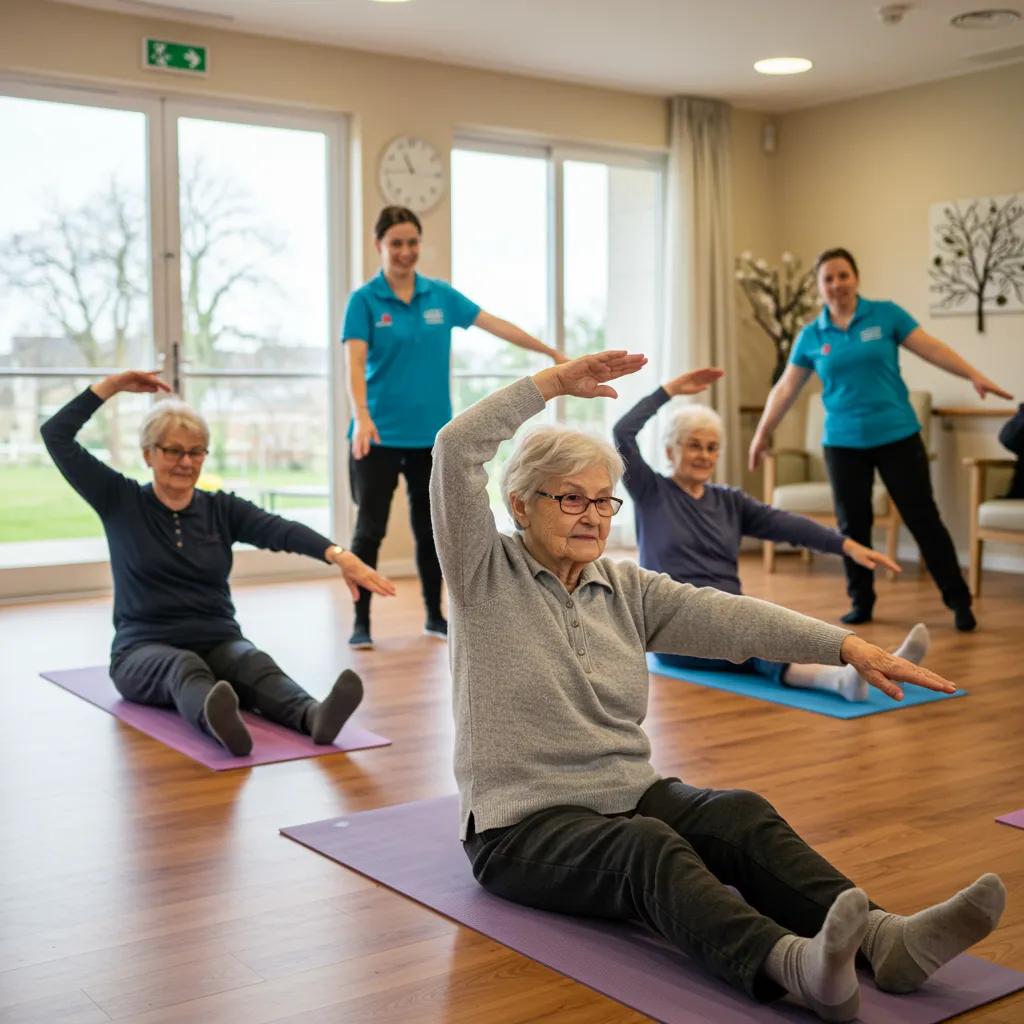
Memory Care Exercise Routines for Better Wellbeing
Memory Care Exercise Routines for Better Wellbeing: Effective Physical Activities to Enhance Cognitive and Emotional Health
Regular, purposeful movement in memory care is any structured or meaningful physical activity designed to support cognition, mobility, mood, and daily function for people with dementia. Exercise promotes brain health by increasing cerebral blood flow, stimulating neurotrophic factors, and engaging attention and executive control through combined physical and cognitive demands. Families who prioritize safe, consistent activity often see improvements in balance, daily independence, mood stability, and sleep patterns that directly influence quality of life. This article explains the multi-domain benefits of exercise for memory care residents, details evidence-based activity types and adaptations, outlines how programs can be personalized in facility and home settings, and provides practical caregiver resources and safety checklists. You will find specific exercise examples, short progression plans, EAV comparison tables for quick reference, and guidance on integrating movement into daily routines that caregivers and staff can implement today. Throughout, keywords such as exercise routines for memory care residents, dementia fitness programs for seniors, and safe exercise for elderly with dementia are woven into actionable advice grounded in current research and practical experience.
What Are the Key Benefits of Exercise for Memory Care Residents?
Exercise produces measurable benefits across cognitive, physical, emotional, and sleep domains by combining physiological mechanisms with social and behavioral effects. Movement increases cerebral perfusion and supports neuroplasticity while strengthening muscles and improving balance, which reduces fall risk and preserves independence. Socially driven group activities add emotional regulation and reduce agitation, and daytime activity helps consolidate circadian rhythms to improve nighttime sleep. Below is a concise list summarizing the core benefit areas that families and staff should prioritize when designing routines.
Exercise benefits for memory care residents include:
Cognitive Support: Regular aerobic and dual-task activities improve attention, processing speed, and certain memory tasks through enhanced blood flow and neurotrophic signaling.
Physical Function: Strength and balance work preserve mobility, ease transfers, and lower fall incidence, maintaining activities of daily living.
Emotional Regulation: Group movement reduces agitation and depressive symptoms while increasing social engagement and a sense of purpose.
Sleep Quality: Daytime physical activity helps regulate circadian rhythms, reducing nighttime wandering and improving sleep consolidation.
These domains interact: improved sleep enhances daytime cognition, and better mobility promotes social participation, which in turn supports mood and engagement. Understanding the mechanisms behind these outcomes clarifies why consistent, tailored exercise is a foundational element of high-quality memory care.
Different types of benefits map to distinct mechanisms and outcomes; the table below compares cognitive, physical, and emotional benefits and their primary mechanisms.
Benefit Domain Primary Mechanism Observable Outcome Cognitive Increased cerebral blood flow; neurotrophic factor release better attention, improved processing speed, modest memory gains Physical Muscle strengthening; balance training; cardiovascular conditioning Improved transfers, fewer falls, greater walking endurance. Emotional social interaction; endorphin and neurotransmitter modulation Reduced agitation, lower depressive symptoms, increased participation Sleep Daytime activity regulates circadian rhythm more consolidated nighttime sleep and reduced nighttime restlessness
How Does Exercise Improve Cognitive Function and Memory in Dementia Patients?

Exercise improves cognitive function primarily by increasing blood flow to the brain and stimulating factors that support neuronal health and synaptic plasticity. Physical activity elevates brain-derived neurotrophic factor and related signaling pathways that help maintain neural networks involved in attention and executive function. Practical studies show that consistent aerobic or combined aerobic-plus-strength programs can yield modest improvements in tasks requiring attention, processing speed, and working memory. Designing sessions that include cognitive challenges—like naming, dual-tasking, or pattern-following—leverages these mechanisms to reinforce neural circuits and practical skills.
These neurophysiological benefits naturally lead into which exercise types best harness cognitive gains, such as dual-task training and gentle aerobic work that can be adapted to each resident's capabilities.
What Physical Health Benefits Does Exercise Provide for Seniors with Memory Loss?
Physical exercise preserves strength, mobility, and balance—key factors that maintain independence and reduce injury risk in seniors with memory impairment. Strength exercises such as sit-to-stand progressions and heel raises improve transfer ability, while balance drills reduce the likelihood of falls by training postural reactions and coordination. Cardiovascular activities support heart and lung function, which in turn sustains energy for daily tasks and social engagement. By focusing on functional outcomes, exercise programs translate physiological gains into practical improvements that matter for daily living.
Improved physical capacity also supports emotional wellbeing and social participation, underscoring the interconnected nature of the benefits.
How Can Exercise Enhance Emotional Wellbeing and Reduce Anxiety or Depression?

Exercise influences mood through biological and psychosocial pathways: activity increases neurotransmitters like serotonin and dopamine and releases endorphins, while group sessions create social bonds that counter isolation. For residents with dementia, predictable routines and meaningful activities reduce agitation by offering structured engagement and sensory regulation. Case observations show decreased daytime pacing and fewer episodes of distress when regular movement is integrated into daily schedules. Staff facilitation and music pairing further amplify mood benefits by cueing positive memories and encouraging voluntary participation.
The mood improvements discussed here naturally extend into sleep benefits, since reduced anxiety and daytime engagement help regulate sleep–wake patterns.
In What Ways Does Physical Activity Promote Better Sleep for Memory Care Residents?
Daytime activity helps entrain circadian rhythms by providing daytime stimulation that signals wakefulness and energy expenditure, which leads to deeper and more consolidated sleep at night. Timing and intensity matter: moderate daytime aerobic or purposeful activities several hours before bedtime are most effective at improving sleep quality without causing evening stimulation. Regular movement also reduces nighttime agitation and wandering by decreasing daytime restlessness and improving mood. Practical implementation involves scheduling brief, consistent exercise blocks throughout the day and pairing them with calming evening routines to reinforce healthy sleep patterns.
Better sleep then feeds back into cognitive and emotional domains, creating a virtuous cycle that supports overall wellbeing.
Which Types of Exercise Are Best Suited for Memory Care and Dementia Patients?
Selecting appropriate exercise types balances safety, stimulation, and meaningful engagement so residents experience physical gains alongside cognitive and emotional benefits. The best-suited activities include gentle aerobic work, chair-based strength and flexibility, balance and coordination practices like Tai Chi or chair yoga, and dual-task exercises that pair movement with cognitive challenges. Below is a short list of exercise categories with a one-line description of their primary benefits to help caregivers and staff prioritize programming.
Gentle Aerobics: Low-impact walking groups or seated marching boost cardiovascular health and mood.
Chair-Based Strength: Seated resistance work supports functional strength for transfers and daily tasks.
Balance & Coordination: Adapted Tai Chi or chair yoga improves postural control and reduces falls.
Dual-Task Exercises: Combining naming or sorting with movement stimulates attention and executive function.
Choosing a mix of these types ensures programs hit strength, endurance, balance, and cognitive stimulation while remaining adaptable to varying abilities.
The table below compares common exercise types, intensity/adaptation options, and their primary benefits with examples that staff or caregivers can use.
Exercise Type Intensity / Adaptation Primary Benefits & Example Walking programs Low to moderate; use supervision or gait aids Cardiovascular fitness, mood boost — example: guided 10–20 minute courtyard walks Chair-based strength Low; use bands or light weights Functional strength, easier transfers — example: seated leg extensions, bicep curls Tai Chi / Chair Yoga Low; seated or assisted variations Balance and coordination — example: 15-minute seated balance sequence Dance / Movement to Music Low to moderate; seated options available Mood, rhythm, dual engagement — example: 5-song movement set with familiar music Dual-task drills Low; graded cognitive load Cognitive-motor integration — example: name items while stepping in place
What Are Gentle Aerobic Activities and Their Benefits for Seniors with Alzheimer’s?
Gentle aerobic activities include supervised walking, light dancing, and seated marching, all of which raise heart rate modestly and stimulate attention and mood. Typical sessions last 10–30 minutes at a comfortable pace and are safe when staff monitor exertion and provide cues. Benefits include improved cardiovascular health, increased alertness after activity, and enhanced participation in communal life due to mood elevation. Safety considerations include footwear, walking paths without trip hazards, and staff presence to assist as needed.
These aerobic building blocks can be combined with strength and balance work for a well-rounded weekly plan that supports endurance and daily function.
How Do Chair-Based Exercises Improve Strength and Flexibility in Memory Care?
Chair-based exercises focus on accessible strength and mobility work that reduce fall risk and preserve independence in daily tasks. Simple progressions—seated marches, knee extensions, shoulder presses with light bands—target major muscle groups used for standing, reaching, and carrying. Use of props like resistance bands and ankle weights (light) allows gradual progression while minimizing balance challenges. Regular chair-based practice improves sit-to-stand ability and shoulder mobility, translating directly to safer transfers and easier dressing or meal preparation.
These seated routines are especially valuable for residents with limited standing endurance and serve as a gateway to more active participation when safe.
The effect of chair-based exercise on physical function in older adults: A systematic review and meta-analysis, 2021
This systematic review and meta-analysis aimed to evaluate the effect of chair-based exercise on physical function in older adults. The review included studies that investigated the effects of chair-based exercise interventions on various aspects of physical function, such as balance, gait speed, grip strength, and mobility. The findings suggest that chair-based exercise benefits several aspects of physical function in older adults.
A systematic review and meta-analysis found that chair-based exercises positively impact various aspects of physical function in older adults.
Why Are Balance and Coordination Activities Like Tai Chi and Chair Yoga Important?
Balance and coordination activities retrain postural responses and improve proprioception, which together lower fall risk and increase confidence in movement. Practices like simplified Tai Chi or chair-adapted yoga emphasize slow, controlled shifts of weight and mindful breathing that support stability. Adaptations—shorter sequences, chair support, cueing—make these practices accessible at different dementia stages while preserving the neuromotor benefits. Evidence indicates regular balance work reduces incidence of slips and falls and improves confidence while walking or navigating assisted environments.
Balance training complements strength work and should be integrated into weekly routines for comprehensive fall-prevention strategies.
What Are Dual-Task Exercises and How Do They Stimulate Mind and Body Together?
Dual-task exercises pair cognitive tasks with physical movement—examples include naming categories while stepping or sorting colored cards during seated reaches—to simultaneously engage attention, memory, and motor control. These tasks strengthen the brain’s ability to manage concurrent demands, which maps to daily life skills like walking while conversing or handling utensils while following instructions. Progression begins with simple pairings and increases cognitive load or movement complexity as tolerated. Staff scaffold difficulty and monitor safety, ensuring tasks remain challenging yet achievable to reinforce success and engagement.
Dual-task work bridges cognitive training and functional mobility, making it a high-value component of memory care exercise programming.
How Does Braley Care Homes Tailor Exercise Programs for Individual Memory Care Needs?
Braley Care Homes highlights include daily exercise offered and individualized activities delivered by trained staff in a home-like, secure environment. Families seeking an assessment or a tour can contact the facility by phone to arrange a free assessment or schedule a visit to see activity spaces and the secure courtyard firsthand. These facility strengths complement evidence-based programming and help families evaluate fit for their loved ones.
What Is the Process for Individualized Activity Planning Based on Resident Needs?
Individualized activity planning begins with gathering a resident’s social history, interests, and a functional baseline to set meaningful, realistic activity goals. The planning process identifies preferred activities, safety limitations, and measurable targets—such as increasing supervised walking distance or participating in twice-weekly music-and-movement sessions. Plans are revisited regularly to assess progress and adapt intensity, complexity, or structure based on response and stage of dementia. This iterative approach keeps programming person-centered and aligned with the resident’s evolving needs.
The assessment-to-plan cycle naturally connects with staff training and supervision practices that ensure safe delivery of activities.
How Does Staff Training Ensure Safe and Effective Exercise Supervision?
Staff training covers dementia communication strategies, safety checks, exercise adaptations, and how to scaffold dual-task activities to maintain engagement while minimizing risk. Roles such as the activity coordinator and nursing staff collaborate to align health status, medication considerations, and daily schedules with exercise plans. Supervision protocols include monitoring for signs of fatigue, adjusting intensity, and documenting responses to refine programming. Consistent training helps staff deliver activities that are both meaningful and safe for residents with diverse needs.
Trained staff operating within a monitored, secure environment enables more opportunities for spontaneous and scheduled movement that supports wellbeing.
What Features of the Facility Support Safe and Engaging Exercise Environments?
Purpose-built features such as a secure outdoor courtyard, video-monitored common areas, and small, home-like activity rooms create opportunities for safe walking, group classes, and sensory-based movement. The secure courtyard allows supervised outdoor walks that provide fresh air and physical stimulation without safety concerns. Video surveillance in common areas supports safe wandering by allowing staff to redirect and supervise movement while maintaining residents’ autonomy. Home-like group spaces enable small, familiar classes—such as seated strength or music-and-movement—that encourage participation and reduce anxiety.
These design elements work together to make structured sessions and purposeful daily activities both safe and inviting for residents.
How Are Exercise Routines Adapted to Different Stages of Dementia?
Exercise routines follow a stage-based progression: early-stage residents receive more independent, goal-oriented activities; middle-stage participants benefit from simplified instructions and closer supervision; late-stage care focuses on sensory-based movement and passive range-of-motion to maintain comfort and circulation. Adaptations include shorter sessions, one-step verbal cues, tactile prompting, seated options, and caregiver-assisted practice when necessary. Goals shift from skill acquisition and independence to enjoyment, comfort, and maintenance of range-of-motion as dementia advances. This staged approach ensures activities remain relevant, achievable, and respectful of each person’s abilities.
Adapting routines by stage helps preserve dignity while maximizing engagement and safety.
How Can Movement Be Integrated into Daily Life Beyond Structured Exercise Routines?
Movement can be embedded in purposeful daily tasks and therapies so residents accumulate physical activity without formal class time, enhancing meaning and adherence. Activities like gardening, simple meal preparation, folding laundry, and guided household tasks combine functional movement with cognitive cues and sensory input. Music and dance therapy provide low-barrier entry points for rhythmical movement tied to reminiscence, while social interaction amplifies motivation and adherence. The examples below illustrate practical ways to integrate movement into daily life that caregivers can adapt to home or facility settings.
Integrating movement into routine tasks makes physical activity feel useful rather than like exercise, promoting consistency and enjoyment.
What Purposeful Activities Like Gardening and Household Tasks Promote Physical Activity?
Purposeful tasks such as raised-bed gardening, folding laundry, setting a table, and simple meal prep offer gentle strength, coordination, and fine-motor practice while connecting to meaningful routines. Adaptations—like seated gardening stations, lightweight utensils, and clear step-by-step cueing—make these tasks safe and achievable across ability levels. Benefits include improved hand dexterity, core engagement during standing tasks, and increased sense of contribution and purpose. Supervision and environmental modifications (stable chairs, non-slip surfaces) reduce risk and support success.
Purposeful activities often lead naturally into music- or group-based movement that further enhances participation and mood.
How Does Music and Dance Therapy Support Memory and Encourage Movement?
Music evokes autobiographical memories and provides rhythmic cues that facilitate motor responses, making music-based movement highly effective for initiating participation. Simple sing-along sessions with movement prompts or seated dance routines to familiar songs encourage stepping, arm motions, and expression with minimal instruction needed. Music’s emotional salience reduces resistance and amplifies engagement, particularly when playlists reflect residents’ formative years. Paired with short, repetitive movement sets, music therapy supports motor function and mood in a low-stress format.
Music-led movement can be incorporated into daily schedules to cue transitions and encourage gentle activity throughout the day.
What Role Does Social Interaction Play in Enhancing Exercise Benefits?
Social interaction increases motivation, accountability, and enjoyment, leading to higher adherence and more sustained benefits compared with solitary activity. Group formats enable peer encouragement and routine, and small-group classes create predictable social connections that reduce isolation. Structuring activities with inclusive pacing and varied role options ensures that residents of differing abilities can participate together and feel valued. Social aspects also contribute to emotional regulation and cognitive stimulation through conversation and social tasks.
Designing group activities with clear roles and gentle peer support maximizes the combined cognitive, emotional, and physical returns of movement.
What Resources and Tips Are Available for Families and Caregivers to Support Exercise at Home?
Families can implement safe, effective home-based activity routines by starting small, using meaningful cues, and following simple safety checklists to avoid injury or overexertion. Professional guidance is important for baseline assessment and identifying medical contraindications, but many practices—short seated warm-ups, functional strength tasks, and daily walking—are safe when adapted and supervised. Below are practical lists and a home-focused EAV table to help caregivers structure sessions and monitor safety and progression.
Essential caregiver tips to encourage safe activity:
Start Small and Consistent: Begin with brief 5–10 minute sessions daily to build habit and tolerance.
Use Meaningful Cues: Pair movement with favorite music or purposeful tasks to boost motivation.
Monitor Response: Watch for fatigue, pain, or confusion and adjust intensity or duration accordingly.
A simple safety checklist for home activity follows to help determine when to pause or seek professional input:
Environment Check: Remove trip hazards and ensure stable seating or handholds.
Medical Considerations: Confirm medications or cardiac conditions with a clinician before increasing intensity.
Supervision Level: Provide appropriate assistance and stay within arm’s reach if balance is limited.
The table below maps common home exercises to safety checks and recommended frequency for caregiver planning.
Home Exercise Safety Checklist Recommended Frequency Seated marches Stable chair, non-slip footwear, monitor breathing5–10 minutes daily Heel raises Hold chair back for balance, avoid overexertion2–3 sets of 8–12 reps, 3× weekly Arm circles with light weights Ensure shoulder comfort, start with no weight1–2 minutes daily Short walks Clear path, accompaniment if needed10–20 minutes, 3–7× weekly
How Can Families Encourage Safe and Effective Physical Activities for Loved Ones?
Successful caregiver facilitation relies on consistency, positive reinforcement, and tailoring activities to interests and capacity. Use brief routines scheduled around daily rhythms, incorporate favorite music or meaningful tasks, and celebrate small wins to maintain engagement. Pace progression slowly, increasing time or reps by small increments while watching for signs of fatigue or behavioral change. Involving a physical therapist or activity coordinator for periodic input helps ensure exercises remain safe and effective as needs change.
These practical steps make home-based exercise sustainable and aligned with each person’s preferences and limitations.
Why Is Professional Guidance Important When Implementing Dementia Exercise Programs?
Professional input—such as from licensed clinicians, physical therapists, or trained memory care activity staff—helps identify medical risks, tailor progressions, and choose appropriate intensity and modalities. Professionals can assess gait, balance, cardiovascular tolerance, and cognitive interaction to prevent adverse events and optimize outcomes. When caregivers encounter pain, persistent fatigue, falls, or sudden behavior changes during activity, consulting professionals ensures safety and appropriate program adjustment. Periodic reassessment keeps goals realistic and aligned with clinical status.
Professional guidance supplements caregiver efforts by providing targeted expertise and safety oversight.
What Are Simple Home-Based Exercises Suitable for Memory Care Residents?
A short, safe at-home routine includes a warm-up, main set, and cool-down: seated marches and shoulder rolls to start, chair-based leg and arm strength exercises as the main work, and gentle stretches to finish. Modifications—seated options, use of a stable support, and shorter sets—make the routine accessible for many ability levels. Recommended frequency is short daily warm-ups with strength and balance practice 3–5 times weekly depending on tolerance. Caregivers should track responses and pause activity for dizziness, chest pain, or excessive shortness of breath.
These simple routines provide functional benefits while minimizing barriers to consistent practice.
Why Choose Braley Care Homes for Specialized Memory Care Exercise Programs?
Braley Care Homes positions specialized memory care as a combination of clinical expertise, a secure, home-like environment, and daily activity offerings tailored to individual needs. Established by Chris and Dean Braley, the facility emphasizes person-centered planning led by experienced clinical leadership and trained staff who deliver daily exercise and individualized activities. Facility features such as a secure outdoor courtyard, 24-hour locked security, and monitored common areas enable safer opportunities for supervised walking and small-group classes. Families in Hurricane, Huntington, and Charleston areas can inquire about assessments and tours to see how programming and environment support resident wellbeing.
How Does Chris Braley’s Expertise Enhance Personalized Memory Care?
Chris Braley’s background as a Licensed Independent Clinical Social Worker (LICSW) informs a person-centered approach that uses social histories and therapeutic communication to shape individualized activity planning. Clinical leadership contributes to program oversight, staff training priorities, and integration of psychosocial goals into exercise routines. This perspective helps ensure that activity plans reflect meaningful goals—such as walking to a favorite outdoor spot or participating in a reminiscence-based movement class—rather than generic exercise checklists. Leadership grounded in clinical practice supports consistent, compassionate programming.
Clinical guidance at the leadership level strengthens the link between therapeutic goals and daily activity choices.
What Makes the Home-Like Environment Ideal for Resident Wellbeing and Exercise?
A smaller, home-like setting reduces anxiety and supports routine, making residents more likely to participate in activities and daily movement. Familiar environments lower barriers to engagement, while cozy activity rooms and consistent staff create predictable cues that encourage participation. Smaller group sizes make it easier to tailor sessions, adapt prompts, and respect individual pacing and comfort. The combination of familiarity, individualized attention, and safe outdoor spaces fosters more frequent and meaningful movement.
Home-like settings therefore amplify the effectiveness of exercise programming by promoting comfort and routine.
How Do Comprehensive Services Complement Exercise for Holistic Care?
Supportive services—nutrition management, medication oversight, and structured social programming—create the conditions for safe and effective exercise participation. Proper nutrition provides the energy needed for activity and recovery, while medication management reduces exercise-related risks by coordinating timing and monitoring side effects. Enrichment programs such as music therapy and purposeful daily activities create natural opportunities for movement and social engagement. Together, these services form a holistic framework that enhances exercise outcomes and overall resident wellbeing.
Integrating supportive services with activity programming ensures residents are prepared, safe, and motivated to participate.
What Are Common Questions About Memory Care Exercise Routines?
Families often ask which exercises are recommended, how exercise helps dementia symptoms, and what activities memory care programs typically offer. Concise answers help decision-making and prepare caregivers for practical steps they can take today to support loved ones. Below are direct Q&A-style responses to common search queries to capture immediate needs for actionable guidance.
What exercises are recommended for memory care residents? Chair yoga, walking groups, Tai Chi, dance-to-music sessions, and light resistance work support balance, cognition, and mood.
How does exercise help dementia and Alzheimer’s patients? Exercise improves cerebral blood flow and neuroplasticity, strengthens muscles and balance, reduces agitation, and improves sleep patterns.
What types of activities are offered in memory care programs? Programs typically include structured exercise classes, purposeful daily activities (gardening, meal prep), music and dance therapy, and dual-task cognitive-motor sessions.
What Exercises Are Recommended for Memory Care Residents?
Recommended exercises include gentle aerobics (walking, light dance), chair-based strength and flexibility work, balance practices like Tai Chi, and dual-task drills that combine cognitive and motor demands. Each option includes adaptations to match abilities—for example, seated versions for limited endurance and simplified cues for cognitive accessibility. Aim for a mix across the week that balances strength, balance, and cardiovascular elements while emphasizing enjoyment and familiarity. Regular reassessment ensures activities remain safe and effective.
Providing a menu of adaptable choices helps caregivers and staff maintain variety while targeting key outcomes.
Chair-based exercise interventions for nursing home residents: a systematic review, D Schoene, 2021
The aim was to summarize the current evidence on chair-based exercise (CBE) interventions for nursing home residents. The review included studies that met the following criteria: (1) participants were residents of nursing homes, (2) participants were aged 65 years or older, (3) had at least 1 treatment arm with seated exercises only, (4) included active or inactive participants, and (5) reported on physical function outcomes.
A systematic review focused on chair-based exercise interventions specifically for nursing home residents, highlighting its relevance for this population.
How Does Exercise Help Dementia and Alzheimer’s Patients?
Exercise acts through physiological mechanisms—enhanced blood flow, neurotrophic factor release, reduced inflammation—and psychosocial mechanisms—routine, social engagement, and purposeful activity—to yield improvements in cognition, mood, mobility, and sleep. Short-term benefits include increased alertness and mood elevation; longer-term patterns of regular activity support slower functional decline and greater independence. Monitoring, adaptation, and professional oversight optimize both safety and efficacy for individuals with dementia.
Understanding these mechanisms clarifies why consistent activity is a core component of memory care strategies.
Physical exercise for individuals with dementia: potential benefits perceived by formal caregivers, I Marques-Aleixo, 2021
Physical exercise has been seen as a beneficial non-pharmacological therapy in the prevention and management of dementia, and possible benefits may not only impact on participants, but also indirectly on their caregivers. Thus, this quasi-experimental non-randomized study aimed to analyze the effects of an exercise intervention on functional capacity, behavioural and psychological symptoms in dementia (BPSD) and quality of life of institutionalized older adults with dementia, perceived by their formal caregivers.
Caregiver perspectives highlight that physical exercise is viewed as a valuable non-pharmacological therapy for dementia, potentially benefiting both residents and those who care for them.
What Types of Activities Are Offered in Memory Care Programs?
Memory care programs commonly offer structured exercise classes, purposeful daily tasks (gardening, folding), music and dance sessions, sensory activities, and dual-task cognitive-motor exercises. Sessions are adapted by stage and preference, using seated formats, one-step instructions, and strong cueing strategies to maximize participation. Staff-led group formats and individualized sessions together create variety and continuity, which helps residents maintain routine and engagement. Families should look for programs that emphasize meaningful participation and safety as parallel priorities.
This variety ensures exercise programming supports physical, cognitive, and emotional health in complementary ways.
Frequently Asked Questions
What role does social interaction play in memory care exercise routines?
Social interaction is crucial in memory care exercise routines as it enhances motivation, accountability, and enjoyment. Group activities foster peer encouragement and create predictable social connections, which can significantly reduce feelings of isolation among residents. Engaging in exercises with others not only makes the experience more enjoyable but also contributes to emotional regulation and cognitive stimulation through shared conversations and tasks. By designing activities that promote social engagement, caregivers can maximize the cognitive, emotional, and physical benefits of exercise for residents.
How can caregivers ensure safety during exercise for memory care residents?
Caregivers can ensure safety during exercise by conducting thorough environment checks to remove trip hazards and ensuring stable seating options. It's essential to monitor residents for signs of fatigue, pain, or confusion and adjust the intensity or duration of activities accordingly. Providing appropriate supervision, especially for those with balance issues, is crucial. Additionally, caregivers should be aware of any medical considerations, such as medications or existing health conditions, that may affect exercise participation. Regular communication with healthcare professionals can further enhance safety measures.
What are some effective ways to integrate movement into daily routines?
Integrating movement into daily routines can be achieved through purposeful activities that naturally incorporate physical activity. Tasks like gardening, folding laundry, or simple meal preparation can provide gentle strength and coordination practice while connecting to meaningful routines. Caregivers can also use music and dance therapy to encourage movement in a fun and engaging way. By embedding movement into everyday tasks, residents can accumulate physical activity without the pressure of formal exercise sessions, making it feel more enjoyable and less daunting.
How can families support exercise routines at home for memory care residents?
Families can support exercise routines at home by starting small and establishing a consistent schedule. Incorporating meaningful cues, such as favorite music or familiar tasks, can enhance motivation. It's important to monitor the resident's response to activities, adjusting intensity or duration as needed. Celebrating small achievements can also boost engagement. Involving a physical therapist or activity coordinator for guidance can help ensure that exercises remain safe and effective, tailored to the individual's needs and preferences.
What types of dual-task exercises are beneficial for memory care residents?
Dual-task exercises are beneficial as they combine cognitive tasks with physical movement, enhancing both mental and physical engagement. Examples include naming items while stepping in place or sorting colored cards during seated reaches. These exercises help strengthen the brain's ability to manage multiple demands, which is essential for daily life skills. Caregivers can start with simple tasks and gradually increase complexity as residents become more comfortable, ensuring that the activities remain challenging yet achievable to promote success and engagement.
How does music therapy enhance exercise participation in memory care?
Music therapy enhances exercise participation by evoking autobiographical memories and providing rhythmic cues that facilitate movement. Engaging residents in sing-along sessions or seated dance routines to familiar songs can encourage physical activity with minimal instruction. The emotional connection to music reduces resistance and amplifies engagement, making it easier for residents to participate. Incorporating music into exercise routines not only supports motor function but also boosts mood, creating a low-stress environment that encourages regular movement throughout the day.

Our clinic largest private mental health partnership, with a carefully selected nationwide team of Psychiatrists.
KEEP IN TOUCH.


CONTACT US
Location:
Braley Care Homes
6192 US 60
Hurricane, WV 25526
Phone Numbers:
Referrals and Inquiries: (304) 767-4033
Facility Phone: (304) 201-3677
Facility Fax: (304) 201-3678
AREAS WE SERVE
BUSINESS HOURS
Monday
9:00am – 6:30pm
Tuesday
9:00am – 6:30pm
Wednesday
9:00am – 6:30pm
Thursday
9:00am – 6:30pm
Friday
9:00am – 6:30pm
KEEP IN TOUCH.
CONTACT US
Location:
Braley Care Homes
6192 US-60
Hurricane, WV 25526
Phone Numbers:
Referrals and Inquiries: (304) 767-4033
Facility Phone: (304) 201-3677
Facility Fax: (304) 201-3678
AREAS WE SERVE
BUSINESS HOURS
Monday
9:00am – 6:30pm
Tuesday
9:00am – 6:30pm
Wednesday
9:00am – 6:30pm
Thursday
9:00am – 6:30pm
Friday
9:00am – 6:30pm