Visit us: Mon - Fri: 9:00 - 18:30
Braley Care Homes 6192 US 60 Hurricane, WV 25526

Resources
Understanding Average Monthly Costs for Memory Care Facilities in West Virginia: A Comprehensive Guide
Understanding Average Monthly Costs for Memory Care Facilities in West Virginia: A Comprehensive Guide
Families researching memory care face a complex mix of clinical needs, living arrangements, and funding options that directly affect monthly costs and long-term planning. This guide explains what memory care is, how it differs from other senior living options, and why transparent cost information matters for families making critical care decisions. You will find statewide and city-level cost estimates, a clear breakdown of what typically drives pricing, and practical funding pathways including Medicaid, veterans benefits, and long-term care insurance. The article also compares memory care to assisted living and nursing homes, shows what specialized facilities include in their pricing, and offers actionable next steps for assessments, tours, and personalized cost consultations. Throughout, we integrate localized context for West Virginia and explain how families can evaluate value, affordability, and quality when choosing memory care.
What Is Memory Care and How Is It Different from Other Senior Care Options?
Memory care is a specialized level of long-term care designed for people with Alzheimer's disease and other dementias; it combines secure environments, specialized staff training, and programs tailored to memory impairment. The purpose of memory care is to reduce risk, manage behaviors, and support daily functioning through structured routines and therapeutic activities, which in turn affects cost and staffing needs. Understanding these distinctions helps families evaluate whether memory care is appropriate versus assisted living or nursing home placement. The next subsections define core services, contrast memory care with other settings, and describe the regional benefits families can expect in West Virginia.
What Defines Memory Care Services for Alzheimer's and Dementia?
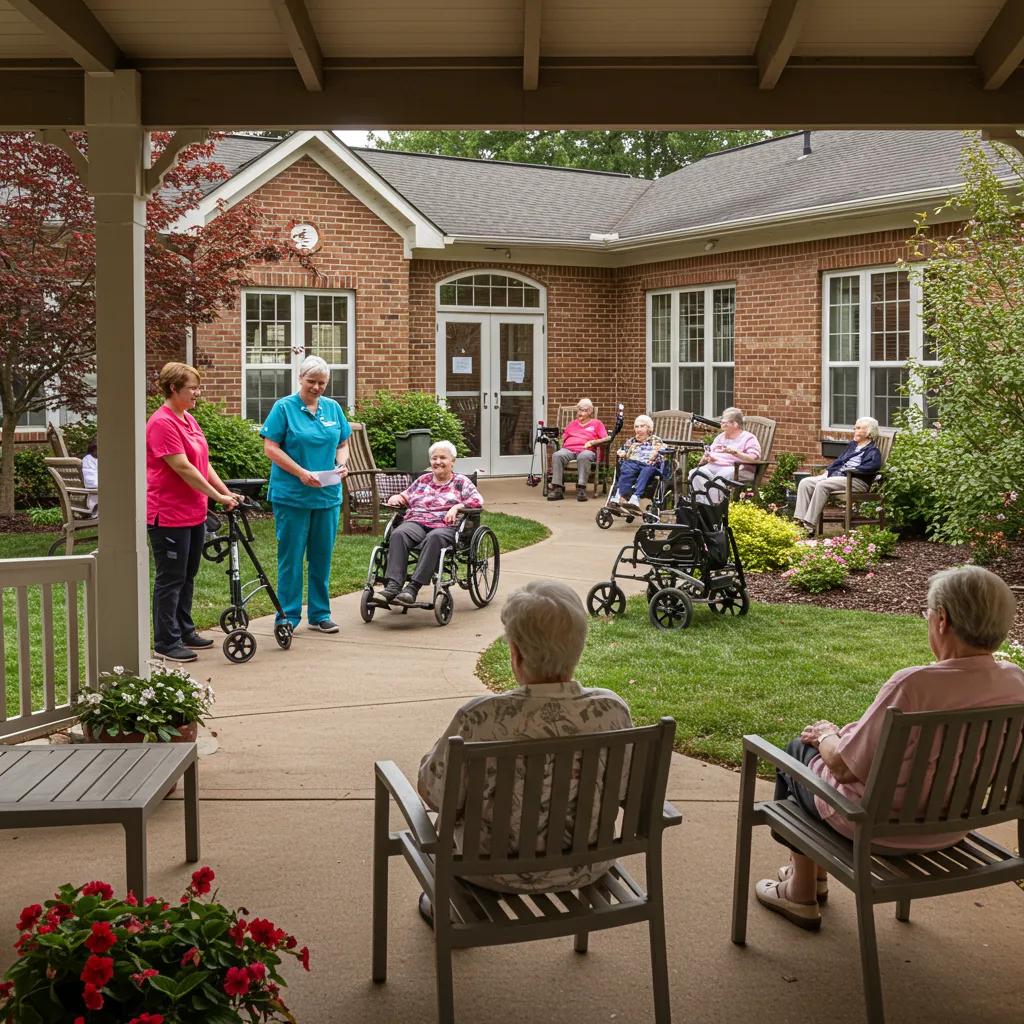
Memory care services center on several clinical and environmental features that address cognitive impairment directly. Staff are trained in dementia-specific communication, behavior management, and de-escalation techniques, and programs emphasize consistency, reminiscence, and meaningful engagement. Secure design elements—such as locked exits, controlled outdoor courtyards, and clear wayfinding—help prevent wandering and reduce anxiety, producing measurable safety benefits. These components increase operational complexity and staffing, which contributes to the specialized cost structure of memory care. For more details on these specialized services, families can visit Braley Care Homes Memory Care Services.
How Does Memory Care Differ from Assisted Living and Nursing Homes?
Memory care differs from assisted living in its greater focus on cognitive safety and structured programming rather than only assistance with activities of daily living, and it differs from nursing homes by providing a more homelike setting with specialized but less intensive medical services. Assisted living typically supports independent seniors with some ADL assistance and social programming, while nursing homes provide skilled nursing and clinical care for high medical acuity. Choosing the right setting depends on clinical need: cognitive instability and wandering risk often indicate memory care, whereas advanced medical or rehabilitative needs point toward nursing home placement.
What Are the Benefits of Specialized Memory Care in West Virginia?

Specialized memory care in West Virginia emphasizes safety, individualized care plans, and staff skilled in dementia-focused interventions, which together can reduce hospitalizations and improve daily quality of life. In-region providers that use small, home-like environments support familiarity and routine, mitigating agitation and promoting dignity for residents. These benefits matter financially because facilities that reduce acute events and rely on consistent, trained staffing can deliver better outcomes even if their monthly cost is higher than generic alternatives. Understanding these outcome differences prepares families to weigh cost against real-world improvements in safety and wellbeing. Learn more about dementia care and Alzheimer’s care options available locally.
What Are the Average Monthly Costs of Memory Care Facilities in West Virginia?
Memory care monthly costs in West Virginia vary by facility type, location, and resident acuity, but a useful statewide range provides families with a planning baseline. Recent industry cost surveys and aggregators typically report memory care in West Virginia falling within a moderate range compared with national averages, reflecting local wage levels and facility types; however, local market conditions and specialized programs create meaningful variance. Below we present the statewide average, city-by-city ranges for key population centers, and the main pricing drivers that explain why one facility may cost more than another. These data help families form realistic budgets and prepare targeted funding plans.
What Is the Statewide Average Cost for Memory Care in West Virginia?
Statewide averages for memory care in West Virginia commonly appear as a range to reflect differences in care level and accommodations; the most practical planning range is presented as an approximate monthly figure with context. This statewide range captures private-pay costs for facility-based memory care and is intended as a budgeting shorthand rather than a quote for any single provider. Because prices change with local demand and service models, families should treat the statewide figure as a starting point and seek facility-specific, personalized estimates to understand final placement expenses.
How Do Memory Care Costs Vary by City: Hurricane, Charleston, Huntington, and Morgantown?
City-level variation reflects differences in local wages, facility supply, and the presence of specialized free-standing memory care homes; urban centers often show higher ranges than smaller towns. The following table presents estimated monthly cost ranges for memory care in several West Virginia cities to help families compare localized budgets. Use this table as a comparative snapshot and contact facilities directly for exact pricing based on room type and clinical needs.
CityTypical Monthly Memory Care Cost RangeNotesHurricane$4,080 – $5,400Local market influenced by proximity to Charleston and specialized providersCharleston$4,500 – $6,000Larger city market with varied facility types and higher demandHuntington$4,500 – $6,000Regional center with a mix of community and institutional providersMorgantown$4,500 – $6,000University-area demand affects staffing and cost levels
This city-by-city comparison highlights that families in different West Virginia communities should expect a range rather than a single price, and it underscores the importance of facility-level quotes for accurate planning.
What Factors Influence Memory Care Pricing in West Virginia?
Several consistent factors drive monthly memory care prices: resident acuity and behavior management needs, staffing ratios and training, room type (private vs shared), included clinical services, and amenities such as secure outdoor spaces. Geographic location and local labor costs affect baseline pricing, while specialized programming—therapeutic activities, individualized care plans, and higher staff credentialing—adds to the cost for better-tailored care. Understanding these factors helps families anticipate why facilities differ and prepares them to ask targeted questions about what is included in any monthly price.
What Financial Assistance Options Are Available for Memory Care in West Virginia?

Families can access multiple funding pathways to offset memory care costs, including state Medicaid programs and waivers, veterans benefits, long-term care insurance, and private financing strategies. Each option has eligibility rules, coverage limits, and application processes that influence suitability and timing; combining options is common for many families. This section explains how Medicaid and VA benefits typically apply in West Virginia, how long-term care insurance functions in dementia cases, and additional strategies families can consider when planning for facility placement and ongoing monthly expenses.
How Does Medicaid Support Memory Care Costs in West Virginia?
Medicaid in West Virginia can help cover long-term care services through specific programs and waivers that fund care delivery, though many waiver programs limit coverage for room and board while paying for eligible services. Eligibility thresholds, asset rules, and program names vary, and families often need caseworker assistance or elder-law guidance to determine practical pathways for applying benefits toward memory care. The table below clarifies how major state programs relate to memory care coverage to help families see where services vs. living costs are supported.
ProgramWhat It CoversEligibility / LimitationsState Medicaid Waiver(s)Clinical memory-care services, in-home alternativesMay not cover full room & board; asset and income limits applyInstitutional MedicaidSkilled nursing level services when clinically indicatedRequires clinical eligibility and application processHome- and Community-Based ServicesService packages to delay institutionalizationCaps and service lists vary by program
These distinctions show why working with a Medicaid specialist or elder-law attorney can be essential to applying benefits effectively for memory care costs.
Memory Care Access and Medicaid in Rural Florida
Older adults in rural areas experience greater risk for Alzheimer’s disease, which increases the need for long-term care (LTC) facilities that can accommodate their needs. Older adults seeking memory care in rural Florida face a significant disparity in access to assisted living communities (ALCs) compared to urban areas. Additionally, those in rural areas tend to have less access to ALCs that accept state subsidized health care. The purpose of this research is to investigate access to ALCs with memory care in Florida in relation to Medicaid acceptance.
Memory Care and Medicaid in Rural Florida
What Veterans Benefits Help Cover Dementia Care in West Virginia?
Veterans and surviving spouses may qualify for VA benefits such as Aid & Attendance, which can supplement monthly income to help pay for memory care services when eligibility criteria are met. Aid & Attendance provides an increase in pension for veterans who require assistance with daily activities or who are housebound, and it can be applied toward facility costs when documented. Families should gather military service records, medical documentation, and financial statements to support claims, and they may benefit from veteran service officers or claims specialists who navigate the application process.
How Can Long-Term Care Insurance Offset Memory Care Expenses?
Long-term care (LTC) insurance typically pays benefits when a policyholder meets specified cognitive or ADL thresholds, and many policies include dementia as a qualifying condition; the scope and duration of benefits vary by contract. To use LTC insurance, families must provide medical records and functional assessments to trigger claims, and they should confirm inflation protection, benefit limits, waiting periods, and how benefits are paid (indemnity vs. reimbursement). Reviewing policy details early—before placement—is crucial because claim approval can require extensive documentation and lead time.
What Other Funding Strategies Can Families Use for Memory Care?
When traditional funding falls short, families commonly explore private-pay arrangements, home equity conversion, family contributions, and structured Medicaid planning with legal guidance to bridge gaps. Each option has trade-offs: private-pay preserves immediate placement choices but draws down assets; home-equity solutions can provide liquidity but carry long-term costs. Consulting a financial planner or elder-law attorney helps families model scenarios that align with care goals, preserve legacy wishes, and optimize benefit coordination.
How Does Braley Care Homes Provide Value for Memory Care Costs in West Virginia?
Braley Care Homes Inc. presents a localized, specialized memory care option that emphasizes a home-like environment and dementia-focused services, offering families an alternative to larger institutional settings. As West Virginia’s only free-standing Alzheimer's and Dementia care facility according to facility materials, Braley Care Homes operates a 16-bed setting designed specifically for memory impairment with secure outdoor space and 24/7 professional staffing. This context helps families evaluate value by comparing included services, specialized staff credentials, and the small-house model’s potential for reduced agitation and higher personalized attention. The subsections below detail why families might consider Braley, what is included in pricing, and how the facility approaches transparency and estimates.
Why Is Braley Care Homes a Smart Investment for Specialized Memory Care?
Braley Care Homes is structured to deliver dementia-specific outcomes through small household size, trained staff, and leadership with clinical social work expertise, which together can produce better day-to-day stability for residents. The facility highlights individualized care plans, secure design, and a staff model focused on consistent relationships—elements that reduce confusion and support adaptive routines for people with memory impairment. For families comparing providers, these operational choices justify cost premiums by prioritizing safety, continuity, and tailored programming, which can reduce emergency interventions and support quality of life. Learn more about the facility’s approach on their About Us page.
What Services and Amenities Are Included in Braley Care Homes’ Pricing?
The facility includes a set of core services intended to meet the needs of residents with memory impairment; understanding what is included helps families compare true value across providers. The table below clarifies included services versus common optional items so prospective families know what to expect and what may generate additional charges before placement.
Service / AmenityIncluded or OptionalDetails / Notes24/7 Professional StaffingIncludedTrained staff available around the clock for safety and careAssistance with ADLsIncludedSupport with dressing, bathing, eating, and mobility as neededMedication AdministrationIncludedOn-site medication management and administrationNutritious MealsIncludedRegular meals and snacks with dietary accommodationsIndividualized ActivitiesIncludedDementia-focused therapeutic activities and social programsSecure Outdoor CourtyardIncludedLocked, safe outdoor space for supervised visits and recreationTransportation or Specialty TherapiesOptionalMay be available or arranged based on needs
How Transparent Is Braley Care Homes About Pricing and Cost Estimates?
Braley Care Homes offers personalized cost estimates following a care assessment that considers clinical needs, room preferences, and individualized service plans; families are encouraged to request a consultation to receive a tailored quote. The facility’s process typically begins with an assessment of care needs, a discussion of included services, and a written estimate that clarifies any optional fees, enabling families to compare offerings confidently. Prospective families can contact the facility to schedule assessments, request tours, and receive clear pricing information aligned to the resident’s care profile. To start this process, families can visit the Care Assessment page or complete a Resident Application.
How Can Families Plan and Prepare for Memory Care Costs in West Virginia?
Effective planning combines clinical readiness, financial preparation, and timely action to secure appropriate placement without unnecessary delay. Start by recognizing common warning signs that trigger an assessment, assemble financial documents, explore funding options early, and schedule tours to compare environments and pricing transparency. The steps below guide families through when to assess, how to request personalized cost consultations, and why in-person facility visits are essential before committing to placement.
When Should You Schedule a Free Care Assessment at Braley Care Homes?
Families should seek an assessment when daily functioning declines—manifested as unsafe wandering, weight loss, frequent missed medications, or caregiver burnout—because earlier evaluation permits smoother transitions and more options. A care assessment at Braley Care Homes helps determine the level of assistance required, identifies urgent safety concerns, and generates a service plan that informs cost estimates. Preparing medical records, medication lists, and recent behavior descriptions speeds the assessment process and yields a more accurate recommendation and timeline for placement. Schedule an assessment through their Care Assessment page.
How Can You Get a Personalized Cost Consultation?
To obtain a personalized cost consultation, families should gather current medical documentation, a list of daily care needs, and financial information that impacts eligibility for benefits; then contact the facility by phone or inquiry to request an appointment. The consultation typically includes a needs assessment, explanation of included services, and a written estimate that outlines optional charges, making it easier to compare alternatives. Expect a clear timeline for receiving the written estimate and an opportunity to ask follow-up questions about payment options and benefit coordination. Contact details and inquiry forms are available on the Contact Us page.
Why Is Touring a Memory Care Facility Important Before Deciding?
A tour allows families to observe staff-resident interactions, assess safety features, inspect living spaces, and sample meals—insights that do not appear on a price sheet but strongly influence resident wellbeing. Use a tour checklist to evaluate staffing visibility, secure outdoor access, activity calendars, and how staff handle common behaviors; ask specific pricing questions about what is included and what triggers additional fees. Observing daily routines and culture during a visit provides critical context to pricing and helps families match a facility’s approach to the resident’s needs.
Transitioning Dementia Patients from Assisted Living to Memory Care Units
The transition of residents with Alzheimer’s disease and related dementias (ADRD) from ALFs to memory care units (MCUs) from the perspective of administrators in three facility types was examined. The study also explored the role of MCUs as part of continuing care retirement communities (CCRCs).
Dementia and transitioning from assisted living to memory care units: Perspectives of administrators in three facility types, SB Laditka, 2010
What Are Common Questions About Memory Care Costs in West Virginia?
This section answers common, practical questions families search for when planning memory care, offering concise, actionable responses to help with budgeting, benefit navigation, and comparative decision-making. Short, direct answers clarify statewide cost ranges, Medicaid applicability, available assistance programs, and how West Virginia’s pricing compares to neighboring states. Where facility-specific pricing is requested, families are advised to obtain a personalized estimate through an assessment and consultation.
How Much Does Memory Care Cost Per Month in West Virginia?
Memory care in West Virginia typically falls within a moderate private-pay monthly range that reflects local market conditions, though exact prices vary by facility, room type, and resident acuity; families should use statewide ranges as planning benchmarks. Because differences in staffing models and specialized programming drive costs, obtaining a personalized facility estimate is essential for accurate budgeting. For precise placement planning, schedule an assessment that results in a written cost estimate reflecting the resident’s needs. Braley Care Homes offers this service through their Care Assessment process.
Does Medicaid Cover Memory Care in West Virginia?
Medicaid can cover certain long-term care services and waivers in West Virginia, but many programs limit coverage of room and board for residential settings while paying for clinical services; eligibility and program rules determine practical applicability. Families should consult a Medicaid caseworker or elder-law professional to understand program options, asset limits, and application steps. Preparing financial documentation and clinical records in advance accelerates the eligibility review and clarifies how benefits may offset care costs.
Are There Financial Assistance Programs for Dementia Care in West Virginia?
Key assistance options include state Medicaid waivers, VA benefits like Aid & Attendance for eligible veterans and surviving spouses, and private long-term care insurance policies that pay under qualifying conditions; each program has distinct application processes and eligibility criteria. Families should identify applicable programs early, gather required documentation, and pursue specialist help for complex claims or planning strategies. Proactive exploration of these programs can materially reduce out-of-pocket monthly costs.
How Does West Virginia Compare to Neighboring States in Memory Care Costs?
West Virginia’s memory care costs are generally competitive with nearby states but can be lower or higher depending on urban center dynamics, specialized provider availability, and local wage scales; cross-state comparisons should account for travel, family involvement, and continuity of care. For families considering out-of-area placement, compare total cost, regulatory differences, and the logistical impacts on visitation and care coordination. Localized cost differences underscore the importance of balancing price against quality and proximity.
How Do Memory Care Costs Compare to Other Senior Care Options in West Virginia?
Comparing memory care to assisted living, nursing homes, and in-home care clarifies when each option is both clinically appropriate and cost-effective. Memory care typically carries a premium over assisted living because of specialized staffing and secure environments, while nursing homes may be more expensive when skilled nursing is required but offer higher clinical oversight. In-home dementia care can be cost-effective short-term but may exceed facility costs as needs intensify. The following subsections quantify typical differences and explain decision drivers to help families choose the right balance of care and cost.
What Is the Cost Difference Between Memory Care and Assisted Living in WV?
Memory care usually costs more than assisted living due to higher staff-to-resident ratios, specialized training, and secure environmental features that manage cognitive risk; this premium reflects enhanced safety and programming. Assisted living focuses on independence with supportive services and typically has lower staffing intensity, translating into lower monthly fees for residents without significant cognitive impairment. When evaluating price differences, consider whether cognitive symptoms require memory-focused interventions that assisted living cannot reliably provide.
How Do Memory Care Costs Compare to Nursing Home Care in West Virginia?
Nursing homes deliver skilled nursing and medical oversight, which can make them more expensive than memory care for residents requiring continuous clinical attention, though pricing depends on private-pay vs. Medicaid arrangements. Memory care fits residents who need cognitive support without the level of medical care that necessitates a nursing home; comparing costs requires assessing clinical needs, potential for Medicare or Medicaid coverage, and long-term care trajectories. Families should align clinical assessments with financial planning to determine the most suitable and sustainable setting.
What Are the Costs of In-Home Dementia Care Versus Facility Care in WV?
In-home dementia care is often billed hourly and can be affordable initially, but as care needs escalate (24-hour supervision, complex behaviors), cumulative costs may exceed facility monthly rates and strain family caregivers. Facility-based memory care consolidates services, supervision, and programming into a single monthly fee, offering predictability and continuous staffing that benefits many dementia cases. Hybrid strategies—combining in-home care with periodic respite or adult day services—may be appropriate for moderate needs but require careful cost modeling to determine long-term sustainability.
Checklist: When comparing options, gather these documents before requesting quotes: Medical assessments and medication lists.Recent behavioral incident notes.Financial and insurance paperwork.Preferred timeline for placement.
Checklist: Key questions to ask providers during comparisons: What services are included in the monthly fee?How are behavior challenges managed and staffed?What are common additional charges and their triggers?How is continuity of care ensured during staff changes?
Checklist: Steps to secure funding and placement: Request personalized cost estimates after an assessment.Explore Medicaid and VA benefits early.Consult financial/elder-law professionals for planning.Schedule tours to verify environment and staffing.
Frequently Asked Questions
What should families consider when choosing a memory care facility?
When selecting a memory care facility, families should evaluate several key factors, including the facility's safety features, staff qualifications, and the types of programs offered. It's essential to consider the environment's homeliness and how well it caters to the specific needs of residents with dementia. Additionally, families should assess the facility's approach to individualized care plans, the availability of therapeutic activities, and the overall atmosphere. Visiting multiple facilities and asking detailed questions can help families make an informed decision that aligns with their loved one's needs. For more information about a specialized provider, visit Braley Care Homes.
How can families prepare for a care assessment at a memory care facility?
Preparing for a care assessment involves gathering essential documents and information that will help the facility understand the resident's needs. Families should compile medical records, a list of medications, and any recent behavioral observations. It's also helpful to outline daily care requirements and any specific concerns regarding safety or health. By providing comprehensive information, families can ensure that the assessment is thorough, leading to a more accurate service plan and cost estimate tailored to their loved one's unique situation. Braley Care Homes offers a detailed Care Assessment to facilitate this process.
What role do family members play in the care of a loved one in memory care?
Family members play a crucial role in the care of a loved one in memory care by providing emotional support, participating in care planning, and maintaining open communication with facility staff. Regular visits can help family members stay informed about their loved one's well-being and progress. Additionally, families can engage in activities with residents, reinforcing connections and familiarity. Being involved in care decisions and advocating for their loved one's needs can significantly enhance the quality of care and overall experience in a memory care setting.
What are the signs that a loved one may need memory care?
Signs that a loved one may need memory care include frequent confusion, unsafe wandering, significant memory loss, difficulty with daily activities, and changes in behavior such as increased agitation or withdrawal. Other indicators include neglecting personal hygiene, experiencing weight loss, or showing signs of caregiver burnout in family members. If these behaviors are observed, it may be time to consider a professional assessment to determine the appropriate level of care and support needed to ensure safety and quality of life.
How can families ensure quality care in a memory care facility?
To ensure quality care in a memory care facility, families should conduct thorough research and visit multiple facilities before making a decision. During visits, they should observe staff interactions with residents, inquire about staff training and turnover rates, and ask about the facility's approach to individualized care. Regular communication with staff and participation in care planning can help families stay informed and involved. Additionally, families should monitor their loved one's well-being and advocate for any necessary changes to improve care quality.
What are the common misconceptions about memory care facilities?
Common misconceptions about memory care facilities include the belief that they are merely nursing homes or that they lack a homelike environment. In reality, many memory care facilities focus on creating a supportive, engaging atmosphere tailored to the needs of residents with dementia. Another misconception is that memory care is only for advanced stages of dementia; however, early intervention can significantly improve quality of life. Understanding the specialized services and benefits of memory care can help families make informed decisions about their loved one's care.

Our clinic largest private mental health partnership, with a carefully selected nationwide team of Psychiatrists.
KEEP IN TOUCH.


CONTACT US
Location:
Braley Care Homes
6192 US 60
Hurricane, WV 25526
Phone Numbers:
Referrals and Inquiries: (304) 767-4033
Facility Phone: (304) 201-3677
Facility Fax: (304) 201-3678
AREAS WE SERVE
BUSINESS HOURS
Monday
9:00am – 6:30pm
Tuesday
9:00am – 6:30pm
Wednesday
9:00am – 6:30pm
Thursday
9:00am – 6:30pm
Friday
9:00am – 6:30pm
KEEP IN TOUCH.
CONTACT US
Location:
Braley Care Homes
6192 US-60
Hurricane, WV 25526
Phone Numbers:
Referrals and Inquiries: (304) 767-4033
Facility Phone: (304) 201-3677
Facility Fax: (304) 201-3678
AREAS WE SERVE
BUSINESS HOURS
Monday
9:00am – 6:30pm
Tuesday
9:00am – 6:30pm
Wednesday
9:00am – 6:30pm
Thursday
9:00am – 6:30pm
Friday
9:00am – 6:30pm