Comparative Analysis: Memory Care Facility Costs in West Virginia vs. Neighboring States
Comparative Analysis of Memory Care Facility Costs in West Virginia vs. Neighboring States
Memory care refers to specialized long-term care for people with Alzheimer’s disease, dementia, and related cognitive impairments, combining secure environments with trained staff and tailored programming. Comparing memory care costs across West Virginia and its neighboring states matters because price differences influence family budgets, eligibility for public benefits, and decisions about relocation or in-state placement. This article explains typical monthly cost ranges and city-level variation in West Virginia, compares state-level averages with Ohio, Pennsylvania, Virginia, Kentucky, and Maryland, and outlines financial-assistance pathways like Medicaid waivers and VA benefits. Readers will also get a practical checklist for choosing a facility beyond price, recent cost trends and projections through 2025, and clear next steps for scheduling assessments or tours. Throughout, the focus is on actionable guidance—how to interpret price quotes, where to prioritize value over sticker price, and how to move from comparison to a placement conversation, including how to schedule a free assessment or tour as the next step.
What Are the Average Memory Care Costs in West Virginia?
Memory care in West Virginia typically combines round-the-clock supervision, assistance with activities of daily living, medication management, and dementia-specialized programming into a monthly fee that covers care services and room-and-board. The mechanism behind pricing is staff intensity and security requirements: higher staffing ratios and locked neighborhoods raise operating costs but directly reduce risk and behavioral escalation. Families therefore get the benefit of safer, more predictable care at higher-priced facilities, while lower-cost options may reflect smaller staff teams or fewer included amenities. Understanding a reliable statewide average helps families budget and compare local quotes. Below we present an estimated statewide range and a city-level breakdown to clarify typical monthly expectations and variables.
How Much Does Memory Care Typically Cost Monthly in West Virginia?
Estimated average monthly memory care costs in West Virginia generally fall within a moderate range compared with national medians, with many families seeing figures in the mid-thousands per month depending on level of care and facility type. What these estimates include varies: most monthly fees cover round-the-clock supervision, ADL assistance, and basic programming, while room configuration and premium services may add to the total. These figures are approximate and intended to help families plan; actual published rates should be obtained directly from facilities and verified during a visit. Remember that the inclusion of medication management, specialized activities, and secured outdoor areas can materially change a quoted monthly price.
Which West Virginia Cities Have the Highest and Lowest Memory Care Costs?
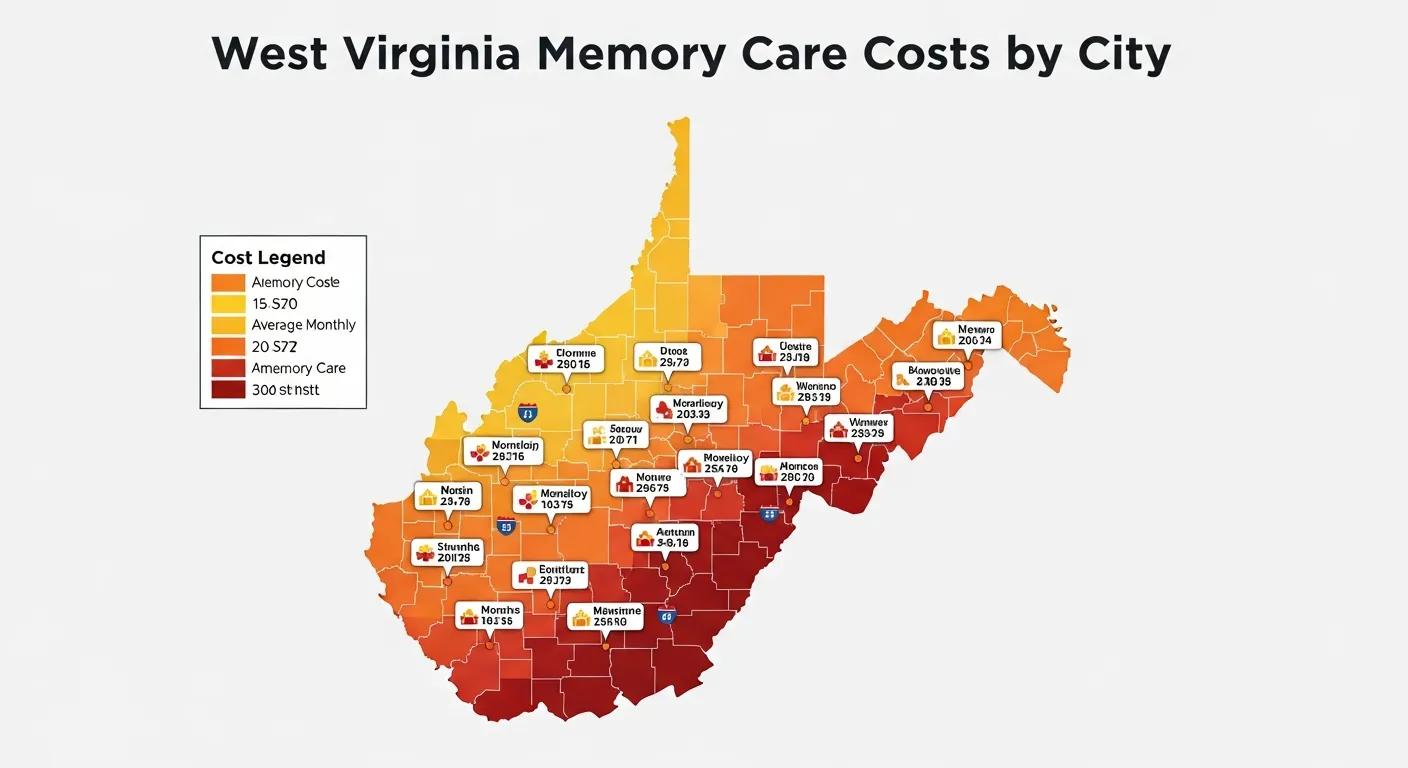
City-level cost variation reflects local demand, wage levels, and proximity to metropolitan centers; coastal or metro-adjacent markets typically command higher rates. The table below offers a quick reference for typical monthly memory care cost estimates by selected West Virginia cities and notes to explain likely drivers of difference. Use this table as a starting point for budgeting and to target city-level inquiries when contacting providers.
CityAverage Monthly Cost (Estimated)NotesCharleston$4,420 - $4,500State capital with mid-to-higher demand and several larger providers. (seniorliving.org)Huntington$4,000 - $4,500Urban center with competitive pricing and mixed facility types. (payingforseniorcare.com)Morgantown$5,500 - $5,810Proximity to university healthcare resources can increase demand. (payingforseniorcare.com)Hurricane$3,800 - $4,000Smaller market; standalone memory care providers can offer competitive rates. (payingforseniorcare.com)
These estimated city ranges reflect typical market differences; Charleston and Morgantown often run higher due to larger facility inventories and local wage rates. Comparing neighborhood-level options within each city during a tour will reveal whether quoted fees align with staffing and program intensity.
What Factors Influence Memory Care Pricing in West Virginia?
Several predictable drivers determine why one facility’s monthly rate is substantially different from another’s, and understanding them clarifies how to evaluate quotes. Staffing ratios, the presence of licensed nurses and trained dementia-care staff, specialized programming, building design (secure exits, monitored courtyards), and whether a facility is a standalone memory care community or a memory neighborhood within a larger assisted living all affect price. Additionally, geographic factors—local wages, real-estate costs, and regulatory compliance expenses—shape local rates. Families should prioritize the cost drivers that most directly affect safety and day-to-day quality, since these deliver tangible benefits to residents’ wellbeing and reduce avoidable hospitalizations.
Key cost drivers include staffing intensity, care level, facility model, and location.
Programs such as individualized activities and secure outdoor spaces tend to increase monthly fees.
Facility type matters: standalone memory care often carries a premium for specialized design and focused staffing.
Evaluating these drivers in a facility tour helps families assess whether higher monthly costs offer proportional improvements in daily life and clinical outcomes.
How Do Memory Care Costs in West Virginia Compare to Neighboring States?
A state-by-state comparison places West Virginia’s market in context and highlights where families may save or pay a premium if considering cross-border placement. Differences arise from cost of living, state reimbursement and waiver structures, and the density of higher-cost metropolitan markets within each neighboring state. Below is a compact comparative table showing estimated average monthly memory care costs by state and a simple delta versus West Virginia to aid quick assessment. Interpreting these deltas requires looking beyond price—families should weigh availability of financial supports and travel logistics when evaluating out-of-state placement.
StateAvg Monthly Memory Care Cost (Estimated)Difference vs WV (Approx.)West Virginia$4,200 - $5,800—Ohio$4,500 - $6,200WV is approximately $300 - $400 less per month on averagePennsylvania$5,000 - $7,000WV is approximately $800 - $1,200 less per month on averageVirginia$4,700 - $6,500WV is approximately $500 - $700 less per month on averageKentucky$4,000 - $5,500Comparable or slightly lower than WV in some regionsMaryland$5,200 - $7,500WV is approximately $1,000+ less per month on average
These comparative estimates highlight why West Virginia is often described as relatively affordable for memory care: fewer large, high-cost metro centers and lower average wage-driven operating costs generally translate to lower monthly fees. However, affordability must be balanced with access to specialized services and family proximity.
What Is the Cost Difference Between West Virginia and Ohio Memory Care Facilities?
West Virginia and Ohio often show modest differences in memory care pricing driven by urban concentration and labor market dynamics. Ohio’s larger metropolitan areas can push averages higher, especially in counties with major hospitals and higher wage expectations, so families may see Ohio rates that are a few hundred dollars per month above comparable West Virginia options. The practical recommendation for families comparing these states is to request itemized fee schedules and to compare included services—an Ohio facility with higher fees may include additional clinical staff or therapies that reduce extra out-of-pocket costs.
Ohio Memory Care Units: Regulations and Facility Profiles
ABSTRACT: Abstract DetailsYear and Degree2017, Master of Gerontological Studies, Miami University, Gerontology.AbstractThe prevalence of Alzheimer's disease (AD) is growing in the United States. Many adults with AD will require long-term care services. Memory care units (MCUs) are a popular type of special care unit within long-term care facilities. Previous research is inconclusive regarding quality of life and quality of care outcomes for MCU residents. MCU regulations are a growing topic in Ohio and the United States. Ohio Governor John Kasich signed House Bill 470 into law effective March 21, 2017, requiring the development of MCU recommendations within six months. Using the 2005 and 2013 Ohio Biennial Survey of Long-Term Care Facilities, this study examined the number of MCUs, developed a profile of facilities with and without a MCU, and determined facility characteristics significantly associated with operating a MCU. Logistic regression analysis determined that profit status, facility siz
How Does Pennsylvania’s Memory Care Pricing Stack Up Against West Virginia?
Pennsylvania typically reports higher memory care averages because of dense metropolitan regions and higher regional costs that push provider operating expenses up. That often results in Pennsylvania facilities charging several hundred to over a thousand dollars more per month than many West Virginia counterparts. Families considering Pennsylvania placements should weigh travel distance against program availability, and factor in any state-specific reimbursement programs that might offset higher sticker prices for eligible applicants.
What Are the Memory Care Cost Variations in Virginia, Kentucky, and Maryland?
Virginia, Kentucky, and Maryland present mixed comparisons: Maryland—especially near the DC corridor—tends to be more expensive, while parts of Kentucky can be comparable or cheaper than West Virginia depending on local markets. Virginia often falls between WV and MD on price due to a mix of high-cost Northern Virginia and more moderate rural regions. The takeaway is that regional pockets within each state can outperform statewide averages; families should compare specific county-level data and service inclusions rather than relying solely on state averages.
Why Is West Virginia Considered More Affordable for Memory Care?
West Virginia’s relative affordability stems from structural economic factors: lower average regional wages, fewer large metropolitan centers that command premium pricing, and market composition with more small-to mid-sized providers. This affordability can align with strong quality in selective providers that focus exclusively on memory care, offering specialized staffing and home-like environments without the overhead of multi-level campuses. For example, some standalone memory care providers in West Virginia offer competitive monthly rates while maintaining 24/7 supervision and secure outdoor courtyards. Families should therefore evaluate both cost and specific quality indicators to identify high-value options.
What Financial Assistance Options Are Available for Memory Care in West Virginia?

Navigating payment pathways can substantially reduce out-of-pocket costs for eligible families; primary channels include Medicaid waiver programs, VA benefits, long-term care insurance, and targeted state supports. Each program operates with eligibility rules and coverage scopes that determine whether it pays for services, room and board, or only care components. The table below summarizes key assistance programs, who they serve, and what they typically cover or limit, providing families a clear starting point for benefit screening and application planning.
ProgramEligibility / What it CoversNotes / LimitationsWV Medicaid WaiverEligibility based on income and clinical need; may cover care servicesOften covers services but not full room & board; application required (payingforseniorcare.com)VA Aid & AttendanceEligible veterans/spouses with qualifying service and financial criteriaCan offset monthly care costs when approved; requires documentation (payingforseniorcare.com)Long-Term Care InsurancePolicy-dependent; may cover memory care if benefit triggers are metCoverage varies widely; families must review policy terms and caps (payingforseniorcare.com)
This table clarifies that assistance often covers care services while room-and-board may remain a private responsibility; families should contact program administrators to confirm specifics and to get help with applications.
How Does West Virginia Medicaid Support Memory Care Costs?
West Virginia Medicaid can support memory care primarily through waiver programs that fund home- and community-based services or covered care components in licensed settings when clinical eligibility is met. Eligibility hinges on income/resource thresholds and assessed care needs; waivers typically reimburse for care services such as personal care and medication management rather than full room-and-board. Families should prepare documentation of income, assets, and medical assessments and consult West Virginia DHHR resources or local caseworkers for application assistance. A practical next step is to request a benefits screening early in the placement process to understand likely coverage.
What Veterans Benefits Can Help Offset Memory Care Expenses in West Virginia?
Veterans and surviving spouses may qualify for VA Aid & Attendance and related pensions that provide monthly payments to offset long-term care costs. Eligibility requires proof of qualifying military service, medical need for assistance, and meeting financial thresholds; benefit amounts vary by individual circumstances. Families initiating a VA benefits claim should gather service records, financial documentation, and medical assessments, and consider working with a VA-accredited representative to streamline the process. These benefits can materially reduce net monthly expenses when approved, making them a key consideration for veteran households.
Can Long-Term Care Insurance and Other Financial Aids Reduce Memory Care Costs?
Long-term care insurance often covers memory care when policy conditions are met, but coverage depends on trigger events, elimination periods, and daily or monthly caps. Private pay strategies, retirement savings, and structured asset conversions are additional options families explore alongside insurance claims. Families should review policies for cognitive-impairment triggers and submit claims early, and they should seek financial planning advice to evaluate hybrid strategies that combine benefits, private funds, and assistance programs. Being proactive with documentation and claim submission can accelerate benefit realization and reduce financial stress.
Common financial options include Medicaid waivers, VA benefits, and LTC insurance.
Policy review and early application are essential to unlock potential offsets.
Seek help from benefit counselors or accredited representatives to improve approval odds.
These choices shape net cost and should be evaluated concurrently with placement discussions to build a realistic budget.
How Should Families Choose the Right Memory Care Facility Beyond Cost?
Selecting a memory care facility requires assessing quality indicators that directly affect daily wellbeing, not just monthly price: staffing qualifications, secure design, individualized activities, medication practices, and the overall environment. The mechanism linking these features to outcomes is straightforward: higher staff training and well-designed environments reduce agitation, falls, and hospital transfers, which in turn improve resident quality of life and lower incidental costs. Families gain value by prioritizing measurable quality markers and by verifying those markers during in-person tours. Below is a practical checklist to guide visits and conversations with prospective providers.
Staff qualifications and consistent staffing: verify training in dementia care and staff-to-resident ratios.
Environment and safety features: check for secure exits, monitored common areas, and a safe outdoor courtyard.
Individualized programming: ask how activities support memory, orientation, and meaningful engagement.
Medication management and clinical oversight: confirm nurse involvement and medication review processes.
Family communication and care planning: ensure regular updates and collaborative care plans.
Use this checklist during visits to compare facilities beyond headline prices and to identify trade-offs where higher cost delivers tangible advantages in safety or services. After using the checklist, families should request sample care plans and review contract terms to understand what is included in the monthly fee.
Why Is Quality of Care and Environment Important When Considering Memory Care?
Quality and environment directly affect resident outcomes—well-trained staff reduce behavioral crises, appropriate design minimizes wandering and falls, and engaging activities preserve function longer. The reason is that dementia-responsive practices and predictable routines lower stress and agitation, improving nutrition, sleep, and participation in care interventions. Families benefit from selecting environments that emphasize dignity and engagement because these factors correlate with fewer emergency hospitalizations and better daily comfort. During tours, observe residents’ interactions and ask staff how they individualize care to confirm whether quality claims align with lived experience.
What Unique Benefits Does Braley Care Homes Offer for Memory Care in West Virginia?
Braley Care Homes Inc. is West Virginia’s only free-standing Alzheimer’s, Dementia, and specialized memory care facility, offering specialized memory care within a home-like environment and secure outdoor courtyard. The facility emphasizes individualized programming, 24/7 supervision, and a care team that includes nurse aides, LPNs, RNs, an LICSW, and an activity coordinator—factual attributes that align with key quality indicators families should prioritize. Owner/administrator Chris Braley is a Licensed Independent Clinical Social Worker (LICSW) who brings personal family experience with dementia to the organization’s approach, reinforcing provider empathy and clinical perspective. If you want to take the next step after comparing options, schedule a tour or call for placement inquiries to see how these features match your family’s priorities.
How Can Personalized Care Impact Overall Value Despite Cost Differences?
Personalized care often reduces residual costs by preventing avoidable events: tailored behavioral strategies can lower the frequency of crisis interventions, and consistent staffing reduces transitions that trigger confusion and hospital visits. The mechanism is that individualized plans target specific triggers and routines, promoting stability and preserving function, which translates into fewer episodic healthcare expenses. Examples include customized activity schedules that reduce agitation in late afternoon hours and medication reviews that prevent polypharmacy complications. Families should therefore evaluate personalization practices as a core component of “value,” not merely as an add-on, since better-tailored care frequently improves outcomes while stabilizing long-term costs.
What Are the Latest Trends and Projections for Memory Care Costs in West Virginia and Surrounding Areas?
Recent trends through 2024–2025 show upward pressure on memory care pricing driven by labor costs, inflation in operational expenses, and increased demand for dementia-specialized services. The result is modest year-over-year increases in average monthly rates, with projected continued growth as facilities adapt staffing models and compliance standards. For families planning placement in the near term, these trends mean budgeting for gradual increases and investigating fixed-fee contract options where available. Understanding these drivers helps families time placement decisions and plan financial strategies that anticipate likely cost trajectories.
How Have Memory Care Costs Changed in West Virginia Over Recent Years?
Year-over-year, memory care pricing has moved upward due to higher wages and increased regulatory expectations for specialized dementia programming and secure environments. These changes have led facilities to adjust their fee structures to sustain staffing ratios and training investments that directly support resident safety. As a practical indicator, families should expect modest increases during initial contract periods and should request historical rate-change information from providers to better forecast future expenses. Tracking these changes informs whether a facility’s current price trend aligns with regional patterns or represents an outlier.
What Are the 2024 and 2025 Cost Projections for Memory Care in West Virginia?
Projections for 2024 and 2025 anticipate continued, gradual increases in monthly memory care costs, primarily reflecting labor and supply inflation and the drive toward higher clinical staffing in memory-focused communities. These projections suggest families should account for periodic rate adjustments in their long-term budgets and consider locking in placement or exploring benefit timelines to mitigate exposure to future increases. Practical advice is to secure written rate-notice policies in admission agreements and to perform a benefits check to maximize available offsets before rates rise further.
How Do Inflation and Market Factors Affect Memory Care Pricing Regionally?
Macro factors like inflation, labor shortages, and supply-chain pressures translate directly into facility operating costs and therefore monthly pricing. When labor markets tighten, facilities increase wages or use agency staffing, both of which raise per-resident costs; similarly, higher utility and food prices increase base operating expenses. Families can respond by comparing provider efficiency and by asking how facilities manage inflation—options include phased rate increases, bundled services, or financial counseling. Anticipating these market forces helps families negotiate contracts and to plan for realistic, long-term care budgets.
What Are Common Questions About Memory Care Costs in West Virginia?
Families frequently ask about how memory care compares to assisted living, relative affordability versus neighboring states, and which financial aids are most accessible—answers should be short, actionable, and geared toward the next step of visiting or applying for benefits. Below are concise responses to common queries, followed by a step-by-step guide for scheduling a free assessment or tour at Braley Care Homes to convert research into action.
How Much Does Memory Care Cost Compared to Assisted Living in West Virginia?
Memory care typically costs more than standard assisted living because it includes higher staffing ratios, dementia-trained personnel, and secure environmental features that reduce risk of wandering. Expect a measurable monthly premium for memory care that reflects these additional services; families should compare line-item inclusions to determine true cost differences. When memory impairments interfere with safety or daily functioning, memory care is often the appropriate level despite higher monthly fees.
Is Memory Care More Affordable in West Virginia Than Neighboring States?
Yes, West Virginia is generally more affordable than several neighboring states, especially metro-influenced markets in Pennsylvania and Maryland, due to lower local wage pressures and fewer large urban centers. That affordability can offer strong value when paired with high-quality, specialized providers, but families should still verify services included in each rate. Use the state comparison table earlier in this article to identify specific deltas and to guide targeted inquiries.
What Financial Aid Programs Are Most Accessible for West Virginia Families?
The most accessible programs for many families are the West Virginia Medicaid waiver programs and VA Aid & Attendance for eligible veterans and surviving spouses; long-term care insurance can also cover memory care depending on policy terms. Each option has eligibility rules and documentation requirements, so families should initiate benefit screenings early. Contacting local aging services or benefit counselors can clarify program fit and application steps.
Medicaid waivers: often cover care services when clinically eligible.
VA Aid & Attendance: provides monthly offsets for qualifying veterans and spouses.
LTC insurance: review policy triggers and caps; submit claims early.
After this initial triage, families should pursue the program that most likely reduces net monthly obligations while supporting a timely placement.
How Can Families Schedule a Free Assessment or Tour at Braley Care Homes?
To schedule a free assessment or tour at Braley Care Homes Inc., follow these steps to move from research to an in-person visit and placement conversation. First, call Braley Care Homes at the listed phone number to request a free assessment or to schedule a tour; staff will ask basic background questions to prepare for your visit. Second, prepare relevant medical summaries and a brief list of current medications and behaviors to share during the assessment. Third, plan to meet with an administrator and request to see sample care plans and the secure outdoor courtyard during your tour. If you prefer an in-person discussion to begin placement inquiries, schedule a tour, call us for placement inquiries, or request a free assessment to start the process. You can also learn more about our resident application process.
Call Braley Care Homes at 304-767-4033 to request a free assessment or schedule a tour.
Gather medical summaries and current medication lists to bring or have ready for the assessment.
During the tour, ask about staffing ratios, individualized programming, and contract terms.
These steps are designed to make the transition from comparison to placement simple and informative; Braley Care Homes offers in-person tours and free assessments to help families evaluate fit and next steps.
Frequently Asked Questions
What Should Families Look for When Touring Memory Care Facilities?
When touring memory care facilities, families should prioritize several key factors. Look for staff qualifications, including training in dementia care and appropriate staff-to-resident ratios. Assess the environment for safety features like secure exits and monitored areas. Inquire about individualized programming that supports residents' cognitive engagement and well-being. Additionally, confirm the involvement of clinical staff in medication management. Observing interactions between staff and residents can also provide insight into the facility's culture and quality of care.
How Can Families Prepare for a Free Assessment at a Memory Care Facility?
Preparing for a free assessment at a memory care facility involves gathering essential information. Families should compile medical summaries, including diagnoses and current medications, to share with the assessment team. It’s also helpful to prepare a list of specific needs or concerns regarding the potential resident's care. This preparation allows the facility staff to tailor their assessment and recommendations effectively. Additionally, consider writing down questions to ask during the assessment to ensure all concerns are addressed.
What Are the Key Differences Between Memory Care and Assisted Living?
Memory care and assisted living serve different needs, primarily based on the level of cognitive impairment. Memory care facilities provide specialized support for individuals with Alzheimer’s, dementia, and other cognitive disorders, featuring trained staff and secure environments to prevent wandering. In contrast, assisted living focuses on helping residents with daily activities like bathing and meal preparation, without the specialized care for memory issues. Families should assess the specific needs of their loved ones to determine the most appropriate care setting.
What Are the Benefits of Choosing a Standalone Memory Care Facility?
Choosing a standalone memory care facility can offer several advantages. These facilities are specifically designed to cater to the unique needs of individuals with cognitive impairments, providing a secure environment and specialized programming. The dedicated focus on memory care often results in higher staff training and better resources tailored to dementia care. Additionally, standalone facilities may foster a more home-like atmosphere, which can enhance residents' comfort and quality of life, making them a compelling option for families seeking specialized care.
How Can Families Evaluate the Quality of Care in Memory Care Facilities?
Evaluating the quality of care in memory care facilities involves several steps. Families should inquire about staff qualifications, including training in dementia care and the facility's staff-to-resident ratios. Observing the environment for safety features and engaging activities is crucial. Additionally, families can ask for references or testimonials from current residents' families. During tours, pay attention to staff interactions with residents, as positive engagement can indicate a supportive and caring environment that prioritizes residents' well-being.
What Trends Are Influencing Memory Care Costs in West Virginia?
Current trends influencing memory care costs in West Virginia include rising labor costs, inflation, and increased demand for specialized dementia services. As facilities adapt to these changes, families can expect gradual increases in monthly rates. Additionally, the growing emphasis on higher clinical staffing and improved care standards may also contribute to cost adjustments. Families should stay informed about these trends to better plan their budgets and explore options for locking in rates or securing financial assistance.
What Steps Can Families Take to Reduce Memory Care Costs?
To reduce memory care costs, families can explore several strategies. First, investigate financial assistance programs such as Medicaid waivers and VA benefits, which can significantly offset expenses. Additionally, consider long-term care insurance if applicable. Families should also compare multiple facilities to find the best value, focusing on included services rather than just monthly fees. Engaging in proactive financial planning and discussing potential discounts or payment plans with facilities can further help manage costs effectively.
