Top 10 Criteria to Evaluate Local Memory Care Programs for Quality and Effectiveness
Top 10 Criteria to Evaluate Local Memory Care Programs for Quality and Effectiveness
Memory care programs are specialized long-term care services designed to support people with Alzheimer’s disease and other dementias by combining environmental design, clinical oversight, and personalized programming to reduce risk and improve daily functioning. According to the Alzheimer’s Association, over 6 million Americans are living with Alzheimer’s disease, highlighting the critical need for high-quality memory care services. Assessing quality and effectiveness requires understanding how staff expertise, safety features, individualized care plans, environment, medical oversight, transition processes, family communication, costs, licensing, and culture interact to produce better outcomes for residents. Families researching options need a structured checklist that explains what to look for during tours, what questions to ask, and which observable indicators signal consistent, respectful care. This article outlines ten evidence-based criteria and practical evaluation steps you can use when comparing local memory care programs, with concrete examples that illustrate how these criteria look in practice and how they translate into safer placements and higher quality of life. For those interested in exploring personalized options, Braley Care Homes offers comprehensive memory care services tailored to individual needs.
What Are the Key Staff Expertise and Training Requirements for Quality Memory Care?
Staff expertise in memory care means that care teams possess dementia-specific knowledge, licensed clinical oversight, and ongoing training so they can prevent and respond to behavioral and medical challenges effectively. The mechanism of quality is competency: staff trained in de-escalation, validation, and person-centered communication reduce agitation and improve engagement, producing measurable benefits such as fewer crises and better daily routines. Research published in the Journal of the American Geriatrics Society shows that specialized dementia training for staff significantly reduces behavioral symptoms and improves quality of life for residents. When evaluating a program, verify documented training hours, named credentials on file, and on-site clinical oversight to confirm those outcomes. Knowing what credentials and topics to look for helps families prioritize facilities that invest in clinical depth and staff development. For more about the philosophy and team behind such care, visit Braley Care Homes About Us.
Why Is Specialized Dementia and Alzheimer’s Training Essential for Staff?
Specialized dementia training gives frontline caregivers the skills to interpret behaviors as unmet needs and to apply techniques like validation, redirection, and environmental adjustments that prevent escalation. Training focuses on communication strategies, behavior management, activity adaptation, and safety protocols, and these components directly reduce falls, agitation, and unnecessary hospital transfers. A 2019 study by the National Institute on Aging found that dementia-specific training programs reduce hospitalizations by up to 30% among memory care residents. Ask facilities to describe training modules and provide examples of staff responses to common scenarios, such as sundowning or food refusal. Understanding these training outcomes helps families assess whether staff can translate knowledge into daily compassionate care.
The effectiveness of specialized dementia training for healthcare professionals is well-documented, highlighting its importance in enhancing care quality.
Dementia Training for Healthcare Professionals: Effectiveness Review
Dementia training for healthcare professionals: A systematic policy and evidence review. This review aims to identify and synthesize evidence on the effectiveness of dementia training programs for healthcare professionals. The review covers various aspects of dementia care, including communication strategies, behavioral management, and person-centered care. It also examines the impact of training on staff knowledge, skills, attitudes, and ultimately, on patient outcomes. The findings of this review can inform the development and implementation of effective dementia training programs in healthcare settings.
Dementia training for healthcare professionals: A systematic policy and evidence review, S Zabihi, 2025
How Does Braley Care Homes Ensure Staff Competency and Compassion?
Braley Care Homes demonstrates staff competency through documented, specialized Alzheimer’s and dementia training and licensed clinical leadership that guides care decisions and staff development. Staff complete focused training hours on dementia care topics and work under licensed social-work oversight, which supports consistent behavior planning and compassionate communication. When families tour a facility, they should request examples of training topics, staff credentials, and observations of staff-resident interactions to verify competency. Seeing staff apply validation and person-centered techniques in real time is the clearest indicator that training translates into resident well-being.
RoleRequired Training / CredentialTypical On-site AvailabilityLicensed Clinical Social Worker (LICSW)Advanced dementia care, clinical supervisionLeadership and care-plan oversightRegistered Nurse (RN)Medication management, clinical assessmentsOn-call/regular assessmentsLicensed Practical Nurse (LPN) / Caregiver30+ hours dementia-specific modules, behavior supportDaily direct care and routines
This table compares common memory care roles, the training or credential families should expect, and how those roles function on-site to support resident care.
What Is the Ideal Staff-to-Resident Ratio in Memory Care Facilities?
An effective staff-to-resident ratio balances safety, engagement, and individualized attention; daytime ratios are typically higher to support activities and mealtimes, while night staffing focuses on safety and monitoring. The Alzheimer’s Association recommends a minimum of one staff member for every six residents during the day in memory care settings to ensure adequate supervision and engagement. Ratios affect response time, one-on-one engagement, and the ability to confidently manage behavioral episodes, so ask providers for daytime, evening, and night ratios as well as how they adjust staffing during activities or when acuity increases. During tours, observe whether staff can converse with residents without appearing rushed and whether caregivers know resident names and preferences. Understanding ratios helps families evaluate whether staff capacity aligns with residents’ needs and facility promises.
Key staff ratio questions to ask during tours: What are your typical daytime and nighttime staff-to-resident ratios? How do you adjust staffing during activities, mealtimes, or increased acuity? Can you provide examples of how staffing levels impacted care recently?
These questions help uncover whether staffing patterns support consistent, personalized care rather than episodic response.
How Do Personalized Care Plans and Activities Impact Memory Care Effectiveness?

Personalized care plans are documented strategies that translate assessment data into daily routines, therapeutic activities, and behavioral supports tailored to a resident’s history and abilities, and they work by reducing triggers and increasing meaningful engagement. Mechanistically, individualized programming leverages residual memories and preferences to anchor routines and to shape activities that improve mood, cognition, and participation. A 2020 report from the National Institute on Aging emphasizes that personalized activities can reduce agitation and improve cognitive function in dementia patients. Evaluating a program means reviewing sample care plans, activity schedules, and evidence of ongoing plan updates based on reassessment. High-quality programs will demonstrate clear links between assessment findings and specific activity or environmental adjustments that benefit the resident. For detailed service descriptions, see Braley Care Homes Memory Care Services and their specialized Alzheimer’s Care and Dementia Care programs.
What Types of Cognitive and Therapeutic Activities Support Memory Care Residents?
Effective activity programs combine cognitive stimulation, sensory engagement, and social connection to enhance function and lower distress; evidence-based options include music therapy, reminiscence sessions, structured exercise, art activities, pet therapy, and small-group cognitive exercises. Each activity type targets different mechanisms: music taps emotional memory to reduce agitation, exercise improves mobility and mood, and reminiscence connects life history to identity and social interaction. Families should request sample weekly schedules and observe how activities adapt to varying ability levels to ensure inclusive participation. A diverse activity portfolio increases opportunities for success and sustained engagement for residents with dementia.
Examples of therapeutic activities to evaluate: Music and reminiscence sessions tailored to individual history. Small-group exercise and balance programs that reduce fall risk. Pet and sensory therapy that calms agitation and prompts interaction.
These activity examples show how different modalities support cognitive, social, and physical well-being.
How Are Care Plans Tailored to Individual Needs and Residual Memories?
Care plans begin with structured assessments that capture life history, routines, triggers, and functional abilities, then translate those data into day-to-day supports such as preferred meal choices, calming techniques, and meaningful activities. The process includes family interviews, behavior profiles, and iterative reassessments that refine interventions over the first 30–90 days.
A useful indicator is whether facilities document specific life-story details and use them to guide activity placement and communication strategies. Ongoing monitoring and family input ensure plans evolve as residents change, preserving dignity and optimizing comfort. For families considering placement, Braley Care Homes offers a care assessment to personalize planning and support transitions.
Why Is Social Engagement Important in Memory Care Programs?
Social engagement decreases isolation, supports mood stabilization, and stimulates cognitive processes through familiar interactions and shared activities, thereby lowering the frequency of behavioral incidents tied to boredom or loneliness. Mechanistically, regular social contact sustains neural pathways involved in language and memory and provides opportunities for staff to observe subtle changes in function. The World Health Organization reports that social isolation is a significant risk factor for cognitive decline, underscoring the importance of social programs in memory care. Families should evaluate the balance between group programming and one-on-one engagement and ask how staff adapt interactions for varying levels of cognition. Programs that foster consistent social roles and opportunities for meaningful contribution support long-term well-being.
What Safety and Security Features Should You Look for in a Memory Care Facility?
Safety in memory care combines secure design, operational procedures, and monitoring systems to prevent elopement, ensure rapid emergency response, and preserve resident dignity. Effective features include controlled entries, safe wandering paths, unobtrusive surveillance in common areas, and clear emergency protocols; these elements reduce risk and improve response coordination when incidents occur. According to the Centers for Disease Control and Prevention (CDC), falls and wandering are leading causes of injury in dementia patients, making safety features critical. When assessing a facility, observe how design choices and staff practices work together to maintain safety without creating an institutional atmosphere. Clear policies and visible practices that prioritize both protection and autonomy indicate thoughtful safety planning.
Which Safety Measures Prevent Wandering and Ensure Resident Security?
Preventing wandering relies on secure perimeter controls, monitored exit points, wander-reduction design, and staff protocols that identify and respond to elopement risk promptly. Effective measures include locked entries with controlled access, secure outdoor areas for safe exploration, wearable alert systems when needed, and staff training in rapid response and redirection techniques. Families should ask about last-known elopement drills, response time expectations, and how the facility evaluates ongoing wandering risk. Observing secure yet accessible wandering paths that end in pleasant, supervised destinations signals both safety and quality of life.
Safety FeatureAttributeBenefitControlled entry / locked doorsMonitored access points with staff oversightReduces elopement risk and unauthorized exitsSafe wandering pathsEnclosed outdoor and indoor loopsAllows movement and reduces agitation safelyWearable alert systemsResident-worn sensors or alert proceduresFaster detection and retrieval if needed
This table maps core safety features to their attributes and the safety benefits families should expect to see in practice.
How Do Video Surveillance and Emergency Protocols Enhance Safety?
Video surveillance in common areas provides situational awareness and documentation that supports quality reviews and faster incident response while preserving privacy by excluding private rooms. Emergency protocols, including medical response procedures and evacuation plans, establish clear roles and communication pathways to protect residents during crises. Families should inquire about surveillance policies, who has access to footage, and how frequently emergency drills occur. Transparency about surveillance and protocols reassures families that safety measures are active, standardized, and respectful of resident dignity.
What Facility Design Elements Promote a Secure and Comfortable Environment?
Dementia-friendly design uses clear sightlines, consistent signage, home-like furnishings, and accessible outdoor areas to promote orientation, reduce confusion, and encourage safe independence. Design choices such as color cues, familiar materials, and personalized rooms support recognition and decrease stress, while staff-visible nurse stations and unobtrusive monitoring enable quick assistance. During tours, note whether furnishings feel residential, whether hallways end in pleasant destinations, and whether signage is simple and legible. Thoughtful design balances safety with comfort and supports daily rhythms that reduce anxiety and enhance engagement.
How Does the Facility Environment and Design Affect Memory Care Quality?
The built environment shapes daily experiences for people with dementia by influencing orientation, mobility, and social interaction; a thoughtfully designed facility reduces triggers, supports routines, and fosters resident autonomy. Mechanistically, environmental cues and scaled spaces help preserve independence and reduce agitation, which in turn lessens the need for reactive interventions. Families should evaluate whether spaces feel home-like, whether layouts permit safe wandering, and whether cleanliness and maintenance are consistently upheld. The alignment of environment with care philosophy is a strong predictor of consistent, humane memory care.
What Makes a Memory Care Facility Feel Like a Home-Like Setting?
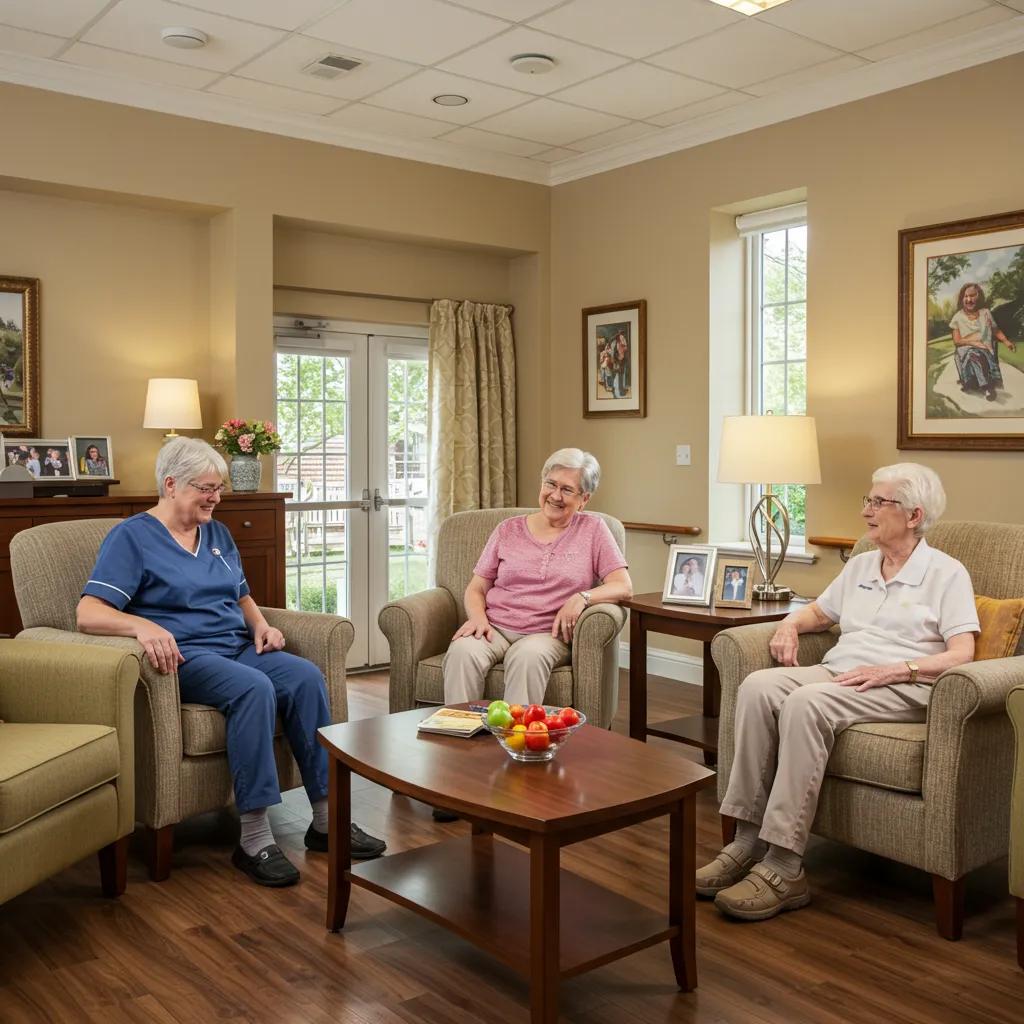
A home-like setting emphasizes residential scale, personal items, communal dining, and smells or routines that mirror a household, which together support familiarity and comfort for residents. These elements reduce institutional cues that can increase anxiety, replacing them with predictable rituals and opportunities for participation in daily life.
Observable indicators include visible personal photos, adjusted lighting, and staff encouraging participation in small household tasks. Facilities that support personalization and family-style interactions often see higher engagement and calmer communities.
How Does Facility Layout Support Safe Wandering and Resident Comfort?
Layouts that employ circular or looped paths, clear visual endpoints, and accessible outdoor areas let residents explore without encountering dead ends that can cause frustration and confusion. Adequate sightlines allow staff to supervise safely without constant interruption to residents’ autonomy, and defined destinations such as gardens or activity nooks provide purposeful wandering options.
On tours, look for unobtrusive staff visibility, logical wayfinding, and rest areas that invite pause. A layout that balances exploration with supervision contributes directly to both safety and quality of life.
Why Is Cleanliness and Maintenance Important in Memory Care Facilities?
Consistent cleanliness and timely maintenance protect health through infection control, reduce odors that can distress residents, and reflect organizational attention to dignity and order. Regular housekeeping schedules, clear laundry protocols, and quick repair responses minimize environmental stressors and signaling of neglect. Families should ask about cleaning frequencies, infection-prevention policies, and how maintenance issues are logged and resolved. A well-maintained environment demonstrates operational competence and supports resident comfort and safety.
What Health and Medical Support Services Are Essential in Memory Care Programs?
Essential medical support includes safe medication management, access to licensed nurses and physicians, and coordination with external providers and telehealth when needed to maintain continuity of care. The mechanism of quality is clinical integration: medication reconciliation, nursing assessments, and physician oversight reduce adverse events and ensure timely interventions for changing needs. According to a 2021 study in BMC Geriatrics, integrated medical oversight in memory care reduces hospital readmissions by 25%. Families should confirm medication administration protocols, nursing availability, and how the facility coordinates hospital transfers or specialty care. Robust medical supports minimize preventable complications and bolster resident stability.
How Is Medication Management Handled in Quality Memory Care?
Quality medication management uses secure storage, accurate medication administration records (MAR), licensed oversight for administration, and regular review for appropriateness and interactions. Processes include reconciliation at admission, clear family notification protocols for changes, and incident reporting for errors with corrective actions. Red flags include unsecured meds, inconsistent MAR documentation, or staff reluctance to explain administration processes. Families should ask for examples of MAR practices and how the facility communicates medication changes to family and prescribers.
What Role Do Licensed Nurses and Physicians Play in Resident Care?
Registered nurses (RNs) and licensed practical nurses (LPNs) conduct assessments, manage medications, and coordinate clinical interventions while physicians or nurse practitioners provide diagnostic oversight and care-plan authorization. Their roles ensure clinical stability through regular monitoring, chronic-condition management, and escalation for acute events. Facilities should explain on-site vs. on-call clinician availability, how often physicians review plans, and coordination protocols for hospital transitions. Clear clinical roles and pathways reduce delays in care and support safer outcomes for residents.
How Does Braley Care Homes Provide Continuous Medical Oversight?
Braley Care Homes integrates licensed clinical oversight into daily operations through on-site nursing support and leadership from a licensed clinical social worker who guides behavior management and care planning. The facility emphasizes regular staff training, documented procedures for medication management, and visible clinical involvement in assessments and plan reviews. Families touring the home can ask about nurse availability, clinical oversight routines, and examples of how clinical staff coordinated care during transitions. Demonstrating active clinical engagement reassures families that medical needs receive ongoing attention.
Medical Support RoleAttributeValue to ResidentRN / LPNMedication administration and assessmentsReduces medication errors and monitors clinical changesPhysician / NPCare-plan approval and clinical oversightEnsures medical review and timely treatment adjustmentsClinical Social Work (LICSW)Behavioral oversight and family coordinationSupports behavior plans and caregiver communication
This comparison clarifies how different clinical roles contribute to safe, integrated medical support within memory care programs.
How Should Resident Assessment and Transition Processes Be Conducted?
Resident assessment and transition processes begin with comprehensive pre-admission evaluations that capture medical status, functional ability, life story, and behavioral triggers; these data guide individualized planning and reduce transition-related stress. Well-structured transitions use gradual orientation, family involvement, and clear communication between sending and receiving providers to decrease delirium and agitation. Families should expect documented behavior-profile forms, a clear admission timeline, and scheduled reassessments in the first 30–90 days. Thoughtful assessment and transition protocols lower the risk of avoidable complications and help residents adapt. For families interested in starting the process, Braley Care Homes offers a resident application and care assessment services to facilitate smooth transitions.
What Are Family and Behavior Assessment Forms, and Why Are They Important?
Family and behavior assessment forms collect personal history, routines, likes/dislikes, and known triggers so staff can design supports that align with identity and minimize distress. Typical fields include daily routines, favorite activities, communication preferences, and previous behavior patterns; these items directly shape care plans and activity placement. Accurate family-provided information allows staff to “step into the resident’s reality,” using familiar cues to calm and engage. Consistent use of these forms creates a reliable baseline for monitoring changes and tailoring interventions.
How Does Braley Care Homes Facilitate Pre-Admission and Ongoing Assessments?
Braley Care Homes offers free initial assessments and uses family interviews and behavior profiles to construct individualized care plans and guide the first months of transition. Their assessment workflow emphasizes life-story integration and early plan implementation, with scheduled reassessments to refine supports and address evolving needs. Families should request examples of assessment forms and a sample timeline for the first 30–90 days to understand how plans become operational. A transparent assessment process signals readiness to personalize care from day one.
What Are Best Practices for Supporting Residents Through Care Transitions?
Best practices for transitions include gradual orientation visits, bringing familiar items, coordinating medication reconciliation, and planning scheduled family visits to reinforce relationships and reduce disorientation. Facilities should provide a written transition checklist, communicate expected adjustment timelines, and assign a staff liaison to guide the family through logistics. Monitoring for signs of delirium and adjusting routines rapidly helps prevent escalation. Clear transitional protocols protect resident health and support emotional stability during change.
Transition checklist essentials: Medication reconciliation and physician communication. Life-history documentation and favorite items provision. Scheduled orientation visits and family liaison assignment.
Using a checklist ensures critical steps are completed and reduces transitional stress for residents and families.
How Important Is Family Involvement and Communication in Memory Care?
Family involvement and consistent communication reinforce continuity of identity, provide essential history for personalization, and ensure families remain partners in care decisions that affect safety and quality of life. Communication protocols that include routine updates, immediate incident notifications, and scheduled plan reviews enable collaborative care and reduce misunderstandings. Evaluate a facility’s approach by asking for sample communication schedules and by observing staff responsiveness to family questions. Programs that integrate families as active partners show stronger outcomes in resident well-being and family satisfaction.
What Communication Protocols Should Memory Care Facilities Have?
Facilities should maintain a predictable cadence of care updates, immediate family notification for incidents, and regular family meetings for plan reviews to maintain transparency and collaboration.
A sample protocol might include weekly check-ins during the transition period, monthly care-plan meetings, and immediate notification for falls or medication changes. Families should request written communication policies and examples of how information is shared. Clear protocols support timely decision-making and strengthen the family-facility partnership.
How Can Families Access Resources and Support During the Care Journey?
Families benefit from local caregiver support groups, national resources like Alzheimer’s-focused organizations, and in-facility education or counseling that help navigate emotional and practical challenges. These resources provide coping strategies, legal and financial guidance referrals, and peer support that reduce caregiver burden. The Family Caregiver Alliance reports that access to support services significantly improves caregiver well-being and patient outcomes. Ask facilities what educational supports or referrals they provide and how families can connect with community resources. Access to resources strengthens family resilience and contributes to sustained, informed partnership in care.
Why Does Braley Care Homes Emphasize Family Partnership in Care?
Braley Care Homes places family partnership at the center of care through family assessment forms, open communication channels with clinical staff, and free assessments and tours that invite early involvement. Encouraging family input into behavior profiles and care plans helps staff create familiar routines and targeted activities that reflect resident history. Families should observe whether staff solicit history and keep relatives informed during the first months, as those practices indicate a genuine collaboration. Facilities that actively include families in planning reduce anxiety and improve continuity. To get in touch, visit their contact page.
What Are the Typical Costs and Financial Planning Considerations for Memory Care?
Memory care costs vary widely by region and the level of services provided, encompassing base accommodation fees, medication management, therapy programs, private-room premiums, and ancillary charges; transparent, itemized fee schedules help families compare options effectively. The mechanism of affordability is clarity: when providers supply detailed pricing and explain funding options, families can plan and access benefits that reduce unexpected financial strain. According to Genworth’s 2023 Cost of Care Survey, the national median monthly cost for memory care is approximately $7,800, with significant variation by state. Ask for an itemized statement, examples of typical monthly totals for levels of care, and explanations of what is included versus billed separately. Smart financial planning begins with transparent provider information and benefit exploration.
How Much Does Memory Care Cost Locally and Nationally in 2025?
Current national medians in 2025 reflect regional variability, with memory care costs influenced by facility type, specialization, and local market conditions; families should use national figures as a baseline and request local quotes for accurate comparison. Key cost drivers include staffing intensity, clinical services, private-room options, and therapeutic programming. Rather than relying solely on averages, request specific examples of monthly fees and what services those fees cover to identify hidden costs. Transparent itemization helps families compare true value across providers.
Cost ComponentDescriptionTypical ConsiderationBase monthly feeRoom, board, basic careDetermine what level of care is includedMedication & clinical servicesMedication administration, nurse visitsAsk if included or billed separatelyTherapy & activitiesSpecialized programs, outingsClarify frequency and additional charges
This table breaks down common cost components and what families should consider when evaluating fees.
What Funding Options and Insurance Benefits Are Available?
Funding options often include private pay, Medicaid waivers where eligible, VA benefits for qualifying veterans, and long-term care insurance if previously purchased; eligibility and coverage details vary by program and state. Families should consult financial advisors or benefits counselors early to understand timelines and documentation needed for applications. When speaking with providers, request examples of typical funding scenarios and whether the facility assists with applications. Exploring funding pathways early increases the likelihood of covering ongoing care.
How Can Families Plan for Affordable and Sustainable Memory Care?
Begin by obtaining detailed, itemized quotes from prospective facilities and comparing included services, add-on fees, and escalation pathways for higher-acuity needs. Create a budget that accounts for potential increases in care level, emergency expenses, and non-covered services, and consult benefits specialists for Medicaid or VA eligibility checks. Request written estimates and financial policies from facilities to avoid surprises and to compare affordability across options. Early financial planning and clear documentation of costs protect families from sudden budget stress and support sustainable placement decisions.
Questions to ask about cost transparency: What exactly is included in the base monthly fee? Which services trigger additional charges? Do you assist with Medicaid or VA benefit applications?
Asking these questions helps families compare total cost of care rather than advertised base rates.
Why Are Accreditation and Licensing Important When Choosing a Memory Care Facility?
Licensing and accreditation provide external verification that a facility meets regulatory and sometimes voluntary quality standards, offering families a measure of assurance about safety, staffing, and clinical policies. Licensing confirms compliance with state requirements, while accreditation examines broader quality domains such as clinical protocols and outcomes; both serve distinct but complementary roles in quality assessment. Families should verify a facility’s licensing status, ask for inspection histories, and inquire about any voluntary accreditations that signal higher standards. Regulatory and accreditation checks complement on-site observations in building confidence.
What Licensing Standards Govern Memory Care Facilities in West Virginia?
State licensing establishes baseline standards for safety, staffing, medication management, and reporting that facilities must meet to operate; families should ask for a facility’s license status and how to review complaint or inspection records. Understanding which state agency oversees licensing and how to verify compliance provides an added layer of due diligence when evaluating providers. While licensing does not guarantee exceptional care, it ensures minimum safety and operational requirements that every facility must meet. Requesting licensing documentation during a tour is a straightforward verification step.
How Does Accreditation Reflect on Care Quality and Safety?
Accreditation goes beyond licensing to evaluate clinical policies, staff competencies, and outcomes through external review, signaling that a facility adheres to higher standards and continuous improvement practices. Families should ask whether a facility pursues accreditation and what the scope of that review included, such as clinical audits or staffing analyses. Accreditation can be a differentiator when choosing between similarly located providers, but families should balance accreditation with observed daily practices and staff-resident interactions. Using accreditation as one of several evaluation metrics offers a fuller picture of quality.
How Does Braley Care Homes Maintain Compliance and Excellence?
Braley Care Homes maintains compliance through documented staff credentials, regular specialized dementia training for direct care staff, visible safety features, and transparent assessment and family-involvement practices that together demonstrate operational accountability. The facility emphasizes clinical oversight and routine documentation that families can review during admission conversations to verify standards. Asking to see policies, training summaries, and licensing records during a tour helps families confirm that compliance is active rather than theoretical. Demonstrated willingness to share documentation is a positive sign of organizational transparency.
How Does Philosophy of Care and Community Culture Influence Memory Care Quality?
Philosophy of care and culture shape how policies are enacted daily, influencing resident dignity, staff responsiveness, and the degree to which person-centered practices are embedded in routines. A person-centered philosophy prioritizes relationships, choice, and life-story integration, resulting in environments where residents experience continuity and meaningful engagement. Families should probe for mission statements, examples of resident-directed choices, and staff continuity during visits to evaluate alignment between stated philosophy and observed practice. Culture is a powerful predictor of long-term satisfaction for residents and families.
What Is a Person-Centered Approach to Dementia and Alzheimer’s Care?
Person-centered care places the individual’s preferences, history, and autonomy at the center of planning and daily interactions, shifting the focus from tasks to relationships and meaning. This approach uses life stories to shape routines, preserves choice wherever possible, and values staff continuity to build trust and understanding over time. Observable signs include personalized rooms, staff who reference resident history, and activities that honor resident preferences. Facilities that prioritize person-centered approaches typically achieve better engagement and fewer behavior incidents.
Effective communication in dementia care is crucial for fostering a person-centered environment, as evidenced by research on language-based strategies.
Person-Centered Communication Strategies for Dementia Care
Language-based communication strategies that support person-centered communication with persons with dementia. There are many recommended language-based strategies for effective communication with persons with dementia. What is unknown is whether effective language-based strategies are also person centered. Accordingly, the objective of this study was to examine whether language-based strategies for effective communication with persons with dementia overlapped with the following indicators of person-centered communication: recognition, negotiation, facilitation, and validation. Conversations (N= 46) between staff-resident dyads were audio-recorded during routine care tasks over 12 weeks. Staff utterances were coded twice, using language-based and person-centered categories. There were 21 language-based categories and 4 person-centered categories. There were 5,800 utterances transcribed: 2,409 without indicators, 1,699 coded as language or person centered, and 1,692 overlapping utterances. For recognition, 26% of utterances were greetings, 21% were affirmations.
Language-based communication strategies that support person-centered communication with persons with dementia, MY Savundranayagam, 2015
How Does Braley Care Homes Foster a Supportive and Respectful Community?
Braley Care Homes fosters community through a small 16-bed home-like model, individualized activities tied to resident histories, and staff trained in dementia-specific care practices that emphasize respect and continuity. This smaller scale supports deeper staff-resident relationships and allows care plans to reflect personal preferences and routines. Families can look for staff who know residents by name and who actively involve relatives in planning and activities. A supportive culture emerges from consistent practices that place dignity and connection at the forefront of daily life.
The CARES® program exemplifies how specialized training can equip direct care workers with the necessary skills to manage behaviors associated with dementia, positively impacting care quality.
CARES® Dementia Training for Direct Care Workers
Direct care worker training to respond to the behavior of individuals with dementia: the CARES® dementia-related behavior™ online program. The CARES® dementia-related behavior™ online program is a comprehensive training program designed to equip direct care workers with the knowledge and skills to effectively manage and respond to the challenging behaviors often associated with dementia. The program utilizes evidence-based strategies and interactive modules to enhance staff competency and improve the quality of care provided to individuals with dementia. The feasibility and utility of online training modules for DCWs has also been explored, suggesting that staff training to enhance dementia care has a positive impact on the quality of care.
Direct care worker training to respond to the behavior of individuals with dementia: the CARES® dementia-related behavior™ online program, JE Gaugler, 2016
Why Is Community Culture Vital for Resident Well-Being and Family Trust?
Community culture affects daily mood, behavior, and the consistency of care because culture shapes staff expectations, retention, and the way residents are engaged throughout the day. Positive culture correlates with better staff continuity, stronger family partnerships, and practices that preserve autonomy and identity, all of which foster trust and reduce caregiver anxiety. Families should use tour observations—how staff interact, whether residents look at ease, and whether family members are welcomed—as key cultural indicators. Choosing a facility with aligned values and visible, respectful routines promotes long-term resident well-being and family confidence.
For families ready to explore personalized memory care options, consider scheduling an assessment and tour to evaluate these criteria in person; Braley Care Homes offers free assessments and facility tours, uses family assessment and behavior profile forms, and maintains clinical oversight with licensed staff to support individualized care.
To learn more or arrange a visit, contact the facility’s referral line or reach out to the administrator directly to discuss needs and next steps via their contact page.
Frequently Asked Questions
What should families look for during a memory care facility tour?
During a memory care facility tour, families should observe the environment, staff interactions, and overall atmosphere. Look for cleanliness, safety features, and how staff engage with residents. Ask about staff-to-resident ratios, training, and the types of activities offered. Pay attention to whether residents appear comfortable and engaged. Additionally, inquire about the facility's approach to personalized care and how they incorporate residents' histories and preferences into daily routines. These observations can provide valuable insights into the quality of care provided.
How can families assess the effectiveness of memory care activities?
To assess the effectiveness of memory care activities, families should inquire about the variety and frequency of activities offered. Ask how activities are tailored to individual residents' abilities and interests. Observe whether residents actively participate and show enjoyment during these activities. Additionally, families can request feedback from staff on how activities are adapted based on residents' changing needs. A well-rounded activity program should include cognitive, physical, and social engagement opportunities that promote overall well-being and reduce feelings of isolation.
What role does family involvement play in memory care?
Family involvement is crucial in memory care as it helps maintain continuity of identity and provides essential insights into residents' preferences and histories. Engaged families can contribute to personalized care plans and support emotional well-being. Facilities that encourage family participation often see better outcomes, as families can help staff understand residents' needs and preferences. Regular communication between families and staff fosters collaboration, ensuring that care remains aligned with the resident's values and enhances their quality of life.
What are the signs of a high-quality memory care program?
Signs of a high-quality memory care program include a well-trained staff with specialized dementia training, a safe and engaging environment, and personalized care plans that reflect residents' histories and preferences. Look for facilities that prioritize social engagement and offer a variety of therapeutic activities. Additionally, effective communication with families and transparent policies regarding care and safety are essential indicators. Regular assessments and a commitment to continuous improvement also signal a facility's dedication to providing quality care.
How can families ensure their loved ones receive personalized care?
To ensure personalized care, families should actively participate in the assessment process and provide detailed information about their loved one's history, preferences, and routines. Ask the facility how they incorporate this information into care plans and daily activities. Regular communication with staff about any changes in the resident's condition or preferences is also vital. Families should inquire about the facility's approach to ongoing assessments and how they adapt care plans to meet evolving needs, ensuring that care remains tailored and responsive.
What should families know about the transition process into memory care?
The transition process into memory care can be challenging, so families should be prepared for gradual adjustments. Facilities should provide a clear transition plan that includes orientation visits, familiar items, and scheduled family involvement. It's important to communicate openly with staff about any concerns and to monitor the resident's adjustment closely. Families should also inquire about how the facility supports residents during this period, including strategies to minimize anxiety and promote comfort. A well-structured transition can significantly enhance the resident's experience.
What are the benefits of a small-scale memory care facility?
Small-scale memory care facilities often provide a more intimate and personalized environment, allowing for deeper staff-resident relationships. With fewer residents, staff can offer more individualized attention and tailor care plans to meet specific needs. This setting typically fosters a sense of community and belonging, which can enhance residents' emotional well-being. Additionally, smaller facilities may be more flexible in adapting activities and routines to suit residents' preferences, leading to improved engagement and satisfaction in daily life.
