Understanding How Care Levels Impact Pricing in West Virginia Memory Care Facilities
Understanding How Care Levels Impact Pricing in West Virginia Memory Care Facilities
Families researching dementia and memory care often need a clear link between clinical care levels and monthly costs to make informed decisions. This article explains what "care levels" mean in the memory care context, why differences between mild, moderate, and severe care drive pricing, and how families in West Virginia can translate assessments into realistic budget expectations. You will learn the clinical markers that define each level, which services are typically included, and the operational cost drivers—such as staffing and 24/7 supervision—that create price tiers. The guide also compares facility types, describes common financial assistance pathways in West Virginia, and shows how family assessment forms influence placement and cost. Practical checklists, three comparison tables, and several bullet lists are included to help you plan next steps and know what questions to ask when touring facilities. Throughout, the focus is on actionable information so families can match care needs, funding options, and placement choices with greater confidence.
What Are the Different Care Levels in West Virginia Memory Care Facilities?
Care levels in memory care separate residents by clinical and functional needs so staffing, programming, and safety measures match individual requirements. At a basic level, facilities classify residents into mild, moderate, and severe dementia care categories based on daily living assistance needs, cognitive symptoms, and behavior risk. These classifications determine the intensity of assistance with activities of daily living (ADLs), frequency of supervision, and clinical oversight—each of which is a primary driver of cost. Understanding how levels differ helps families anticipate service bundles and how assessment results map to pricing tiers, which we explore next.
How Is Mild, Moderate, and Severe Dementia Care Defined?
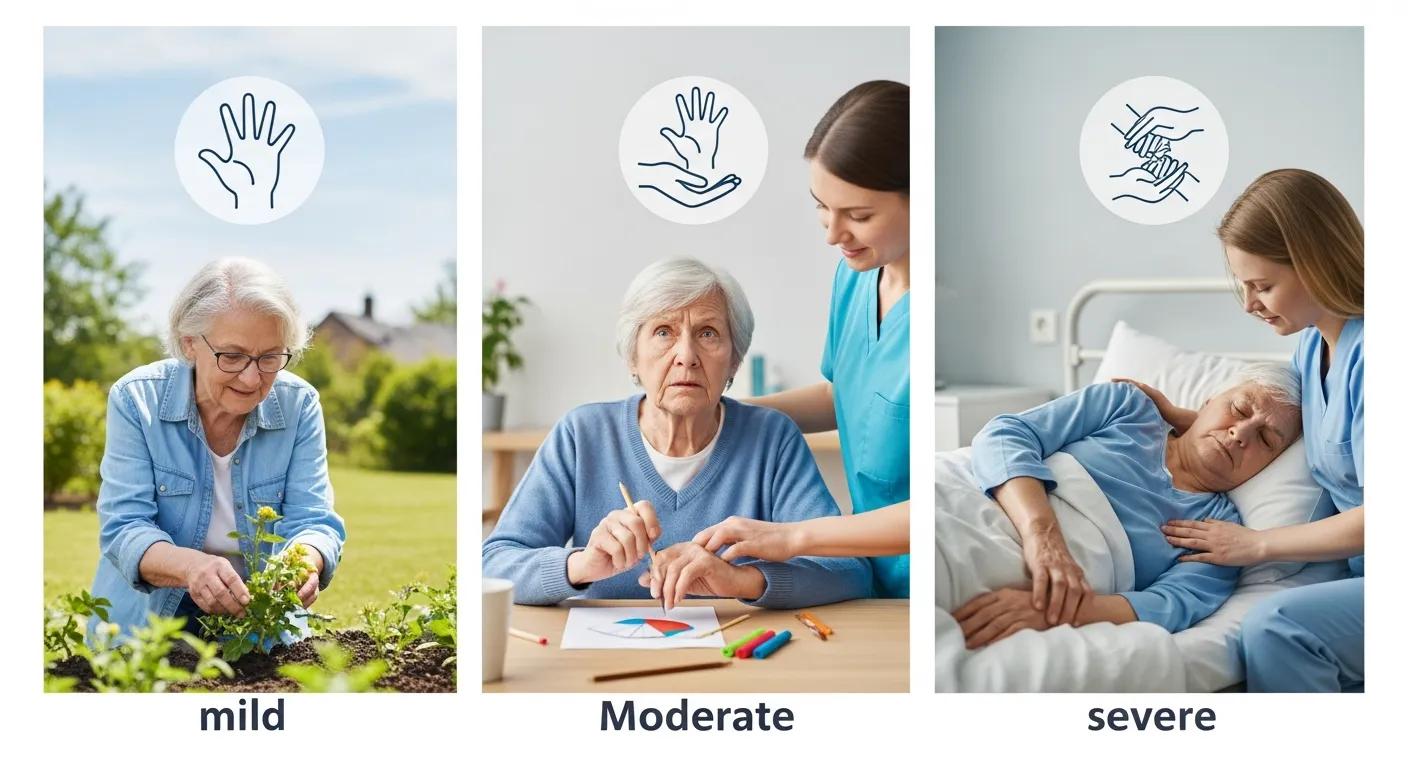
Mild dementia care typically describes residents who need intermittent reminders and supervision for complex tasks and occasional ADL help, while maintaining substantial independence. Clinically, mild stages involve short-term memory gaps, reduced executive function, and some difficulty with multi-step activities; supervision is lighter but structured routines are helpful.
Moderate dementia care involves more frequent assistance with dressing, bathing, and medication prompts, along with increased behavioral monitoring and structured activities.
Severe dementia care refers to residents requiring near-constant assistance with most ADLs, intensive behavior interventions, and continuous supervision to ensure safety.
What Services Are Included at Each Care Level?
Service bundles expand as needs increase: mild care usually includes medication administration, medication reminders, and scheduled activities; moderate care adds more frequent ADL assistance, behavior management plans, and increased staff check-ins. Severe care packages typically include one-to-one support for feeding and toileting, advanced behavior intervention strategies, and higher clinical oversight and care coordination. These added services entail greater staffing time and specialized training, which is why they systematically raise facility fees as care levels increase.
How Do Care Levels Affect the Type of Memory Care Provided?
Care levels shape program design, staffing ratios, and environmental features: mild care may emphasize social engagement and cognitive stimulation, moderate care adds structured therapies and frequent monitoring, and severe care typically requires secure design and specialized clinical interventions. Facilities adjust staff credentials—such as licensed clinicians or trained behavior specialists—and modify the physical environment to reduce wandering and manage behaviors, directly affecting operational costs. Knowing these programmatic differences helps families match a loved one's needs with a facility model that balances safety, quality, and budget.
How Do Care Levels Influence Memory Care Pricing in West Virginia?
Care levels influence pricing because each incremental service and safety measure adds labor, training, and equipment costs that facilities must cover in monthly rates. The more intensive the level—measured by ADL assistance frequency, required staffing ratios, and clinical oversight—the higher the operational cost per resident, which translates into higher fees. Pricing differences also reflect the administrative effort to maintain individualized behavior plans and coordinate external medical care. The table below summarizes how mild, moderate, and severe care levels typically map to services and pricing impact in a way families can use when comparing West Virginia options.
Different care levels map to distinct service packages and typical cost implications in memory care.
Care Level Services Included Typical Cost Impact Mild dementia care Medication reminders, periodic ADL help, structured activities Lower tier impact; fewer direct caregiving hours Moderate dementia care Regular ADL assistance, behavior plans, increased supervision Mid-tier impact; more staffing and clinical input Severe dementia care One-to-one ADL help, intensive behavior management, continuous supervision High-tier impact; highest staffing and security costs
This table shows that pricing scales with the intensity and frequency of services, so families should focus on the measurable needs identified in assessments when estimating monthly costs.
What Are the Average Monthly Costs for Each Care Level?
Average monthly costs vary widely across regions and facility types, and estimates should be used as planning guides rather than exact quotes. In West Virginia, families can expect that mild-level memory care generally represents the lower end of facility memory-care pricing, moderate-level care sits in the middle due to increased staffing and programming, and severe-level care is the most expensive because of near-constant staffing and enhanced clinical supports. It is essential to ask facilities how they break down base fees versus add-on service charges and how assessment results translate into specific line items on a contract.
Which Care Level Factors Drive Higher or Lower Costs?
Several intrinsic care-level factors drive cost differences: staffing ratios and credentialing requirements, frequency of ADL assistance, need for licensed clinical oversight, and behavior-management intensity. Facilities that require higher proportions of licensed clinicians or one-to-one aides will have higher payroll expenses that are passed to residents. Additional cost drivers include the complexity of medication management, frequency of external clinical coordination, and use of individualized therapeutic interventions. Recognizing these factors helps families connect clinical needs from assessments to expected cost drivers.
How Does 24/7 Supervision Impact Pricing?
Round-the-clock supervision increases costs through staffing across multiple shifts and through investments in security and monitoring technologies. 24/7 models typically require more direct-care hours per resident, weekend and evening premiums, and higher staff training requirements focused on dementia care and de-escalation. Technology investments—such as secure doors, wander-management systems, and monitoring sensors—also add capital and maintenance costs to operating budgets. Families should ask whether overnight supervision is provided by awake staff or by monitoring technology and how those choices affect fees.
What Factors Affect Memory Care Rates Beyond Care Levels in West Virginia?
Beyond care-intensity tiers, facility type, location, specialization, and amenities significantly affect memory care rates in West Virginia. Free-standing memory care facilities, memory units within assisted living communities, and nursing homes each carry different cost structures driven by operational focus, regulatory requirements, and economies of scale. Local wage levels and rural-versus-urban market dynamics also influence pricing. Understanding these broader factors helps families compare apples-to-apples when evaluating facilities and estimating realistic budgets.
How Do Facility Type and Location Influence Costs?
Free-standing memory care facilities typically concentrate resources and programming strictly on dementia needs, which can affect pricing differently than memory units inside mixed communities that share overhead across services. Urban locations often show higher rates due to higher local labor and property costs, while rural facilities may have lower base costs but fewer local specialized resources. Facility size, payer mix, and proximity to medical centers also influence operating expenses—so geography and facility model both matter when interpreting quoted monthly rates in West Virginia.
What Role Does Facility Specialization Play in Pricing?
Specialized memory care commands a premium because it requires targeted staff training, program design, and purpose-built environments that reduce risk and improve outcomes. Specialized programs invest in credentialed leadership, staff education on dementia-specific interventions, and consistent behavior-management approaches, all of which increase operating costs. This specialization, however, can offer distinct benefits in safety and tailored programming compared with general senior residential care, and families should weigh the trade-off between higher costs and better-fit services when choosing a facility.
How Do Amenities and Personalized Activities Affect Pricing?
Amenities—such as private rooms, dedicated outdoor secure spaces, and specialized therapies—add value but also increase monthly rates, particularly when personalization requires paid staff time or external contractors. Tiered amenity packages allow families to select levels of privacy, additional therapies, or enhanced meal plans that adjust costs upward. Personalized activities that require one-to-one facilitation or licensed therapists will typically appear as higher line items on billing statements. When budgeting, families should identify which amenities are essential for quality of life and which can be modified to meet financial constraints.
How Can Families Assess the Appropriate Care Level and Understand Pricing?
An effective assessment process connects clinical needs to pricing by measuring ADL dependency, behavioral risks, and medical complexity so facilities can propose the right care level and associated fees. Family assessment forms and behavior profiles collect critical information that facilities use to recommend placement and determine required staff time and interventions. The structured assessment also clarifies which services are included in base rates and which are billed as extras, helping families anticipate total monthly costs. Below are steps families can use when approaching assessments and pricing conversations.
Complete a comprehensive family assessment form: Provide details on ADLs, behaviors, medications, and routines so the facility can assign an appropriate care level.
Request a behavior profile review: Ask how specific behaviors influence staffing and service recommendations.
Compare written service packages: Ensure you receive a clear listing of included services and potential add-ons.
Ask for an estimated monthly cost worksheet: Have the facility show base rate plus likely additional charges based on the assessment.
What Is the Role of Family Assessment Forms and Behavior Profiles?
Family assessment forms gather functional and behavioral information—such as ADL independence, fall risk, medication complexity, and frequency of challenging behaviors—that determine the level of supervision and clinical oversight required. Behavior profiles document triggers, effective calming strategies, and safety concerns, which can increase required staffing intensity and specialized interventions. These assessments directly influence placement decisions and the service package a facility proposes, thereby shaping pricing. Completing thorough forms reduces surprises and clarifies how specific needs translate into fees.
How Does Braley Care Homes Support Families in Care Level Decisions?
Braley Care Homes provides free assessments and uses Family Assessment Forms and behavior profiles to guide transparent placement recommendations, helping families understand how needs map to service levels. The facility's specialized focus on Alzheimer's, dementia, and memory care means assessments are oriented toward dementia-specific risks and programming, which aids in selecting an appropriate care tier. Braley's process aims to clarify which services are included versus which may be billed separately, supporting families as they interpret pricing implications. Families are encouraged to use these assessments as practical tools for comparing options and planning finances.
What Questions Should Families Ask About Pricing and Care Levels?
A concise question checklist helps ensure families get clear answers on how assessments determine costs and what each fee covers.
What services are included in the base monthly rate? Ask for a written list.
Which services trigger additional charges? Clarify examples and price ranges.
How often will the care level be reassessed and who makes that decision? Understand change procedures.
What staffing ratios and credentials apply at each care level? This links to safety and cost.
What Financial Assistance Options Are Available for Memory Care in West Virginia?

Does Medicaid cover memory care costs in West Virginia? The short answer is: Medicaid can help cover certain long-term care services for eligible individuals, but coverage varies depending on program rules, facility type, and level of care required. Families should view Medicaid, VA benefits, long-term care insurance, and private-pay strategies as distinct pathways that may combine to meet costs. The following table summarizes common assistance programs, general eligibility contours, and their typical impact on memory care budgeting.
Below is a concise comparison of assistance programs, their scope, and typical application impacts for planning purposes.
Assistance Program Eligibility / What It Covers Typical Application / Impact Medicaid (WV)Eligibility based on income and assets; may cover long-term care services Can substantially reduce private-pay burden but requires verification and facility participation VA benefits Veterans and surviving spouses may qualify for aid and attendance or other supports Can offset personal care costs when eligible; requires application and documentation Long-term care insurance Policy-dependent coverage of ADLs and facility stays Can cover some or most costs if benefits are active; claim process varies Local/state aid & charities Varies by program; may offer short-term grants or services Useful for specific needs but rarely covers full ongoing care costs
Does Medicaid Cover Memory Care Costs in West Virginia?
Yes, Medicaid in West Virginia can cover certain long-term care services for eligible individuals, but eligibility rules, covered service types, and facility participation requirements determine real-world access. Families should contact the West Virginia Medicaid office or a benefits specialist to confirm individual eligibility and to learn which facilities accept Medicaid for memory care. Because rules change and facility participation varies, obtaining current program guidance is essential to realistic budgeting and placement planning.
How Can Veterans Benefits Help with Dementia Care Pricing?
Veterans and surviving spouses may qualify for VA programs such as aid-and-attendance or other long-term care supports that can offset memory care expenses when eligibility criteria are met. These benefits typically require documentation of service history, medical need, and financial status, and families should consult a veteran benefits counselor for application assistance. While VA benefits can reduce out-of-pocket costs, they are not automatic and often complement rather than fully replace other funding sources. Professional guidance helps families maximize potential VA support.
What Are the Options for Long-Term Care Insurance and Other Aid?
Long-term care insurance policies vary widely; many cover ADL assistance or facility stays depending on policy terms, waiting periods, and benefit limits. When evaluating policies or making claims, bring current assessment forms, physician statements, and detailed invoices to streamline approval. Other options include tapping retirement savings, exploring state waivers, or pursuing limited charitable supports for specific needs. Combining insurance, benefits, and private-pay planning gives families the clearest path to sustaining care over time.
How Does Braley Care Homes' Specialized Memory Care Compare in Pricing and Services?
Braley Care Homes positions itself as West Virginia's only free-standing Alzheimer's, Dementia, and memory care facility with specialized programs designed for dementia needs, including tailored activities, a secure home-like environment, and family support through assessment tools. The facility emphasizes specialized expertise and a transparent assessment process, which helps families understand how care recommendations align with service packages. While this section explains how Braley maps services to care levels conceptually, families should contact the facility directly through their website contact form or Google Business Profile for specific pricing and availability details.
What Unique Value Does Braley Care Homes Offer for Dementia Care?
Braley Care Homes highlights a focused, free-standing model dedicated to Alzheimer's and dementia care, a home-like secure environment, and personalized activities tailored to cognitive needs, which together support safety and engagement. Leadership with licensed clinical social work expertise informs care planning and behavior-profile use, enhancing clinical oversight without substituting for medical providers. The facility also offers support for families during assessment and placement decisions, aiming for transparency in how needs translate to service recommendations. These attributes can make Braley a strong match for families prioritizing dementia-specific programming.
How Does Braley's Pricing Reflect Its Care Level Structure?
Braley aligns placement and pricing through assessment-driven recommendations: Family Assessment Forms and behavior profiles help determine the intensity of required services, which then shapes the proposed service package. Pricing reflects service components—staffing levels, frequency of ADL assistance, behavior-management needs, and environmental supports—rather than arbitrary tiers, and the facility seeks to explain which services are included versus billed separately. For exact pricing, Braley invites families to request a personalized estimate following a free assessment so that quotes reflect individual needs rather than generalized rates.
Why Choose a Free-Standing Memory Care Facility in West Virginia?
Choosing a free-standing memory care facility often means concentrated expertise, consistent program design, and environments tailored for dementia safety rather than a unit embedded within a broader assisted living or nursing facility. This operational focus can yield benefits in staff training, specialized activities, and a unified approach to behavior management that is attuned to dementia trajectories. Families should weigh these advantages against cost and location considerations to determine the best fit for their loved one's medical and social needs.
How Can Understanding Care Levels Help Families Plan for Memory Care Costs?
Understanding care levels creates a framework for financial planning by clarifying which services are likely to be required now and as needs change, enabling families to estimate both near-term and long-term expenses. Early assessment, regular reassessment, and proactive planning—such as reviewing insurance, VA options, and Medicaid eligibility—reduce surprises and make transitions smoother. The five-step plan below provides a practical pathway to evaluate needs, estimate costs, and manage ongoing care expenses.
Assess current needs: Complete a detailed family assessment and gather medical records to establish baseline care level.
Consult providers: Request formal assessments from prospective facilities to see how they map needs to service packages.
Estimate costs: Ask for written estimates that separate base rates from likely add-ons based on assessment results.
Plan financing: Explore Medicaid, VA benefits, LTC insurance, and personal assets to create a sustainable payment strategy.
Revisit regularly: Schedule reassessments and budget reviews every 3–12 months or when needs change.
What Are the Steps to Evaluate Care Needs and Budget Accordingly?
Begin with a structured assessment capturing ADLs, behavior frequency, and medical complexity, then compare assessment-driven service packages from multiple facilities to identify cost differences. Create a simple budget worksheet listing base rate, estimated add-ons, and potential external assistance sources such as Medicaid or VA benefits. Factor in contingency funds for short-term increases in needs and plan timelines for reassessment to manage future cost escalations. This methodical approach ties clinical indicators to realistic monthly cost projections and reduces the chance of unexpected financial strain.
How Does Early Assessment Impact Long-Term Care Pricing?
Early assessment allows families to plan placement while needs are stable, often enabling choices that combine supportive programming with lower immediate intensity, which can delay more expensive care tiers. Early planning also facilitates benefit applications, insurance claims, and financial arrangements before acute crises force rushed decisions that often carry higher costs. By identifying likely future needs, families can adopt mitigation strategies—such as targeted therapies and support services—that may slow rapid escalation and provide clearer budgeting horizons.
What Resources Are Available for Ongoing Support and Cost Management?
Families can access state Medicaid offices, veteran benefit counselors, long-term care insurance specialists, and local aging-services agencies to get guidance on eligibility, claims, and planning. National and state Alzheimer's organizations and caregiver support groups offer educational resources, respite program listings, and peer advice on cost-management strategies. Keeping a centralized file of assessments, invoices, and benefit correspondence streamlines applications and appeals, making it easier to manage long-term care finances.
Braley Care Homes invites families seeking a free assessment, a facility tour, or help understanding placement options to reach out via the facility's website contact form or its Google Business Profile for next steps and personalized guidance on how care levels map to services and costs.
Frequently Asked Questions
What should families consider when choosing a memory care facility?
When selecting a memory care facility, families should evaluate several key factors, including the facility's specialization in dementia care, staff qualifications, and the types of services offered. It's also important to consider the facility's environment, safety features, and the availability of personalized activities. Families should visit multiple facilities, ask about care levels, and review pricing structures to ensure they find a place that meets both their loved one's needs and their budget. Additionally, understanding the facility's approach to family involvement can enhance the overall care experience.
How often should care levels be reassessed in memory care facilities?
Care levels should be reassessed regularly, typically every 3 to 6 months, or whenever there is a significant change in the resident's condition. Regular assessments help ensure that the care provided aligns with the resident's current needs, which can change due to the progression of dementia or other health issues. Facilities should have a clear process for reassessment, including who conducts it and how families are informed of any changes in care levels or associated costs. This proactive approach helps maintain optimal care and can prevent unexpected expenses.
What are the benefits of specialized memory care programs?
Specialized memory care programs offer tailored services designed specifically for individuals with dementia, which can significantly enhance the quality of care. These programs typically include staff trained in dementia-specific interventions, structured activities that promote cognitive engagement, and environments designed to minimize confusion and enhance safety. The focus on specialized care can lead to better outcomes, such as improved behavior management and increased resident satisfaction. Families should consider the benefits of such programs when evaluating facilities, as they can provide a more supportive and effective care experience.
How can families effectively communicate their loved one's needs to care providers?
Effective communication with care providers is crucial for ensuring that a resident's needs are met. Families should prepare detailed information about their loved one's medical history, daily routines, preferences, and any specific behavioral concerns. Utilizing family assessment forms and behavior profiles can facilitate this process. Regular meetings with care staff to discuss any changes in behavior or health can also help maintain alignment between the resident's needs and the care provided. Open dialogue fosters a collaborative relationship that benefits both the resident and the caregivers.
What role do family support services play in memory care?
Family support services are essential in memory care as they provide resources, education, and emotional support to families navigating the challenges of dementia care. These services can include caregiver support groups, educational workshops, and access to counseling. They help families understand the disease, improve communication with their loved ones, and manage stress. By engaging with these support services, families can enhance their caregiving skills and create a more positive environment for both themselves and their loved ones in memory care settings.
What should families know about transitioning a loved one into memory care?
Transitioning a loved one into memory care can be a challenging process for families. It's important to prepare both emotionally and logistically. Families should involve their loved one in the decision-making process as much as possible, explaining the benefits of the move. Visiting the facility together can help ease anxiety. Additionally, families should establish a routine for visits and communication to maintain connections. Understanding the facility's policies on family involvement and support services can also help families feel more comfortable during this transition.
