Visit us: Mon - Fri: 9:00 - 18:30
Braley Care Homes 6192 US 60 Hurricane, WV 25526
Experience Life at
Braley Care Homes
At Braley Care Homes, every day is filled with meaningful moments, engaging activities, and compassionate care. Our video collection offers a glimpse into the vibrant community we've built—where residents enjoy holiday celebrations, participate in enriching activities, and share their unique stories. Explore these videos to see how we create a warm, welcoming environment where seniors feel at home, supported, and celebrated.
Experience Life at
Braley Care Homes
At Braley Care Homes, every day is filled with meaningful moments, engaging activities, and compassionate care. Our video collection offers a glimpse into the vibrant community we've built—where residents enjoy holiday celebrations, participate in enriching activities, and share their unique stories. Explore these videos to see how we create a warm, welcoming environment where seniors feel at home, supported, and celebrated.
This Month’s Featured Insight
A Closer Look at Life at Braley Care Homes
🎉 Holiday Highlights & Festive Fun
🧠 Memory Care Moments & Tips
🎨 Everyday Adventures & Engaging Activities
💬 Heartfelt Stories & Resident Smiles
💡 Caregiver Corner: Wisdom & Wellness
Testimonials

I have only great memories of the great care my husband received. Never heard an unkind word to anyone there. This care home facility is wonderful. Thank you, Mr. Braley, for all you do and your staff. God's blessing continue to be with you all.
Brenda B. L.
I’ve worked there and I’ve seen how the residents are treated. Staff love their jobs and you can tell. Owner is great with residents too. They do a wide variety of activities and even a pet dog.
Samantha G.
I have only great memories of the great care my husband received. Never heard an unkind word to anyone there. This care home facility is wonderful. Thank you, Mr. Braley, for all you do and your staff. God's blessing continue to be with you all.
Brenda B. L.
I’ve worked there and I’ve seen how the residents are treated. Staff love their jobs and you can tell. Owner is great with residents too. They do a wide variety of activities and even a pet dog.
Samantha G.
Absolutely the best care home in the valley for your loved one with dementia.
Leah S. K.
Residents and workers are great. What you see is what you get. Thanks, BCH!
Nola H.
Absolutely the best care home in the valley for your loved one with dementia.
Leah S. K.
Residents and workers are great. What you see is what you get. Thanks, BCH!
Nola H.
Braley Care Homes
Caring Is Our Business
Read The Latest From Braley Care Homes
Discover Engaging Memory Care Activities in West Virginia
Engaging Memory Care Activities for West Virginia Residents: How to Support Loved Ones with Dementia and Alzheimer’s
Engaging memory care activities combine purposeful cognitive, physical, social, and expressive programs designed to support people living with Alzheimer’s and other forms of dementia. This guide explains what those activities are, why they matter for West Virginia seniors, how programs are adapted to different dementia stages, and practical steps families can take when evaluating memory care options. Families often face uncertainty about day-to-day quality of life, behavioral management, and how to choose a facility that prioritizes meaningful engagement; targeted activities address all of these concerns by reducing agitation, preserving skills, and promoting social connection. The article covers core activity types and mechanisms, examples of program implementation in West Virginia settings, personalization strategies tied to life stories and stages, measurable resident and family benefits, evaluation checklists for facilities, local resources, and how Braley Care Homes applies specialized, home-like programming to support residents. Throughout the guide you’ll find concise checklists, comparison tables, and stage-mapped recommendations to help you make informed decisions for loved ones in West Virginia.
What Are Engaging Memory Care Activities and Why Are They Important for West Virginia Seniors?
Engaging memory care activities are structured programs—cognitive exercises, sensory stimulation, gentle movement, social interaction, and expressive therapies—designed to preserve function, reduce behavioral symptoms, and improve quality of life. These activities work by stimulating residual neural networks, creating routine and meaningful cues, and providing social reinforcement that stabilizes mood and behavior. For West Virginia seniors living with dementia, locally tailored programs help offset isolation, maintain daily routines, and support families who need reliable, therapeutic care. Understanding these core concepts helps families evaluate providers and recognize which services deliver measurable improvements in mood, engagement, and safety.
What Types of Memory Care Activities Help Dementia and Alzheimer’s Patients?
Memory care activity categories include cognitive stimulation, physical movement, social engagement, expressive arts, and sensory- or life-story-based approaches. Cognitive stimulation covers orientation games, reminiscence prompts, and simple problem-solving exercises that encourage attention and recall without overwhelming residents. Physical and movement programs—chair exercise, short walks, or gardening—support balance, cardiovascular health, and functional independence while reducing restlessness. Expressive arts like music and art therapy offer nonverbal outlets for emotion and identity, and social activities such as small-group conversations or shared tasks promote connection and purpose. These categories are adaptable across dementia stages by adjusting complexity, group size, and prompts.
How Do Therapeutic Activities Improve Cognitive and Emotional Health?

Therapeutic activities improve cognition and emotion by repeatedly engaging neural circuits through meaningful tasks, sensory cues, and social routines that reinforce memory pathways and calm limbic-driven agitation. Mechanisms include cognitive stimulation that encourages new synaptic connections, rhythmic music that cues long-term memories, and sensory triggers (familiar smells, textures) that promote recognition and comfort. Emotionally, predictable activities reduce anxiety by creating safety cues and opportunities for success, which boosts mood and decreases behavioral disruptions. Understanding these mechanisms equips families to look for programs that intentionally pair stimulation with reassurance and trained facilitation.
Which Memory Care Activities Are Most Effective in West Virginia Facilities?
In facility settings, high-impact activities combine strong facilitation, safe environments, and small-group formats that encourage participation without overstimulation. Programs consistently effective include music-based sessions, structured reminiscence using personal memorabilia, short goal-oriented cognitive groups, and supervised outdoor access for sensory and movement benefits. Facility-level enablers—trained activity leaders, secure wandering design, and home-like common areas—allow staff to tailor pacing and cues for each resident. When evaluating local providers, look for evidence of routine scheduling, staff-led small groups, and spaces designed to support consistent engagement and safe movement.
What Types of Memory Care Activities Are Offered at Braley Care Homes and Across West Virginia?
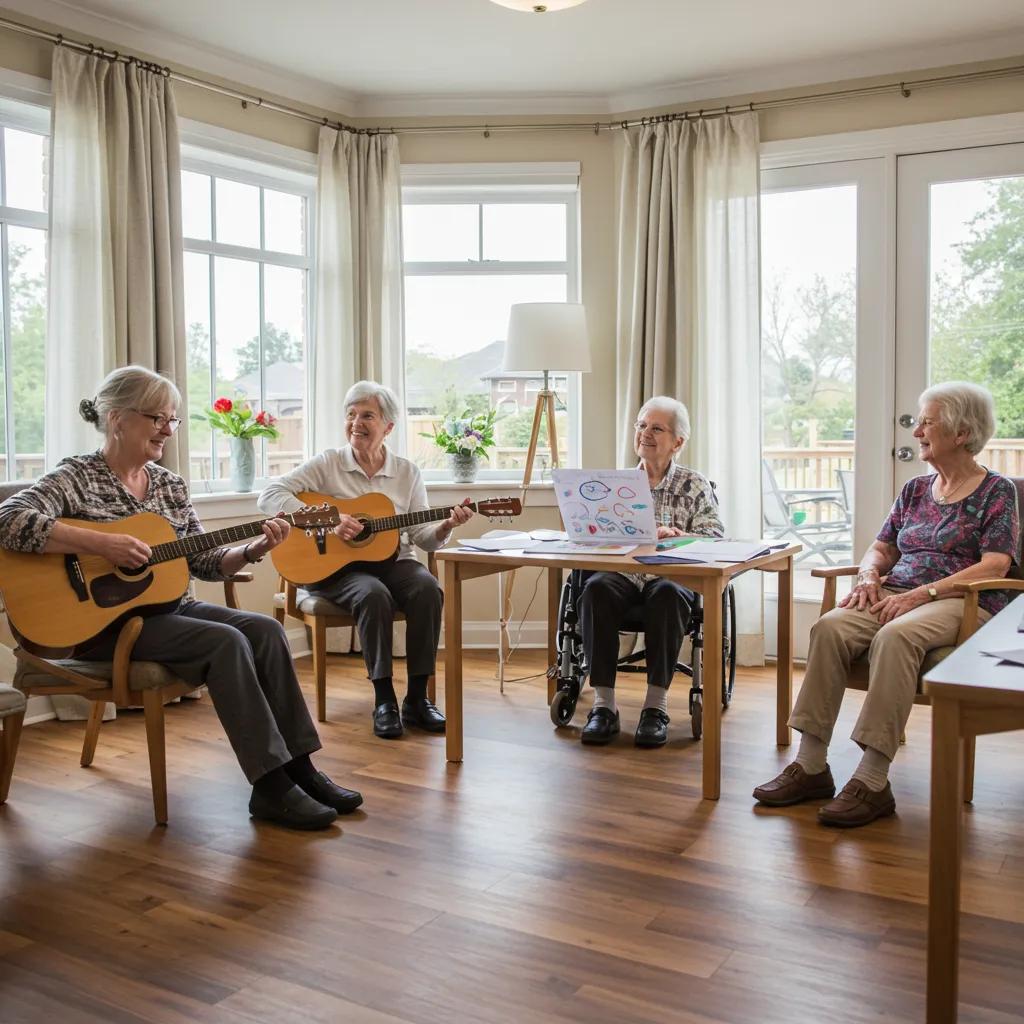
Activity programs across West Virginia typically span music therapy, art and crafts, gentle exercise, reminiscence and life-story work, and supervised pet- or animal-assisted interactions to boost social engagement. In facility practice, sessions are scheduled daily with mixed formats: group activities for socialization, one-on-one time for personalized stimulation, and outdoor courtyard access for sensory respite. Implementation relies on small-group sizes, consistent activity leaders, and integration of residents’ life histories into session themes to increase relevance. Below is a practical comparison of common program types that families can use to compare offerings and expected session formats in West Virginia memory care settings.
Introductory comparison of common memory care activity types and how they are delivered in facility settings.
Activity TypeWhat it InvolvesBenefitsRecommended Stage(s)Sample Session Length/FrequencyMusic TherapyGroup sing-alongs, familiar playlists, rhythmic activitiesMood regulation, memory cues, reduced agitationEarly–Mid20–40 min, 3–5× weeklyArt TherapyGuided painting, crafts, tactile materialsExpression, fine motor practice, self-worthEarly–Mid30–45 min, 2–4× weeklyGentle ExerciseChair yoga, walking groups, gardeningBalance, cardiovascular health, improved sleepEarly–Late (adapted)15–30 min, daily or every other dayReminiscence TherapyMemory boxes, life-story sessions, promptsIdentity reinforcement, social connectionAll stages20–30 min, 2–4× weeklyPet TherapySupervised animal visits, interaction timeReduced loneliness, calming effectEarly–Mid15–30 min, 1–3× weekly
This table clarifies how different activity formats translate to practical session design and expected frequency across West Virginia memory care programs.
How Does Music Therapy Benefit Seniors with Alzheimer’s and Dementia?
Music therapy leverages preserved musical memory and rhythm to access emotional and autobiographical recall, often yielding immediate mood improvement and lowered agitation. A typical session includes familiar songs, rhythmic movement, and opportunities for singing or instrument tapping, which cue long-term memories and create shared social experiences. Music stimulates neural networks involved in language and memory, providing nonverbal access when conversational ability declines, and can be used at transitions to ease anxiety or prepare residents for care tasks. Families should ask providers about credentialed facilitators, use of personalized playlists, and how music is integrated into daily schedules to reinforce routine and comfort.
What Are the Benefits of Art Therapy for Memory Care Residents?
Art therapy provides a nonverbal avenue for expression that supports fine motor skills, sensory engagement, and a sense of accomplishment through tangible creations. Sessions are typically adapted—using large brushes, pre-cut materials, or clay—to reduce frustration while preserving creative choice and autonomy. Art activities can be structured around familiar themes (seasons, local scenes) or personal histories to prompt stories and connection during group sharing. When well-facilitated, art projects build self-worth, encourage social interaction, and offer observable outputs families can keep and discuss.
How Do Gentle Exercise Programs Support Physical and Cognitive Health?
Gentle exercise programs incorporate low-impact movement, balance training, and light aerobic activities to maintain mobility, reduce fall risk, and support cognitive functioning via improved circulation and sleep. Examples include seated movement to music, supervised walking groups in secure courtyards, and light gardening tasks that combine physical work with sensory stimulation. Safety is paramount: staff should monitor vitals, provide assists, and adapt intensity to individual ability. Regular movement reduces agitation by channeling energy, supports daily functioning, and complements cognitive activities through integrated scheduling.
What Role Does Reminiscence Therapy Play in Memory Care?
Reminiscence therapy centers on life-story work, memory boxes, photographs, and themed conversations that draw on preserved autobiographical memories to reinforce identity and social bonds. Facilitators use prompts—objects, music, or photos—to cue recall and encourage storytelling, which strengthens social interaction and reduces isolation. Family involvement in compiling memory materials increases relevance and deepens the therapeutic effect. These sessions also support staff in learning meaningful prompts for each resident, improving personalized care beyond the activity itself.
The discussion of reminiscence therapy highlights its role in reinforcing identity and social bonds through life-story work and memory prompts.
Reminiscence Therapy for Dementia: A Comprehensive Review
RT involves the discussion of memories and past experiences with other people using tangible prompts such as photographs or music to evoke memories and stimulate conversation. RT is implemented widely in a range of settings using a variety of formats.
Reminiscence therapy for dementia, L O'Philbin, 2000
How Does Pet Therapy Enhance Social Interaction and Well-Being?
Pet therapy uses supervised animal visits or interaction time to promote comfort, reduce loneliness, and encourage gentle physical interaction through petting and play. Animals provide nonjudgmental companionship that can lower stress hormones and lift mood, often prompting conversational exchanges and collaborative caregiving tasks. Operational considerations include trained animals, infection-control routines, and staff supervision to ensure safety for all residents. When integrated into a regular activity schedule, pet visits become reliable emotional anchors that foster daily anticipation and social connection.
How Are Memory Care Activities Personalized for Individuals with Different Stages of Dementia in West Virginia?
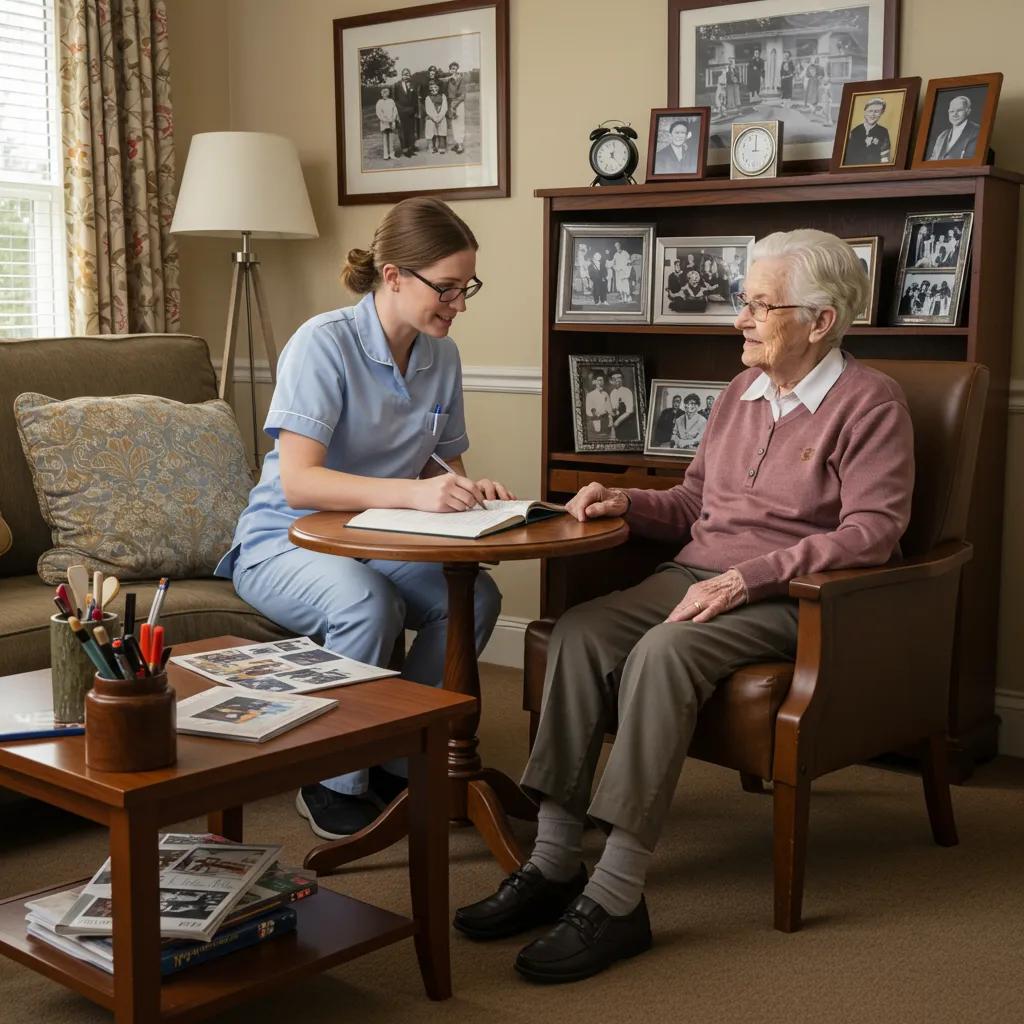
Personalization begins with gathering life history, preferences, and functional abilities to create an individualized activity plan that matches attention spans and preserved skills. Staff synthesize family interviews, memory boxes, and clinical observations to map favorites, triggers, and meaningful roles into daily programming. Stage-based adaptations change the complexity, prompts, and group size so activities remain accessible and purposeful; personalization reduces frustration and increases participation. The following table maps stages to typical adaptations and example activities to illustrate practical tailoring used across West Virginia memory care settings.
Dementia StageActivity AdaptationsExample ActivityEarlyOffer choice, higher cognitive challenge, longer sessionsReminiscence discussion with photo promptsMidSimplify steps, use sensory cues, smaller groupsMusic sing-along with rhythmic instrumentsLateFocus on sensory stimulation, brief one-on-one momentsGuided touch-and-scent therapy with favorite fabrics
This stage map helps families and providers select activities that match current abilities while preserving dignity and stimulation.
How Are Individual Life Stories Incorporated into Activity Planning?
Incorporating life stories starts with structured interviews and family-supplied memorabilia that reveal occupations, hobbies, and cultural touchpoints relevant to each resident. Staff then translate those details into activity prompts—music from a resident’s hometown, themed crafts tied to past hobbies, or role-based tasks that mirror previous responsibilities—so sessions tap residual memory and identity. Documenting preferences in the care plan ensures consistency across staff and shifts, and periodic review with families updates activities as needs change. This approach increases relevance, improves participation, and gives families a direct role in shaping meaningful daily experiences.
The emphasis on person-centered care and tailoring activities to individual needs is crucial for maintaining a sense of self and purpose for those living with dementia.
Personalized Dementia Care Through Meaningful Activities and Technology
Person-centred care is widely recognised as important for helping people with dementia maintain a sense of self and purpose in life – especially for those living in care facilities. Despite this, most care practices still adopt a medical approach in which physical needs are prioritized over psychosocial well-being. Addressing the need to find ways of promoting person-centred approaches in care, this study explored care professionals’ reflections on a novel, technological intervention (SENSE-GARDEN) that combines multisensory stimuli and digital media to create personalized environments for people with dementia. The aim of this study was to explore the experiences of care professionals who had used SENSE-GARDEN for approximately 1 year.
Towards personalized dementia care through meaningful activities supported by technology: A multisite qualitative study with care professionals, G Goodall, 2021
What Strategies Adapt Activities for Early, Middle, and Late-Stage Dementia?
Adapting activities requires adjusting complexity, sensory load, and group dynamics to match cognitive and physical capacity at each stage. Early-stage residents benefit from choice-driven, cognitively engaging tasks that preserve executive skills; mid-stage participants respond better to structured, sensory-rich sessions with clear cues; late-stage individuals gain from brief, comforting sensory activities and one-on-one attention. Safety, attention span, and communication style guide selection: shorter segments, visual prompts, and tactile materials reduce frustration. Regular observation and iterative adjustment—documenting what works—ensure activities remain meaningful and safe.
How Do Caregivers Tailor Activities to Resident Preferences and Needs?
Effective tailoring relies on careful observation, consistent documentation of responses, and small, testable adjustments that preserve engagement. Caregivers record triggers, preferred prompts, and successful pacing, then share this data in team huddles to refine plans and avoid repeated mismatches. Collaboration with families clarifies historical preferences, while training equips staff to pivot during sessions—offering alternate prompts or shifting to one-on-one time as needed. This iterative approach builds a responsive activity program that respects individuality and yields more consistent participation.
What Are the Benefits of Engaging Memory Care Activities for Residents and Their Families in West Virginia?
Engaging memory care activities deliver measurable benefits: reduced agitation and behavioral incidents, improved mood and social connection, preserved functional abilities, and greater family reassurance. By combining cognitive, sensory, and social elements, programs provide daily structure and purpose that translate into calmer behaviors and more meaningful interactions with loved ones. Families report better communication, clearer indicators of decline or improvement, and practical guidance from activity outcomes that inform care planning. Below is a mapping of activity types to specific resident outcomes to illustrate how programming translates into measurable benefits.
Activity TypePrimary BenefitObservable OutcomeMusic TherapyImproves mood and reduces agitationFewer anxiety episodes, increased smilingReminiscenceReinforces identity and social connectionMore sustained conversations, family engagementGentle ExerciseMaintains mobility and sleep qualityImproved gait stability, better nighttime rest
This mapping clarifies how targeted programming produces outcomes families can monitor and discuss with providers.
Before choosing a facility, many families want a clear pathway to see the impact of activities and to understand how providers measure success. A brief bridge to local choices: why families often choose a specialized facility for these programs follows below and includes actionable next steps for scheduling visits and assessments.
Why families choose a specialized facility:
Smaller, purpose-built settings that reduce overstimulation and enable consistent routines.
Staff trained specifically in dementia care who can adapt activities and manage behaviors.
Integrated programs—like music, reminiscence, and safe outdoor access—that are difficult to replicate at home.
Families should look for these indicators during evaluations to confirm programs are both therapeutic and individualized.
How Can Families Choose the Best Memory Care Facility with Engaging Activities in West Virginia?
Choosing a memory care facility involves prioritizing safety, personalization, staff training, and evidence of meaningful, routine programming that matches your loved one’s needs. Start with a checklist of targeted questions about activity frequency, staff-to-resident ratios during sessions, how life stories inform programming, and how outcomes are measured and communicated to families. Observe a live activity if possible, noting resident engagement, staff facilitation, and environmental design for safety and comfort. Below is a focused list of questions families should ask and expect clear answers to when evaluating providers.
Practical checklist of high-impact questions families should ask during tours or initial calls.
What types of memory care activities are scheduled daily, and how often are they offered?
How are activities personalized using life histories or family-provided materials?
What credentials or dementia-specific training do activity staff and nurses have?
How do you measure resident engagement and share progress with families?
Families should expect specific examples and documentation, not vague assurances, when providers describe programs. Clear, observable answers indicate a facility that treats activities as core clinical programming rather than optional recreation.
What Questions Should Families Ask About Memory Care Activities?
When touring, ask concise, measurable questions that reveal program quality: frequency and variety of activities, staff credentials in dementia care, examples of personalized sessions, and sample outcome metrics used to track engagement. Expect providers to describe routines, show an activity calendar, and explain how life stories are collected and used in planning. Also ask about safety measures during activities, supervision protocols for outdoor access, and how families are invited to participate. These questions help separate facilities that offer scripted entertainment from those delivering clinically informed, person-centered programs.
How Does Braley Care Homes’ Home-Like Environment Support Engagement?
Braley Care Homes is positioned as West Virginia’s only free-standing Alzheimer’s and dementia care facility, offering a purpose-built 16-bed, home-like environment with safe wandering design and an outdoor courtyard with pastoral views. These design features enable small-group activities, frequent outdoor sensory sessions, and predictable routines that reduce agitation and promote participation. A smaller scale allows staff to know residents’ life stories closely and tailor prompts during sessions, while the courtyard provides safe opportunities for supervised movement and gardening-style activities. Families evaluating options should observe how space and scale support meaningful daily engagement.
What Role Does Staff Training Play in Delivering Effective Memory Care Activities?
Staff training underpins effective programming: competencies include dementia behavior management, activity facilitation, person-centered communication, and emergency preparedness. Well-trained teams can read nonverbal cues, simplify tasks in real time, and pivot to one-on-one support when group formats fail to engage a resident. Leadership with clinical credentials supports a culture of ongoing education and evaluation of outcomes. Braley Care Homes’ leadership includes an owner/administrator with clinical social work credentials (BSW, MSW, LICSW), which family members can consider an indicator of clinical oversight in program design and staff training.
How Can Families Access Tours and Free Care Assessments?
Scheduling a tour and a care assessment typically starts with a phone call or email to request availability and share basic care needs; bring a summary of medical history, medication lists, and notes on daily routines to make the assessment efficient. During the visit, expect a guided walk-through, observation of an activity if available, and a conversation about personalized care planning and next steps for placement. Families should confirm how the facility communicates updates and invite staff to explain how life-story information will be integrated into daily programming. For specific inquiries, families can contact the facility by phone or email to arrange an in-person or virtual consultation.
Steps to prepare for a tour:
Compile a short summary of your loved one’s medical history and daily routine.
Note favorite activities, music, and meaningful objects to discuss during the visit.
Prepare questions about staffing, personalization, and measurable outcomes.
These steps ensure the visit yields useful information and helps families compare providers more objectively.
What Resources and Support Are Available for Families and Caregivers of Memory Care Residents in West Virginia?
Families in West Virginia can access a mix of state and national support organizations, caregiver education programs, and financial counseling resources to help plan care, locate support groups, and explore funding pathways. Local agencies and national organizations offer caregiver training, emotional support, and information on benefits such as Medicaid waivers or veteran programs that may assist with long-term care costs. Caregivers benefit from peer support, respite options, and structured education that improves coping skills and reduces burnout. The following list highlights practical starting points families can pursue to build a support network.
Local and state aging services and family caregiver programs for referrals and education.
National organizations providing disease-specific resources, hotlines, and training materials.
Financial assistance avenues such as Medicaid waivers, veteran benefits, and facility consultation for planning.
Families should combine clinical advice from a facility’s care assessment with referrals from state and national organizations to create a comprehensive support plan.
Where Can Families Find West Virginia Dementia Support Groups?
Support groups can be located through state aging networks, disease-specific organizations, and local community centers offering caregiver education and peer meetings. Both in-person groups and virtual options provide emotional support, practical tips, and a forum to share experiences with others facing similar challenges. When choosing a group, consider meeting frequency, facilitator qualifications, and whether the format includes education on legal and financial planning. Regular participation provides social support that complements formal care services and reduces caregiver isolation.
What Financial Assistance Options Exist for Memory Care in West Virginia?
Common funding paths include Medicaid programs and waivers, veteran benefits for qualifying individuals, and private pay with financial planning support; the exact options depend on eligibility and clinical needs. Families should consult state agencies and facility care managers for specific guidance and application assistance, as facilities can often help navigate initial eligibility screening. Early planning and a care assessment help determine likely costs and which funding routes are applicable. Combining professional advice with organizational resources yields a clearer roadmap for long-term financial planning.
What Coping Strategies Help Caregivers Manage Dementia Challenges?
Practical coping strategies include scheduling regular respite, joining support groups, delegating tasks among family members, and practicing self-care routines that preserve emotional resources. Structured time for rest and maintaining outside social connections reduce burnout and improve caregiving quality. Learning behavioral techniques—consistent routines, simplified communication, and environment modifications—also reduces day-to-day stress. Caregivers who partner with facility staff and use community supports report better outcomes for both themselves and their loved ones.
How Does Braley Care Homes’ Unique Approach Enhance Memory Care Activities for West Virginia Residents?
Braley Care Homes emphasizes a family-centered, home-like memory care model that combines specialized programming with a purpose-built environment to support meaningful daily engagement for residents with Alzheimer’s and dementia. The facility’s free-standing design and smaller 16-bed scale enable individualized activity plans, safe wandering design, and frequent outdoor access that are integrated into daily routines. Staff training, life-story-based planning, and program elements such as pet therapy and courtyard activities are used to promote social connection, mood stabilization, and physical activity. Families seeking a specialized, integrated approach to memory care can request a tour or care assessment to observe programming and discuss personalized plans for their loved one.
What Features Define Our Specialized Home-Like Memory Care Facility?
Key features include a 16-bed, free-standing layout designed for safe wandering, a home-like common area plan that supports small-group engagement, and an outdoor courtyard with pastoral views that enables supervised sensory and movement activities. These elements reduce institutional cues and increase familiar, calming environments where residents are more likely to participate in daily programs. Smaller scale supports consistent staffing relationships, quicker personalization of activity plans, and easier family involvement. Families evaluating options should observe how space and scale influence resident comfort and opportunity for meaningful engagement.
How Are Staff Trained to Implement Individualized Activity Programs?
Effective staff training covers dementia behavior management, activity facilitation techniques, person-centered communication, and ongoing assessment of engagement to tailor programming. Leadership with clinical credentials supports a culture of training and evaluation that translates into consistent, evidence-informed activity delivery. Well-trained staff can read nonverbal cues, simplify or amplify tasks in the moment, and document preferences for team use across shifts. This competency reduces agitation, increases successful participation, and ensures activity plans remain responsive to changing needs.
What Are the Benefits of Our Pet Therapy and Outdoor Courtyard Programs?
Pet therapy and courtyard access provide complementary benefits: animals offer immediate emotional comfort and social catalysts that reduce loneliness, while the courtyard enables safe movement, sensory stimulation, and gardening-style tasks that support physical health. Supervised integration of these features into daily schedules promotes predictable routine, encourages outdoor time for mood and sleep regulation, and creates opportunities for family visits that feel natural rather than clinical. These program elements, combined with trained staff and purposeful personalization, contribute to improved daily engagement and observable improvements in resident well-being.
Families interested in a tour or a care assessment can contact the facility directly to arrange a visit and discuss individualized programming and placement options: chris@braleycarehomes.com or 304-767-4033.
Frequently Asked Questions
What are some signs that a memory care activity is effective for my loved one?
Effective memory care activities often lead to observable improvements in mood, engagement, and social interaction. Signs include increased participation in group activities, more frequent smiles or laughter, and a reduction in agitation or anxiety. Additionally, residents may show enhanced communication skills, such as recalling names or sharing stories. Families should also look for positive changes in daily routines, such as improved sleep patterns or willingness to engage in physical activities. Regular feedback from staff can help families assess the effectiveness of specific programs.
How can families get involved in memory care activities?
Families can play a vital role in memory care activities by participating in sessions, sharing personal stories, and providing memorabilia that can be used in reminiscence therapy. Engaging in activities alongside residents fosters connection and enhances the experience for both parties. Additionally, families can volunteer to help organize events or provide input on activity planning based on their loved one's preferences. Regular communication with staff about the resident's interests and history can also help tailor activities to be more meaningful and enjoyable.
What should families look for in a memory care facility's activity schedule?
When evaluating a memory care facility's activity schedule, families should look for a variety of engaging activities that cater to different cognitive and physical abilities. The schedule should include a mix of cognitive, physical, and social activities, with clear frequency and duration for each. It's also important to assess whether activities are personalized based on residents' life stories and preferences. Families should inquire about the qualifications of staff leading these activities and how they adapt sessions to meet individual needs, ensuring a supportive environment for all residents.
How can I assess the safety of memory care activities?
Assessing the safety of memory care activities involves observing the environment and the protocols in place during sessions. Families should look for secure spaces that minimize fall risks, such as non-slip flooring and appropriate seating arrangements. Additionally, staff should be trained in emergency procedures and able to monitor residents effectively. Families can ask about supervision ratios during activities and how staff adapt activities to accommodate residents' physical limitations. Regular safety drills and clear communication about safety measures can also provide reassurance to families.
What role does technology play in enhancing memory care activities?
Technology can significantly enhance memory care activities by providing interactive and engaging tools that stimulate cognitive function. For example, tablets can be used for reminiscence therapy through digital photo albums or music playlists tailored to residents' preferences. Virtual reality experiences can also offer immersive environments that evoke memories and encourage social interaction. Additionally, technology can facilitate communication between families and staff, allowing for real-time updates on residents' engagement and progress. Families should inquire about how facilities integrate technology into their activity programs to enhance resident experiences.
How can families measure the impact of memory care activities on their loved ones?
Families can measure the impact of memory care activities by observing changes in their loved one's behavior, mood, and social interactions over time. Keeping a journal to document daily observations can help track progress and identify patterns related to specific activities. Additionally, families should engage in regular discussions with staff to review assessments and feedback on resident participation and engagement levels. Facilities may also provide measurable outcomes, such as reduced agitation incidents or improved communication skills, which can help families understand the effectiveness of the programs offered.

Discover Engaging Memory Care Activities in West Virginia
Engaging Memory Care Activities for West Virginia Residents: How to Support Loved Ones with Dementia and Alzheimer’s
Engaging memory care activities combine purposeful cognitive, physical, social, and expressive programs designed to support people living with Alzheimer’s and other forms of dementia. This guide explains what those activities are, why they matter for West Virginia seniors, how programs are adapted to different dementia stages, and practical steps families can take when evaluating memory care options. Families often face uncertainty about day-to-day quality of life, behavioral management, and how to choose a facility that prioritizes meaningful engagement; targeted activities address all of these concerns by reducing agitation, preserving skills, and promoting social connection. The article covers core activity types and mechanisms, examples of program implementation in West Virginia settings, personalization strategies tied to life stories and stages, measurable resident and family benefits, evaluation checklists for facilities, local resources, and how Braley Care Homes applies specialized, home-like programming to support residents. Throughout the guide you’ll find concise checklists, comparison tables, and stage-mapped recommendations to help you make informed decisions for loved ones in West Virginia.
What Are Engaging Memory Care Activities and Why Are They Important for West Virginia Seniors?
Engaging memory care activities are structured programs—cognitive exercises, sensory stimulation, gentle movement, social interaction, and expressive therapies—designed to preserve function, reduce behavioral symptoms, and improve quality of life. These activities work by stimulating residual neural networks, creating routine and meaningful cues, and providing social reinforcement that stabilizes mood and behavior. For West Virginia seniors living with dementia, locally tailored programs help offset isolation, maintain daily routines, and support families who need reliable, therapeutic care. Understanding these core concepts helps families evaluate providers and recognize which services deliver measurable improvements in mood, engagement, and safety.
What Types of Memory Care Activities Help Dementia and Alzheimer’s Patients?
Memory care activity categories include cognitive stimulation, physical movement, social engagement, expressive arts, and sensory- or life-story-based approaches. Cognitive stimulation covers orientation games, reminiscence prompts, and simple problem-solving exercises that encourage attention and recall without overwhelming residents. Physical and movement programs—chair exercise, short walks, or gardening—support balance, cardiovascular health, and functional independence while reducing restlessness. Expressive arts like music and art therapy offer nonverbal outlets for emotion and identity, and social activities such as small-group conversations or shared tasks promote connection and purpose. These categories are adaptable across dementia stages by adjusting complexity, group size, and prompts.
How Do Therapeutic Activities Improve Cognitive and Emotional Health?
Therapeutic activities improve cognition and emotion by repeatedly engaging neural circuits through meaningful tasks, sensory cues, and social routines that reinforce memory pathways and calm limbic-driven agitation. Mechanisms include cognitive stimulation that encourages new synaptic connections, rhythmic music that cues long-term memories, and sensory triggers (familiar smells, textures) that promote recognition and comfort. Emotionally, predictable activities reduce anxiety by creating safety cues and opportunities for success, which boosts mood and decreases behavioral disruptions. Understanding these mechanisms equips families to look for programs that intentionally pair stimulation with reassurance and trained facilitation.
Which Memory Care Activities Are Most Effective in West Virginia Facilities?
In facility settings, high-impact activities combine strong facilitation, safe environments, and small-group formats that encourage participation without overstimulation. Programs consistently effective include music-based sessions, structured reminiscence using personal memorabilia, short goal-oriented cognitive groups, and supervised outdoor access for sensory and movement benefits. Facility-level enablers—trained activity leaders, secure wandering design, and home-like common areas—allow staff to tailor pacing and cues for each resident. When evaluating local providers, look for evidence of routine scheduling, staff-led small groups, and spaces designed to support consistent engagement and safe movement.
What Types of Memory Care Activities Are Offered at Braley Care Homes and Across West Virginia?
Activity programs across West Virginia typically span music therapy, art and crafts, gentle exercise, reminiscence and life-story work, and supervised pet- or animal-assisted interactions to boost social engagement. In facility practice, sessions are scheduled daily with mixed formats: group activities for socialization, one-on-one time for personalized stimulation, and outdoor courtyard access for sensory respite. Implementation relies on small-group sizes, consistent activity leaders, and integration of residents’ life histories into session themes to increase relevance. Below is a practical comparison of common program types that families can use to compare offerings and expected session formats in West Virginia memory care settings.
Introductory comparison of common memory care activity types and how they are delivered in facility settings.
Activity TypeWhat it InvolvesBenefitsRecommended Stage(s)Sample Session Length/FrequencyMusic TherapyGroup sing-alongs, familiar playlists, rhythmic activitiesMood regulation, memory cues, reduced agitationEarly–Mid20–40 min, 3–5× weeklyArt TherapyGuided painting, crafts, tactile materialsExpression, fine motor practice, self-worthEarly–Mid30–45 min, 2–4× weeklyGentle ExerciseChair yoga, walking groups, gardeningBalance, cardiovascular health, improved sleepEarly–Late (adapted)15–30 min, daily or every other dayReminiscence TherapyMemory boxes, life-story sessions, promptsIdentity reinforcement, social connectionAll stages20–30 min, 2–4× weeklyPet TherapySupervised animal visits, interaction timeReduced loneliness, calming effectEarly–Mid15–30 min, 1–3× weekly
This table clarifies how different activity formats translate to practical session design and expected frequency across West Virginia memory care programs.
How Does Music Therapy Benefit Seniors with Alzheimer’s and Dementia?
Music therapy leverages preserved musical memory and rhythm to access emotional and autobiographical recall, often yielding immediate mood improvement and lowered agitation. A typical session includes familiar songs, rhythmic movement, and opportunities for singing or instrument tapping, which cue long-term memories and create shared social experiences. Music stimulates neural networks involved in language and memory, providing nonverbal access when conversational ability declines, and can be used at transitions to ease anxiety or prepare residents for care tasks. Families should ask providers about credentialed facilitators, use of personalized playlists, and how music is integrated into daily schedules to reinforce routine and comfort.
What Are the Benefits of Art Therapy for Memory Care Residents?
Art therapy provides a nonverbal avenue for expression that supports fine motor skills, sensory engagement, and a sense of accomplishment through tangible creations. Sessions are typically adapted—using large brushes, pre-cut materials, or clay—to reduce frustration while preserving creative choice and autonomy. Art activities can be structured around familiar themes (seasons, local scenes) or personal histories to prompt stories and connection during group sharing. When well-facilitated, art projects build self-worth, encourage social interaction, and offer observable outputs families can keep and discuss.
How Do Gentle Exercise Programs Support Physical and Cognitive Health?
Gentle exercise programs incorporate low-impact movement, balance training, and light aerobic activities to maintain mobility, reduce fall risk, and support cognitive functioning via improved circulation and sleep. Examples include seated movement to music, supervised walking groups in secure courtyards, and light gardening tasks that combine physical work with sensory stimulation. Safety is paramount: staff should monitor vitals, provide assists, and adapt intensity to individual ability. Regular movement reduces agitation by channeling energy, supports daily functioning, and complements cognitive activities through integrated scheduling.
What Role Does Reminiscence Therapy Play in Memory Care?
Reminiscence therapy centers on life-story work, memory boxes, photographs, and themed conversations that draw on preserved autobiographical memories to reinforce identity and social bonds. Facilitators use prompts—objects, music, or photos—to cue recall and encourage storytelling, which strengthens social interaction and reduces isolation. Family involvement in compiling memory materials increases relevance and deepens the therapeutic effect. These sessions also support staff in learning meaningful prompts for each resident, improving personalized care beyond the activity itself.
The discussion of reminiscence therapy highlights its role in reinforcing identity and social bonds through life-story work and memory prompts.
Reminiscence Therapy for Dementia: A Comprehensive Review
RT involves the discussion of memories and past experiences with other people using tangible prompts such as photographs or music to evoke memories and stimulate conversation. RT is implemented widely in a range of settings using a variety of formats.
Reminiscence therapy for dementia, L O'Philbin, 2000
How Does Pet Therapy Enhance Social Interaction and Well-Being?
Pet therapy uses supervised animal visits or interaction time to promote comfort, reduce loneliness, and encourage gentle physical interaction through petting and play. Animals provide nonjudgmental companionship that can lower stress hormones and lift mood, often prompting conversational exchanges and collaborative caregiving tasks. Operational considerations include trained animals, infection-control routines, and staff supervision to ensure safety for all residents. When integrated into a regular activity schedule, pet visits become reliable emotional anchors that foster daily anticipation and social connection.
How Are Memory Care Activities Personalized for Individuals with Different Stages of Dementia in West Virginia?
Personalization begins with gathering life history, preferences, and functional abilities to create an individualized activity plan that matches attention spans and preserved skills. Staff synthesize family interviews, memory boxes, and clinical observations to map favorites, triggers, and meaningful roles into daily programming. Stage-based adaptations change the complexity, prompts, and group size so activities remain accessible and purposeful; personalization reduces frustration and increases participation. The following table maps stages to typical adaptations and example activities to illustrate practical tailoring used across West Virginia memory care settings.
Dementia StageActivity AdaptationsExample ActivityEarlyOffer choice, higher cognitive challenge, longer sessionsReminiscence discussion with photo promptsMidSimplify steps, use sensory cues, smaller groupsMusic sing-along with rhythmic instrumentsLateFocus on sensory stimulation, brief one-on-one momentsGuided touch-and-scent therapy with favorite fabrics
This stage map helps families and providers select activities that match current abilities while preserving dignity and stimulation.
How Are Individual Life Stories Incorporated into Activity Planning?
Incorporating life stories starts with structured interviews and family-supplied memorabilia that reveal occupations, hobbies, and cultural touchpoints relevant to each resident. Staff then translate those details into activity prompts—music from a resident’s hometown, themed crafts tied to past hobbies, or role-based tasks that mirror previous responsibilities—so sessions tap residual memory and identity. Documenting preferences in the care plan ensures consistency across staff and shifts, and periodic review with families updates activities as needs change. This approach increases relevance, improves participation, and gives families a direct role in shaping meaningful daily experiences.
The emphasis on person-centered care and tailoring activities to individual needs is crucial for maintaining a sense of self and purpose for those living with dementia.
Personalized Dementia Care Through Meaningful Activities and Technology
Person-centred care is widely recognised as important for helping people with dementia maintain a sense of self and purpose in life – especially for those living in care facilities. Despite this, most care practices still adopt a medical approach in which physical needs are prioritized over psychosocial well-being. Addressing the need to find ways of promoting person-centred approaches in care, this study explored care professionals’ reflections on a novel, technological intervention (SENSE-GARDEN) that combines multisensory stimuli and digital media to create personalized environments for people with dementia. The aim of this study was to explore the experiences of care professionals who had used SENSE-GARDEN for approximately 1 year.
Towards personalized dementia care through meaningful activities supported by technology: A multisite qualitative study with care professionals, G Goodall, 2021
What Strategies Adapt Activities for Early, Middle, and Late-Stage Dementia?
Adapting activities requires adjusting complexity, sensory load, and group dynamics to match cognitive and physical capacity at each stage. Early-stage residents benefit from choice-driven, cognitively engaging tasks that preserve executive skills; mid-stage participants respond better to structured, sensory-rich sessions with clear cues; late-stage individuals gain from brief, comforting sensory activities and one-on-one attention. Safety, attention span, and communication style guide selection: shorter segments, visual prompts, and tactile materials reduce frustration. Regular observation and iterative adjustment—documenting what works—ensure activities remain meaningful and safe.
How Do Caregivers Tailor Activities to Resident Preferences and Needs?
Effective tailoring relies on careful observation, consistent documentation of responses, and small, testable adjustments that preserve engagement. Caregivers record triggers, preferred prompts, and successful pacing, then share this data in team huddles to refine plans and avoid repeated mismatches. Collaboration with families clarifies historical preferences, while training equips staff to pivot during sessions—offering alternate prompts or shifting to one-on-one time as needed. This iterative approach builds a responsive activity program that respects individuality and yields more consistent participation.
What Are the Benefits of Engaging Memory Care Activities for Residents and Their Families in West Virginia?
Engaging memory care activities deliver measurable benefits: reduced agitation and behavioral incidents, improved mood and social connection, preserved functional abilities, and greater family reassurance. By combining cognitive, sensory, and social elements, programs provide daily structure and purpose that translate into calmer behaviors and more meaningful interactions with loved ones. Families report better communication, clearer indicators of decline or improvement, and practical guidance from activity outcomes that inform care planning. Below is a mapping of activity types to specific resident outcomes to illustrate how programming translates into measurable benefits.
Activity TypePrimary BenefitObservable OutcomeMusic TherapyImproves mood and reduces agitationFewer anxiety episodes, increased smilingReminiscenceReinforces identity and social connectionMore sustained conversations, family engagementGentle ExerciseMaintains mobility and sleep qualityImproved gait stability, better nighttime rest
This mapping clarifies how targeted programming produces outcomes families can monitor and discuss with providers.
Before choosing a facility, many families want a clear pathway to see the impact of activities and to understand how providers measure success. A brief bridge to local choices: why families often choose a specialized facility for these programs follows below and includes actionable next steps for scheduling visits and assessments.
Why families choose a specialized facility:
Smaller, purpose-built settings that reduce overstimulation and enable consistent routines.
Staff trained specifically in dementia care who can adapt activities and manage behaviors.
Integrated programs—like music, reminiscence, and safe outdoor access—that are difficult to replicate at home.
Families should look for these indicators during evaluations to confirm programs are both therapeutic and individualized.
How Can Families Choose the Best Memory Care Facility with Engaging Activities in West Virginia?
Choosing a memory care facility involves prioritizing safety, personalization, staff training, and evidence of meaningful, routine programming that matches your loved one’s needs. Start with a checklist of targeted questions about activity frequency, staff-to-resident ratios during sessions, how life stories inform programming, and how outcomes are measured and communicated to families. Observe a live activity if possible, noting resident engagement, staff facilitation, and environmental design for safety and comfort. Below is a focused list of questions families should ask and expect clear answers to when evaluating providers.
Practical checklist of high-impact questions families should ask during tours or initial calls.
What types of memory care activities are scheduled daily, and how often are they offered?
How are activities personalized using life histories or family-provided materials?
What credentials or dementia-specific training do activity staff and nurses have?
How do you measure resident engagement and share progress with families?
Families should expect specific examples and documentation, not vague assurances, when providers describe programs. Clear, observable answers indicate a facility that treats activities as core clinical programming rather than optional recreation.
What Questions Should Families Ask About Memory Care Activities?
When touring, ask concise, measurable questions that reveal program quality: frequency and variety of activities, staff credentials in dementia care, examples of personalized sessions, and sample outcome metrics used to track engagement. Expect providers to describe routines, show an activity calendar, and explain how life stories are collected and used in planning. Also ask about safety measures during activities, supervision protocols for outdoor access, and how families are invited to participate. These questions help separate facilities that offer scripted entertainment from those delivering clinically informed, person-centered programs.
How Does Braley Care Homes’ Home-Like Environment Support Engagement?
Braley Care Homes is positioned as West Virginia’s only free-standing Alzheimer’s and dementia care facility, offering a purpose-built 16-bed, home-like environment with safe wandering design and an outdoor courtyard with pastoral views. These design features enable small-group activities, frequent outdoor sensory sessions, and predictable routines that reduce agitation and promote participation. A smaller scale allows staff to know residents’ life stories closely and tailor prompts during sessions, while the courtyard provides safe opportunities for supervised movement and gardening-style activities. Families evaluating options should observe how space and scale support meaningful daily engagement.
What Role Does Staff Training Play in Delivering Effective Memory Care Activities?
Staff training underpins effective programming: competencies include dementia behavior management, activity facilitation, person-centered communication, and emergency preparedness. Well-trained teams can read nonverbal cues, simplify tasks in real time, and pivot to one-on-one support when group formats fail to engage a resident. Leadership with clinical credentials supports a culture of ongoing education and evaluation of outcomes. Braley Care Homes’ leadership includes an owner/administrator with clinical social work credentials (BSW, MSW, LICSW), which family members can consider an indicator of clinical oversight in program design and staff training.
How Can Families Access Tours and Free Care Assessments?
Scheduling a tour and a care assessment typically starts with a phone call or email to request availability and share basic care needs; bring a summary of medical history, medication lists, and notes on daily routines to make the assessment efficient. During the visit, expect a guided walk-through, observation of an activity if available, and a conversation about personalized care planning and next steps for placement. Families should confirm how the facility communicates updates and invite staff to explain how life-story information will be integrated into daily programming. For specific inquiries, families can contact the facility by phone or email to arrange an in-person or virtual consultation.
Steps to prepare for a tour:
Compile a short summary of your loved one’s medical history and daily routine.
Note favorite activities, music, and meaningful objects to discuss during the visit.
Prepare questions about staffing, personalization, and measurable outcomes.
These steps ensure the visit yields useful information and helps families compare providers more objectively.
What Resources and Support Are Available for Families and Caregivers of Memory Care Residents in West Virginia?
Families in West Virginia can access a mix of state and national support organizations, caregiver education programs, and financial counseling resources to help plan care, locate support groups, and explore funding pathways. Local agencies and national organizations offer caregiver training, emotional support, and information on benefits such as Medicaid waivers or veteran programs that may assist with long-term care costs. Caregivers benefit from peer support, respite options, and structured education that improves coping skills and reduces burnout. The following list highlights practical starting points families can pursue to build a support network.
Local and state aging services and family caregiver programs for referrals and education.
National organizations providing disease-specific resources, hotlines, and training materials.
Financial assistance avenues such as Medicaid waivers, veteran benefits, and facility consultation for planning.
Families should combine clinical advice from a facility’s care assessment with referrals from state and national organizations to create a comprehensive support plan.
Where Can Families Find West Virginia Dementia Support Groups?
Support groups can be located through state aging networks, disease-specific organizations, and local community centers offering caregiver education and peer meetings. Both in-person groups and virtual options provide emotional support, practical tips, and a forum to share experiences with others facing similar challenges. When choosing a group, consider meeting frequency, facilitator qualifications, and whether the format includes education on legal and financial planning. Regular participation provides social support that complements formal care services and reduces caregiver isolation.
What Financial Assistance Options Exist for Memory Care in West Virginia?
Common funding paths include Medicaid programs and waivers, veteran benefits for qualifying individuals, and private pay with financial planning support; the exact options depend on eligibility and clinical needs. Families should consult state agencies and facility care managers for specific guidance and application assistance, as facilities can often help navigate initial eligibility screening. Early planning and a care assessment help determine likely costs and which funding routes are applicable. Combining professional advice with organizational resources yields a clearer roadmap for long-term financial planning.
What Coping Strategies Help Caregivers Manage Dementia Challenges?
Practical coping strategies include scheduling regular respite, joining support groups, delegating tasks among family members, and practicing self-care routines that preserve emotional resources. Structured time for rest and maintaining outside social connections reduce burnout and improve caregiving quality. Learning behavioral techniques—consistent routines, simplified communication, and environment modifications—also reduces day-to-day stress. Caregivers who partner with facility staff and use community supports report better outcomes for both themselves and their loved ones.
How Does Braley Care Homes’ Unique Approach Enhance Memory Care Activities for West Virginia Residents?
Braley Care Homes emphasizes a family-centered, home-like memory care model that combines specialized programming with a purpose-built environment to support meaningful daily engagement for residents with Alzheimer’s and dementia. The facility’s free-standing design and smaller 16-bed scale enable individualized activity plans, safe wandering design, and frequent outdoor access that are integrated into daily routines. Staff training, life-story-based planning, and program elements such as pet therapy and courtyard activities are used to promote social connection, mood stabilization, and physical activity. Families seeking a specialized, integrated approach to memory care can request a tour or care assessment to observe programming and discuss personalized plans for their loved one.
What Features Define Our Specialized Home-Like Memory Care Facility?
Key features include a 16-bed, free-standing layout designed for safe wandering, a home-like common area plan that supports small-group engagement, and an outdoor courtyard with pastoral views that enables supervised sensory and movement activities. These elements reduce institutional cues and increase familiar, calming environments where residents are more likely to participate in daily programs. Smaller scale supports consistent staffing relationships, quicker personalization of activity plans, and easier family involvement. Families evaluating options should observe how space and scale influence resident comfort and opportunity for meaningful engagement.
How Are Staff Trained to Implement Individualized Activity Programs?
Effective staff training covers dementia behavior management, activity facilitation techniques, person-centered communication, and ongoing assessment of engagement to tailor programming. Leadership with clinical credentials supports a culture of training and evaluation that translates into consistent, evidence-informed activity delivery. Well-trained staff can read nonverbal cues, simplify or amplify tasks in the moment, and document preferences for team use across shifts. This competency reduces agitation, increases successful participation, and ensures activity plans remain responsive to changing needs.
What Are the Benefits of Our Pet Therapy and Outdoor Courtyard Programs?
Pet therapy and courtyard access provide complementary benefits: animals offer immediate emotional comfort and social catalysts that reduce loneliness, while the courtyard enables safe movement, sensory stimulation, and gardening-style tasks that support physical health. Supervised integration of these features into daily schedules promotes predictable routine, encourages outdoor time for mood and sleep regulation, and creates opportunities for family visits that feel natural rather than clinical. These program elements, combined with trained staff and purposeful personalization, contribute to improved daily engagement and observable improvements in resident well-being.
Families interested in a tour or a care assessment can contact the facility directly to arrange a visit and discuss individualized programming and placement options: chris@braleycarehomes.com or 304-767-4033.
Frequently Asked Questions
What are some signs that a memory care activity is effective for my loved one?
Effective memory care activities often lead to observable improvements in mood, engagement, and social interaction. Signs include increased participation in group activities, more frequent smiles or laughter, and a reduction in agitation or anxiety. Additionally, residents may show enhanced communication skills, such as recalling names or sharing stories. Families should also look for positive changes in daily routines, such as improved sleep patterns or willingness to engage in physical activities. Regular feedback from staff can help families assess the effectiveness of specific programs.
How can families get involved in memory care activities?
Families can play a vital role in memory care activities by participating in sessions, sharing personal stories, and providing memorabilia that can be used in reminiscence therapy. Engaging in activities alongside residents fosters connection and enhances the experience for both parties. Additionally, families can volunteer to help organize events or provide input on activity planning based on their loved one's preferences. Regular communication with staff about the resident's interests and history can also help tailor activities to be more meaningful and enjoyable.
What should families look for in a memory care facility's activity schedule?
When evaluating a memory care facility's activity schedule, families should look for a variety of engaging activities that cater to different cognitive and physical abilities. The schedule should include a mix of cognitive, physical, and social activities, with clear frequency and duration for each. It's also important to assess whether activities are personalized based on residents' life stories and preferences. Families should inquire about the qualifications of staff leading these activities and how they adapt sessions to meet individual needs, ensuring a supportive environment for all residents.
How can I assess the safety of memory care activities?
Assessing the safety of memory care activities involves observing the environment and the protocols in place during sessions. Families should look for secure spaces that minimize fall risks, such as non-slip flooring and appropriate seating arrangements. Additionally, staff should be trained in emergency procedures and able to monitor residents effectively. Families can ask about supervision ratios during activities and how staff adapt activities to accommodate residents' physical limitations. Regular safety drills and clear communication about safety measures can also provide reassurance to families.
What role does technology play in enhancing memory care activities?
Technology can significantly enhance memory care activities by providing interactive and engaging tools that stimulate cognitive function. For example, tablets can be used for reminiscence therapy through digital photo albums or music playlists tailored to residents' preferences. Virtual reality experiences can also offer immersive environments that evoke memories and encourage social interaction. Additionally, technology can facilitate communication between families and staff, allowing for real-time updates on residents' engagement and progress. Families should inquire about how facilities integrate technology into their activity programs to enhance resident experiences.
How can families measure the impact of memory care activities on their loved ones?
Families can measure the impact of memory care activities by observing changes in their loved one's behavior, mood, and social interactions over time. Keeping a journal to document daily observations can help track progress and identify patterns related to specific activities. Additionally, families should engage in regular discussions with staff to review assessments and feedback on resident participation and engagement levels. Facilities may also provide measurable outcomes, such as reduced agitation incidents or improved communication skills, which can help families understand the effectiveness of the programs offered.
Latest Events
Follow Us On Facebook

Contact Us to Schedule a Tour!
We offer tours of our memory care facility so that you can see first-hand what we have to offer.
If you would like to schedule a tour or ask any questions, please don't hesitate to contact us.
We look forward to helping you on your senior care journey.
Contact Us to
Schedule a Tour!
We offer tours of our memory care facilities so that you can see first-hand what we have to offer.
If you would like to schedule a tour or ask any questions, please don't hesitate to contact us.
We look forward to helping you on your senior care journey.
KEEP IN TOUCH.


CONTACT US
Location:
Braley Care Homes
6192 US-60
Hurricane, WV 25526
Phone Numbers:
Referrals and Inquiries: (304) 767-4033
Facility Phone: (304) 201-3677
Facility Fax: (304) 201-3678
AREAS WE SERVE
BUSINESS HOURS
Monday
9:00am – 6:30pm
Tuesday
9:00am – 6:30pm
Wednesday
9:00am – 6:30pm
Thursday
9:00am – 6:30pm
Friday
9:00am – 6:30pm
Our clinic largest private mental health partnership, with a carefully selected nationwide team of Psychiatrists.
KEEP IN TOUCH.
CONTACT US
Location:
Braley Care Homes
6192 US 60
Hurricane, WV 25526
Phone Numbers:
Referrals and Inquiries: (304) 767-4033
Facility Phone: (304) 201-3677
Facility Fax: (304) 201-3678
AREAS WE SERVE
BUSINESS HOURS
Monday
9:00am – 6:30pm
Tuesday
9:00am – 6:30pm
Wednesday
9:00am – 6:30pm
Thursday
9:00am – 6:30pm
Friday
9:00am – 6:30pm