Visit us: Mon - Fri: 9:00 - 18:30
Braley Care Homes 6192 US 60 Hurricane, WV 25526



Experience Life at
Braley Care Homes
At Braley Care Homes, every day is filled with meaningful moments, engaging activities, and compassionate care. Our video collection offers a glimpse into the vibrant community we've built—where residents enjoy holiday celebrations, participate in enriching activities, and share their unique stories. Explore these videos to see how we create a warm, welcoming environment where seniors feel at home, supported, and celebrated.
This Month’s Featured Insight
A Closer Look at Life at Braley Care Homes
🎉 Holiday Highlights & Festive Fun
🧠 Memory Care Moments & Tips
🎨 Everyday Adventures & Engaging Activities
💬 Heartfelt Stories & Resident Smiles
💡 Caregiver Corner: Wisdom & Wellness
Testimonials

I have only great memories of the great care my husband received. Never heard an unkind word to anyone there. This care home facility is wonderful. Thank you, Mr. Braley, for all you do and your staff. God's blessing continue to be with you all.
Brenda B. L.
I’ve worked there and I’ve seen how the residents are treated. Staff love their jobs and you can tell. Owner is great with residents too. They do a wide variety of activities and even a pet dog.
Samantha G.
Absolutely the best care home in the valley for your loved one with dementia.
Leah S. K.
Residents and workers are great. What you see is what you get. Thanks, BCH!
Nola H.
Absolutely the best care home in the valley for your loved one with dementia.
Leah S. K.
Residents and workers are great. What you see is what you get. Thanks, BCH!
Nola H.
Braley Care Homes
Caring Is Our Business
Read The Latest From Braley Care Homes
Sundowning in Dementia: What Families Can Do When Evenings Get Harder
Sundowning in Dementia: What Families Can Do When Evenings Get Harder
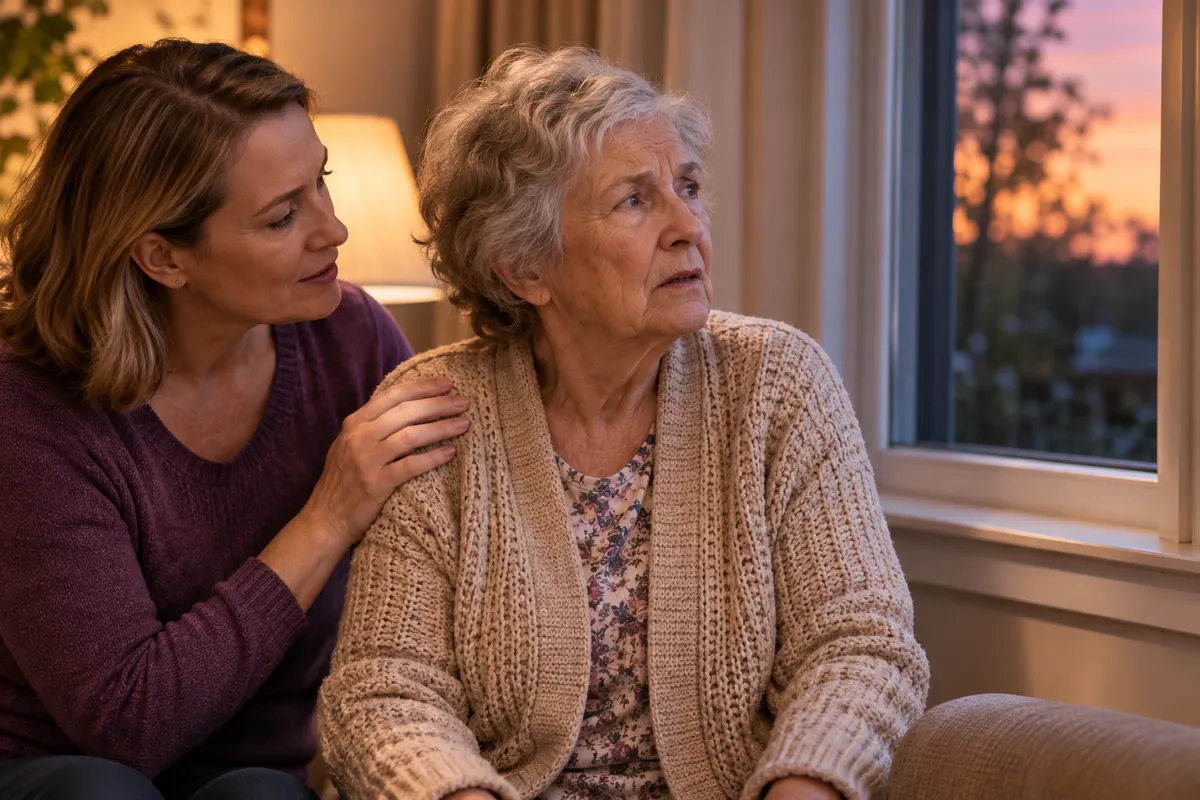
It's four o'clock, and your mom, who was calm at lunch, is suddenly pacing, upset, or sure she needs to "go home." By dinner she may not recognize the room she's in. If this sounds familiar, she may be experiencing sundowning, one of the most common and most exhausting challenges for families caring for a loved one with dementia.
This guide explains what it is, the causes of sundowning, practical tips for caregivers at home, and how to tell when it might be time to look at other care options.
What Is Sundowning in Dementia?
Sundowning is increased confusion and restlessness that some people living with dementia experience from late afternoon or early evening into the night. The Alzheimer's Association describes it as "not a disease but a set of symptoms," which may include trouble sleeping, anxiety, agitation, pacing, hallucinations and disorientation (Alzheimer's Association). You may also hear it called "sundown syndrome" or "sundowning syndrome." The exact cause isn't known, but the Alzheimer's Association notes it may be linked to disease progression and changes in the brain.
It can happen at any stage of dementia, but the Alzheimer's Society (UK) says it is more common in the middle and later stages (Alzheimer's Society). It can look different from person to person and day to day. Some evenings are fine; others are very hard. That unpredictability is part of what wears caregivers down.
Signs and Symptoms of Sundowning
Watch for changes that tend to show up late in the day:
Pacing, wandering, or trying to leave the house
Restlessness, irritability or sudden anger
Asking the same question over and over
Confusion about where they are or what time it is
Hallucinations: seeing or hearing things that aren't there
Trouble going to bed or falling asleep, or waking up confused in the night
Keeping a simple log of the signs of sundowning, and what happens before and during each sundowning episode, can help you and your loved one's doctor see patterns.
Causes of Sundowning: What Can Trigger It?
No single cause explains sundowning behaviors, but the Alzheimer's Association lists several factors that may contribute:
Tiredness after a full day of activity
A new or confusing environment
A mixed-up internal body clock, so the person feels sleepy during the day and awake at night
Low light and shadows, which can be misread and cause confusion or fear
Picking up on stress in the people around them
Less need for sleep, which is common in older adults
The Alzheimer's Society adds hunger, pain and other unmet physical needs, too little daylight, overstimulation, hearing or sight loss, and side effects of prescribed drugs. Physical problems, such as a urinary tract infection, can also cause or worsen evening confusion in someone with dementia. If symptoms change suddenly, seek medical advice. [REVIEW R3]
Does the Type of Dementia Matter?
Sleep problems can affect people with many types of dementia. The Alzheimer's Society notes that excessive sleepiness during the day is common in dementia with Lewy bodies (Lewy body dementia) and the more advanced stages of Alzheimer's, and that sleep apnea is more common in Alzheimer's and vascular dementia (Alzheimer's Society). Poor sleep can make dementia symptoms worse, so any ongoing sleep problem is worth raising with the doctor. [REVIEW R10]
Managing Sundowning: Tips for Caregivers
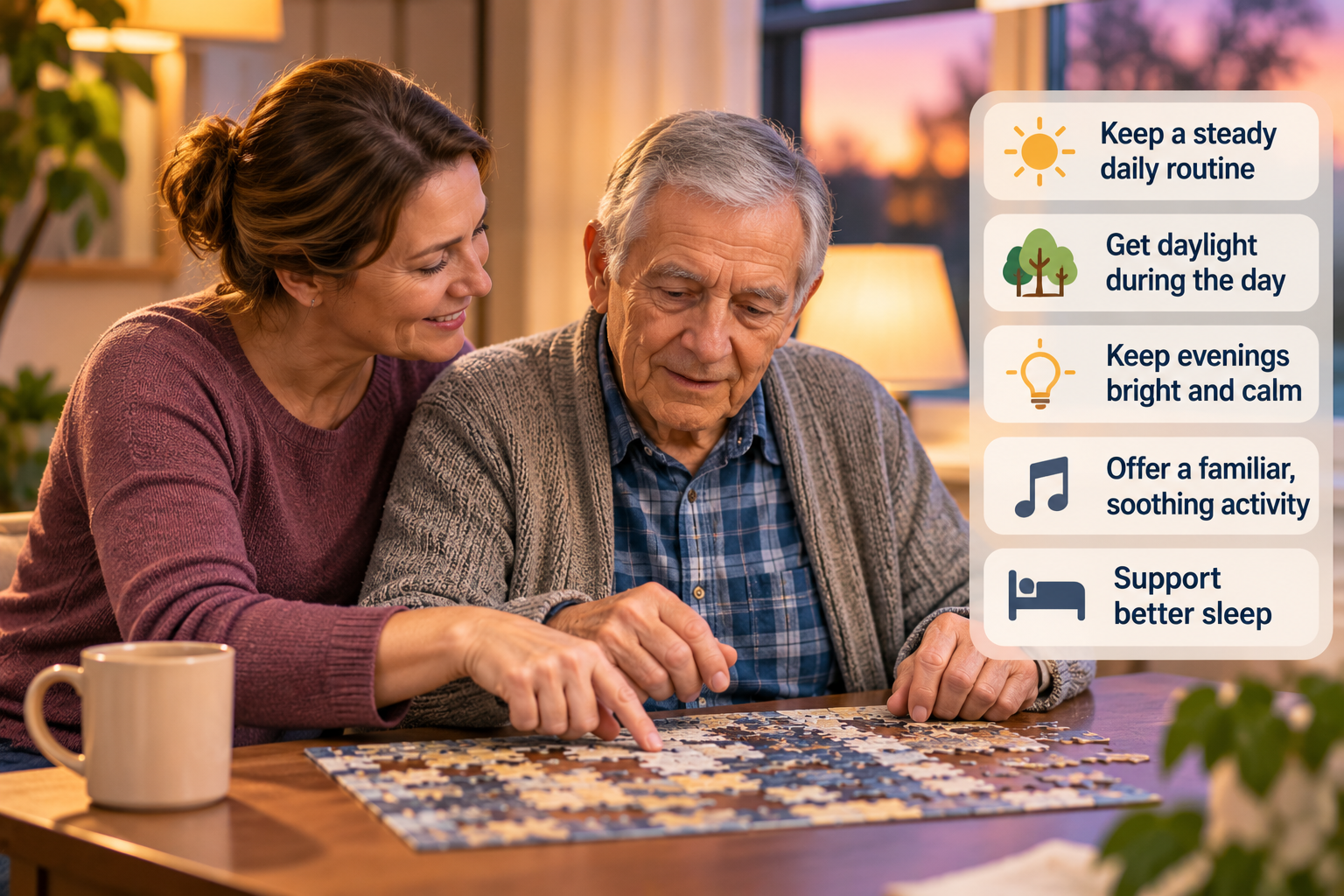
There's no single fix, and what works for people with dementia one week may not work the next. These approaches, drawn largely from Alzheimer's Association guidance, are a good place to start. [REVIEW R4]
Plan the day around their best hours
Schedule appointments, outings and bathing for the morning or early afternoon, when your loved one is usually more alert.
Keep a steady daily routine for waking, meals and bedtime.
Get outside in daylight when you can. Bright days and darker evenings help regulate the body's internal clock and support the sleep-wake cycle.
Limit long daytime naps if nights are hard.
Make evenings calmer
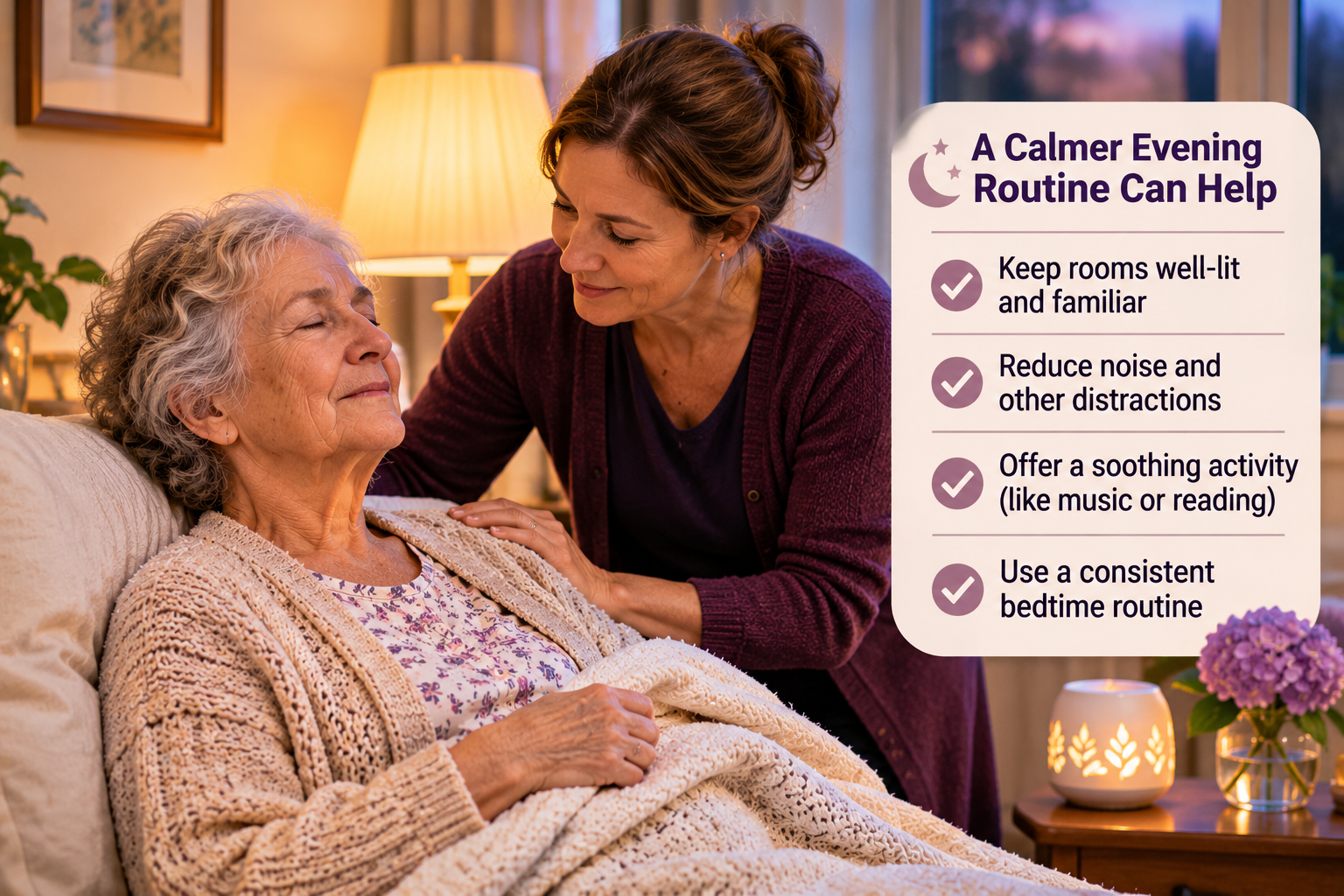
Turn lights on before dusk so rooms stay bright and shadows stay soft.
Lower the noise: turn off the TV, skip chores and limit noise from visitors.
Serve a bigger meal at lunch and a lighter dinner.
Cut back on caffeine and alcohol, especially later in the day.
Offer something soothing, like familiar music, a photo album or a favorite show.
When your loved one is upset
Approach slowly and speak in a calm, low voice.
Ask if they need something: are they hungry, cold, in pain, or needing the bathroom?
Reassure them that they're safe. Avoid arguing about the facts.
If they need to pace, let them walk with supervision rather than holding them back.
Take a short walk together if it helps the person with dementia settle.
You can read more about calm, simple communication in our guide to communicating with dementia patients.
Caregiver Support: Take Care of Yourself, Too
These symptoms often peak just when caregivers are most tired. Ask family members to take some evening shifts, and accept help when it's offered. A short break is not selfish; it's what lets you keep going and keep helping. If you're losing sleep night after night, tell your own doctor, too.
When Sundowning Becomes Too Much to Manage at Home
Many families manage these symptoms at home for a long time. But it may be time to look at more support if:
Your loved one tries to leave the house in the evening or at night
Late-day agitation leads to falls, injuries or unsafe situations
You or other caregivers aren't getting enough sleep to stay healthy
Nighttime needs have grown beyond what your family can safely provide
At that point, many families begin researching dementia care homes. A good fit offers a secure setting, a predictable daily rhythm, and staff who understand these behaviors. [REVIEW R5]
How Braley Care Homes Approaches Evening Care
Braley Care Homes is a memory care home in Hurricane, WV, focused on dementia and memory care since 2008. Our philosophy is "quality care in a home-like environment." The home is locked 24 hours a day, with a secure outdoor courtyard where residents can spend time outside safely. We provide individualized memory care activities and behavior programming. Our owner and administrator, Chris Braley, holds a bachelor's and a Master's degree in social work and is a licensed independent clinical social worker (LICSW).
Families from across the region reach out to us, including those looking for dementia care in Huntington, WV.
Frequently Asked Questions (FAQs)
What time of day does sundowning usually start?
It typically begins in the late afternoon or around dusk and can continue into the night. Timing varies, so a daily log can help you spot your loved one's pattern.
Is sundowning a sign that dementia is getting worse?
Sundowning can happen at any stage, though it is more common in the middle to late stages. A sudden change in behavior can also have another cause, such as an infection, pain or a medication side effect, so talk with the doctor about any new or worsening symptoms. [REVIEW R6]
Can sundowning be prevented?
It can't always be prevented, but a steady routine, daylight, a calm and well-lit evening, and fewer late-day stimulants may help reduce sundowning for some people and help them sleep better at night.
Should I correct my loved one when they're confused in the evening?
Usually it's better not to argue. Respond to the feeling ("You sound worried; you're safe here"), gently offer the time if it helps, and redirect to something calming.
Is there medication for sundowning?
The Alzheimer's Association says most experts encourage non-drug measures rather than medication for sleep issues primarily due to Alzheimer's disease, and that in some cases, when non-drug approaches fail, medication may be prescribed for agitation during the late afternoon and evening hours (Alzheimer's Association). The Alzheimer's Society notes that some drugs, such as antidepressants and antipsychotics, may cause periodic limb movement disorder, a condition that interrupts sleep, and that switching to another drug may help (Alzheimer's Society). Only your loved one's doctor, or a geriatric specialist they refer you to, can weigh the risks and benefits.
Talk With Us
If evenings at home are getting harder, you don't have to figure it out alone. Start with a free care assessment. It's a simple first step toward understanding what kind of support your loved one needs.

Sundowning in Dementia: What Families Can Do When Evenings Get Harder
Sundowning in Dementia: What Families Can Do When Evenings Get Harder
It's four o'clock, and your mom, who was calm at lunch, is suddenly pacing, upset, or sure she needs to "go home." By dinner she may not recognize the room she's in. If this sounds familiar, she may be experiencing sundowning, one of the most common and most exhausting challenges for families caring for a loved one with dementia.
This guide explains what it is, the causes of sundowning, practical tips for caregivers at home, and how to tell when it might be time to look at other care options.
What Is Sundowning in Dementia?
Sundowning is increased confusion and restlessness that some people living with dementia experience from late afternoon or early evening into the night. The Alzheimer's Association describes it as "not a disease but a set of symptoms," which may include trouble sleeping, anxiety, agitation, pacing, hallucinations and disorientation (Alzheimer's Association). You may also hear it called "sundown syndrome" or "sundowning syndrome." The exact cause isn't known, but the Alzheimer's Association notes it may be linked to disease progression and changes in the brain.
It can happen at any stage of dementia, but the Alzheimer's Society (UK) says it is more common in the middle and later stages (Alzheimer's Society). It can look different from person to person and day to day. Some evenings are fine; others are very hard. That unpredictability is part of what wears caregivers down.
Signs and Symptoms of Sundowning
Watch for changes that tend to show up late in the day:
Pacing, wandering, or trying to leave the house
Restlessness, irritability or sudden anger
Asking the same question over and over
Confusion about where they are or what time it is
Hallucinations: seeing or hearing things that aren't there
Trouble going to bed or falling asleep, or waking up confused in the night
Keeping a simple log of the signs of sundowning, and what happens before and during each sundowning episode, can help you and your loved one's doctor see patterns.
Causes of Sundowning: What Can Trigger It?
No single cause explains sundowning behaviors, but the Alzheimer's Association lists several factors that may contribute:
Tiredness after a full day of activity
A new or confusing environment
A mixed-up internal body clock, so the person feels sleepy during the day and awake at night
Low light and shadows, which can be misread and cause confusion or fear
Picking up on stress in the people around them
Less need for sleep, which is common in older adults
The Alzheimer's Society adds hunger, pain and other unmet physical needs, too little daylight, overstimulation, hearing or sight loss, and side effects of prescribed drugs. Physical problems, such as a urinary tract infection, can also cause or worsen evening confusion in someone with dementia. If symptoms change suddenly, seek medical advice. [REVIEW R3]
Does the Type of Dementia Matter?
Sleep problems can affect people with many types of dementia. The Alzheimer's Society notes that excessive sleepiness during the day is common in dementia with Lewy bodies (Lewy body dementia) and the more advanced stages of Alzheimer's, and that sleep apnea is more common in Alzheimer's and vascular dementia (Alzheimer's Society). Poor sleep can make dementia symptoms worse, so any ongoing sleep problem is worth raising with the doctor. [REVIEW R10]
Managing Sundowning: Tips for Caregivers
There's no single fix, and what works for people with dementia one week may not work the next. These approaches, drawn largely from Alzheimer's Association guidance, are a good place to start. [REVIEW R4]
Plan the day around their best hours
Schedule appointments, outings and bathing for the morning or early afternoon, when your loved one is usually more alert.
Keep a steady daily routine for waking, meals and bedtime.
Get outside in daylight when you can. Bright days and darker evenings help regulate the body's internal clock and support the sleep-wake cycle.
Limit long daytime naps if nights are hard.
Make evenings calmer
Turn lights on before dusk so rooms stay bright and shadows stay soft.
Lower the noise: turn off the TV, skip chores and limit noise from visitors.
Serve a bigger meal at lunch and a lighter dinner.
Cut back on caffeine and alcohol, especially later in the day.
Offer something soothing, like familiar music, a photo album or a favorite show.
When your loved one is upset
Approach slowly and speak in a calm, low voice.
Ask if they need something: are they hungry, cold, in pain, or needing the bathroom?
Reassure them that they're safe. Avoid arguing about the facts.
If they need to pace, let them walk with supervision rather than holding them back.
Take a short walk together if it helps the person with dementia settle.
You can read more about calm, simple communication in our guide to communicating with dementia patients.
Caregiver Support: Take Care of Yourself, Too
These symptoms often peak just when caregivers are most tired. Ask family members to take some evening shifts, and accept help when it's offered. A short break is not selfish; it's what lets you keep going and keep helping. If you're losing sleep night after night, tell your own doctor, too.
When Sundowning Becomes Too Much to Manage at Home
Many families manage these symptoms at home for a long time. But it may be time to look at more support if:
Your loved one tries to leave the house in the evening or at night
Late-day agitation leads to falls, injuries or unsafe situations
You or other caregivers aren't getting enough sleep to stay healthy
Nighttime needs have grown beyond what your family can safely provide
At that point, many families begin researching dementia care homes. A good fit offers a secure setting, a predictable daily rhythm, and staff who understand these behaviors. [REVIEW R5]
How Braley Care Homes Approaches Evening Care
Braley Care Homes is a memory care home in Hurricane, WV, focused on dementia and memory care since 2008. Our philosophy is "quality care in a home-like environment." The home is locked 24 hours a day, with a secure outdoor courtyard where residents can spend time outside safely. We provide individualized memory care activities and behavior programming. Our owner and administrator, Chris Braley, holds a bachelor's and a Master's degree in social work and is a licensed independent clinical social worker (LICSW).
Families from across the region reach out to us, including those looking for dementia care in Huntington, WV.
Frequently Asked Questions (FAQs)
What time of day does sundowning usually start?
It typically begins in the late afternoon or around dusk and can continue into the night. Timing varies, so a daily log can help you spot your loved one's pattern.
Is sundowning a sign that dementia is getting worse?
Sundowning can happen at any stage, though it is more common in the middle to late stages. A sudden change in behavior can also have another cause, such as an infection, pain or a medication side effect, so talk with the doctor about any new or worsening symptoms. [REVIEW R6]
Can sundowning be prevented?
It can't always be prevented, but a steady routine, daylight, a calm and well-lit evening, and fewer late-day stimulants may help reduce sundowning for some people and help them sleep better at night.
Should I correct my loved one when they're confused in the evening?
Usually it's better not to argue. Respond to the feeling ("You sound worried; you're safe here"), gently offer the time if it helps, and redirect to something calming.
Is there medication for sundowning?
The Alzheimer's Association says most experts encourage non-drug measures rather than medication for sleep issues primarily due to Alzheimer's disease, and that in some cases, when non-drug approaches fail, medication may be prescribed for agitation during the late afternoon and evening hours (Alzheimer's Association). The Alzheimer's Society notes that some drugs, such as antidepressants and antipsychotics, may cause periodic limb movement disorder, a condition that interrupts sleep, and that switching to another drug may help (Alzheimer's Society). Only your loved one's doctor, or a geriatric specialist they refer you to, can weigh the risks and benefits.
Talk With Us
If evenings at home are getting harder, you don't have to figure it out alone. Start with a free care assessment. It's a simple first step toward understanding what kind of support your loved one needs.
Latest Events
Follow Us On Facebook

Contact Us to Schedule a Tour!
We offer tours of our memory care facility so that you can see first-hand what we have to offer.
If you would like to schedule a tour or ask any questions, please don't hesitate to contact us.
We look forward to helping you on your senior care journey.
Contact Us to
Schedule a Tour!
We offer tours of our memory care facilities so that you can see first-hand what we have to offer.
If you would like to schedule a tour or ask any questions, please don't hesitate to contact us.
We look forward to helping you on your senior care journey.
KEEP IN TOUCH.


CONTACT US
Location:
Braley Care Homes
6192 US-60
Hurricane, WV 25526
Phone Numbers:
Referrals and Inquiries: (304) 767-4033
Facility Phone: (304) 201-3677
Facility Fax: (304) 201-3678
AREAS WE SERVE
BUSINESS HOURS
Monday
9:00am – 6:30pm
Tuesday
9:00am – 6:30pm
Wednesday
9:00am – 6:30pm
Thursday
9:00am – 6:30pm
Friday
9:00am – 6:30pm
KEEP IN TOUCH.
CONTACT US
Location:
Braley Care Homes
6192 US 60
Hurricane, WV 25526
Phone Numbers:
Referrals and Inquiries: (304) 767-4033
Facility Phone: (304) 201-3677
Facility Fax: (304) 201-3678
AREAS WE SERVE
BUSINESS HOURS
Monday
9:00am – 6:30pm
Tuesday
9:00am – 6:30pm
Wednesday
9:00am – 6:30pm
Thursday
9:00am – 6:30pm
Friday
9:00am – 6:30pm