Visit us: Mon - Fri: 9:00 - 18:30
Braley Care Homes 6192 US 60 Hurricane, WV 25526


Experience Life at
Braley Care Homes
At Braley Care Homes, every day is filled with meaningful moments, engaging activities, and compassionate care. Our video collection offers a glimpse into the vibrant community we've built—where residents enjoy holiday celebrations, participate in enriching activities, and share their unique stories. Explore these videos to see how we create a warm, welcoming environment where seniors feel at home, supported, and celebrated.
This Month’s Featured Insight
A Closer Look at Life at Braley Care Homes
🎉 Holiday Highlights & Festive Fun
🧠 Memory Care Moments & Tips
🎨 Everyday Adventures & Engaging Activities
💬 Heartfelt Stories & Resident Smiles
💡 Caregiver Corner: Wisdom & Wellness
Testimonials

I have only great memories of the great care my husband received. Never heard an unkind word to anyone there. This care home facility is wonderful. Thank you, Mr. Braley, for all you do and your staff. God's blessing continue to be with you all.
Brenda B. L.
I’ve worked there and I’ve seen how the residents are treated. Staff love their jobs and you can tell. Owner is great with residents too. They do a wide variety of activities and even a pet dog.
Samantha G.
Absolutely the best care home in the valley for your loved one with dementia.
Leah S. K.
Residents and workers are great. What you see is what you get. Thanks, BCH!
Nola H.
Absolutely the best care home in the valley for your loved one with dementia.
Leah S. K.
Residents and workers are great. What you see is what you get. Thanks, BCH!
Nola H.
Braley Care Homes
Caring Is Our Business
Read The Latest From Braley Care Homes
Validation Therapy for Dementia: What Families Should Know
Validation Therapy for Dementia: What Families Should Know
Your mother asks, again, when her own mother is coming to pick her up. Your father is sure he has to get to work at the plant this morning. If you love someone living with dementia, you know these moments, and you know how hard it is to find the right words.
Validation therapy is a therapeutic way of answering that many families find gentle and practical. It doesn't ask you to argue with your loved one's reality, and it doesn't ask you to pretend. It asks you to listen for the feeling underneath the words. This guide explains what it is, where it came from, how it works, what the research says, and how you can try it at home.
What Is Validation Therapy?
Validation therapy (often called the Feil method) is a way of communicating with older adults living with confusion or cognitive decline, including many individuals with dementia. The core idea is simple: accept the person's emotional reality, rather than correcting the facts.
When your dad says he's late for work, the fact may be wrong, but the feeling is real. He may feel useful, responsible or worried. This approach focuses on that feeling. You acknowledge it, you show empathy, and you let him express it, with words or without them. The Validation Training Institute describes it as a way of "communicating and being with disoriented very old people" that is built on an empathetic attitude.
The goal is connection, not winning the conversation. Caregivers who validate feelings this way often say it helps them feel calmer too.
Who Created Validation Therapy? Naomi Feil's Story
The method was developed by Naomi Feil, a social worker who grew up at the Montefiore Home for the Aged in Cleveland, Ohio, where her parents worked. After earning a Master's degree in Social Work from Columbia University, she returned to work there. Between 1963 and 1980 she developed it because traditional approaches weren't helping the severely confused older people she served .
Feil published Validation: The Feil Method in 1982 and The Validation Breakthrough in 1993, and she taught workshops around the world. She died in December 2023. Her work continues through the Validation Training Institute and its Authorized Validation Organizations, which train caregivers and professionals.
The Principles of the Validation Method
The principles of validation come down to respect and empathy. In plain terms:
Every person is valuable, however confused they may seem.
There is a reason behind behavior. Repeating a question, pacing or calling out often carries a need or a feeling.
Painful feelings that are expressed and acknowledged tend to ease, while feelings that are ignored or argued with can grow stronger.
Empathy builds trust. When people feel heard, they may feel safer and less anxious. [REVIEW R3]
Older adults may be working through unfinished business from earlier in life, and this approach gives them room to do it.
Validation Techniques You Can Use
Validation techniques include both verbal and nonverbal communication. You don't need to use them all at once. Pick one or two and practice.
Verbal techniques
Center yourself first. Take a slow breath before you respond, so your own frustration doesn't come through.
Ask open, factual questions: who, what, where, when, how. ("Where do you need to go?") Avoid "why," which can feel like a challenge.
Rephrase what you hear. ("You're worried you'll be late.") This is active listening, and it shows you care.
Reminisce. ("Tell me about your job. What did you like most?") Memories from long ago are often clearer and more comforting.
Ask about the extreme. ("What's the worst part of waiting?") Letting someone say the hard thing out loud can bring relief.
Nonverbal techniques
Make warm, steady eye contact at their level.
Use a clear, low, caring tone.
Match their emotion: if they're upset, let your face show you understand.
Gentle touch on the hand or shoulder, if the person welcomes it.
Music they know from earlier years can help you connect when words are hard.
Validation vs. Reality Orientation
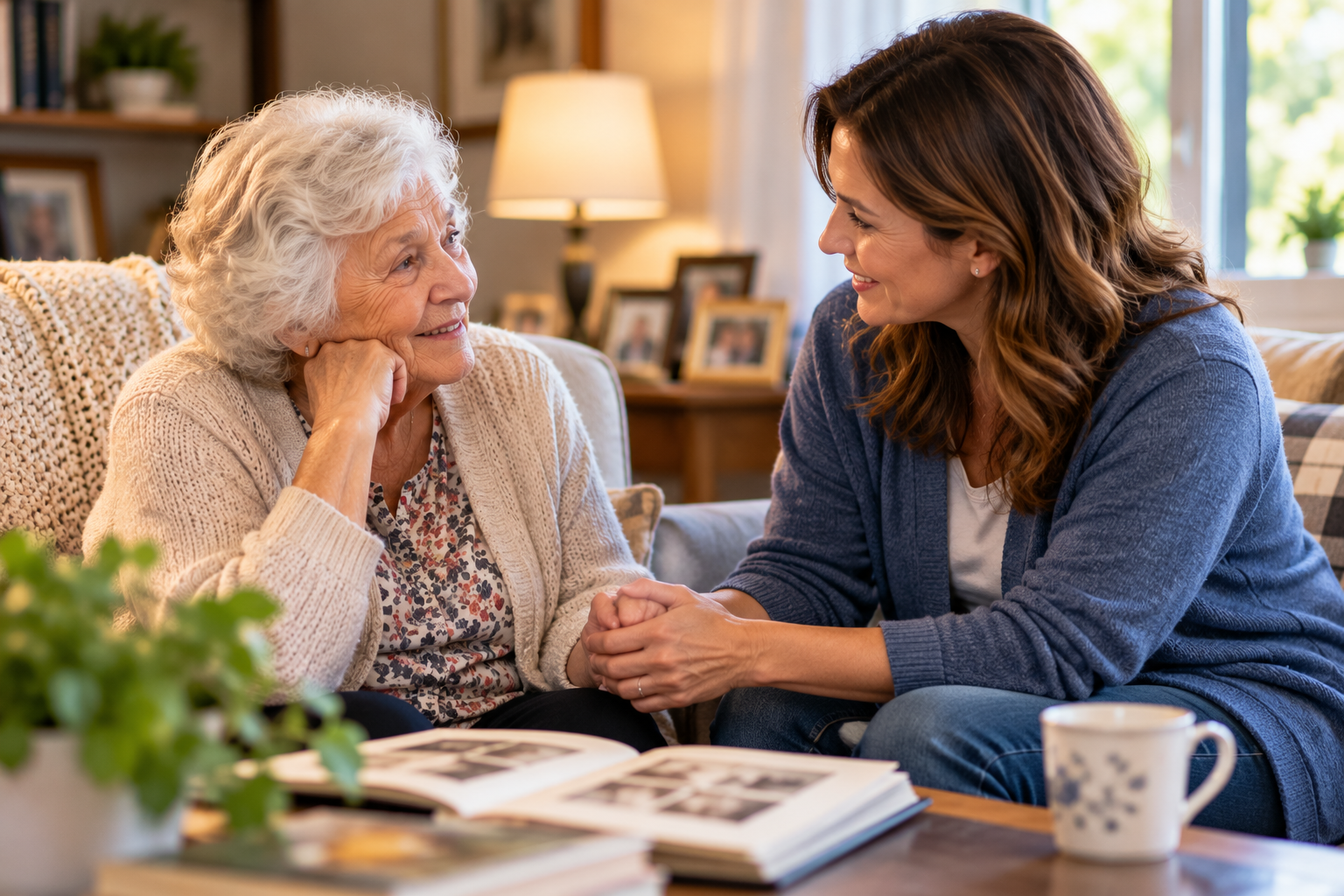
Reality orientation is an older approach that repeatedly reminds a person of the date, place, and facts. For some people early in dementia, gentle reminders can be fine. But when someone is more disoriented, constant correcting can lead to frustration, embarrassment or agitation.
This method takes a different path. Instead of "Your mother passed away years ago," you might say, "You're thinking about your mother. Tell me about her." You're not agreeing that she's coming; you're joining the feeling of missing her. Many families end up using a mix: validation first, then gentle redirection to a comforting activity.
What Does the Research Say?
Families deserve an honest answer here: the scientific evidence is limited and mixed. A Cochrane review of randomized trials found too few small studies to draw a firm conclusion about whether validation therapy is effective for people with dementia (Cochrane). Some studies have reported benefits in some areas, and many caregivers find the approach helpful day to day, but it isn't proven to slow Alzheimer's disease or other dementias, or to replace medical care.
What it does offer is a respectful way to communicate. If your loved one's behavior changes suddenly, talk with their doctor, because pain, infection or medication can also cause agitation.
Using Validation at Home
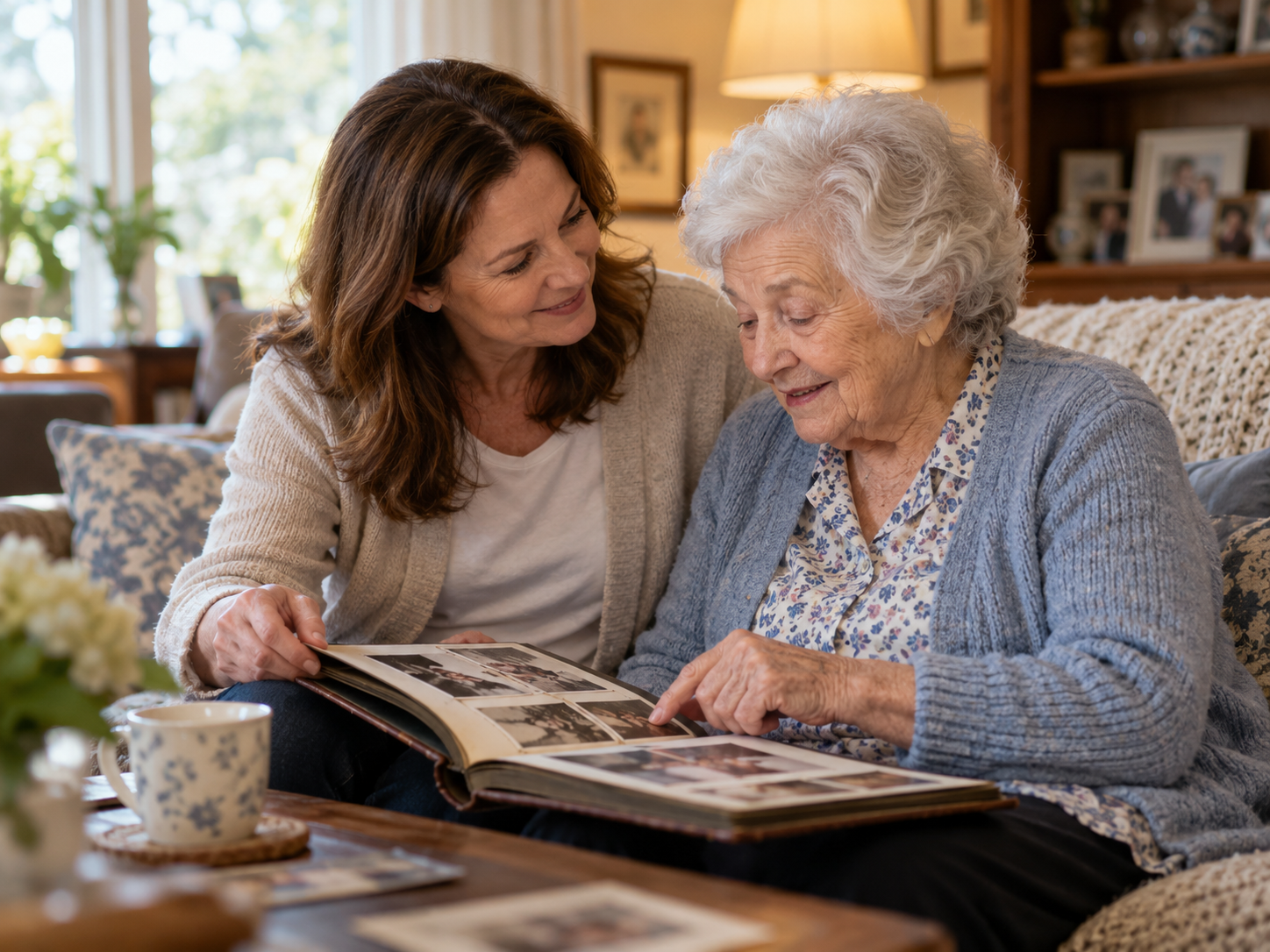
You don't need special training to begin. Try this the next time your loved one is upset or confused:
Pause and breathe. Let go of the urge to correct.
Name the feeling. "You sound worried." "You miss him."
Invite more. "Tell me about it."
Stay with them. Sit close, keep your voice calm, and listen.
Gently redirect, if needed, to something soothing, like a walk, a snack, photos or a favorite song.
Be kind to yourself, too. Caregiving is hard, and no one gets every conversation right. It's a practice, not a test. For more everyday tips, see our guide to communicating with dementia patients.
How We Approach This at Braley Care Homes
Braley Care Homes in Hurricane, WV opened in 2005 and expanded into Alzheimer's, dementia and memory care in 2008. Our philosophy is "quality care in a home-like environment." Owner and administrator Chris Braley holds a bachelor's and a Master's degree in social work and is a licensed independent clinical social worker (LICSW). Chris received the AGE-u-cate Achievement Award for Dementia Live Coaching.
Our memory care services include individualized activities and behavior programming. The home is locked 24 hours a day and has a secure outdoor courtyard, so residents can spend time outside safely. You can read more about our Alzheimer's care and dementia care, or about our home in Hurricane, WV.
Frequently Asked Questions (FAQs)
What is an example of validation therapy?
Your loved one says, "I need to go home and make dinner for the kids." Instead of "Your kids are grown," you might say, "You've always taken care of your family. What were you going to make?" Then listen, and when the moment is right, offer a calming activity together.
Isn't validation just lying to someone with dementia?
No. It doesn't mean telling a person false things or agreeing with everything. It means acknowledging the emotion behind what they say. You can respond to the feeling ("You miss your mother") without confirming a fact you know isn't true.
Who responds best to validation?
Feil designed the method for very old adults who are confused, especially in later life. People who become distressed when corrected may respond well to a validating approach. Every person is different, so watch how your loved one responds. [REVIEW R8]
What are Feil's stages?
Feil described four stages of disorientation: Malorientation, Time Confusion, Repetitive Motion and Vegetation, with techniques adjusted for each (summary in the Cochrane review abstract, PubMed). These are Feil's own categories, not a medical diagnosis or staging system.
Is validation therapy used in memory care?
Validation is taught to professional caregivers in many settings, including memory care and nursing homes, through Feil's training institute and its partner organizations. Families can use the same ideas at hom
Talk With Us About Your Loved One
If you're caring for someone with dementia in Hurricane or nearby and wondering what kind of support would help, we're glad to talk. Start with a free care assessment. There's no cost, and it's an easy first step toward understanding your loved one's needs.
This article is for general education and isn't medical advice. Talk with your loved one's doctor about their care.

Validation Therapy for Dementia: What Families Should Know
Validation Therapy for Dementia: What Families Should Know
Your mother asks, again, when her own mother is coming to pick her up. Your father is sure he has to get to work at the plant this morning. If you love someone living with dementia, you know these moments, and you know how hard it is to find the right words.
Validation therapy is a therapeutic way of answering that many families find gentle and practical. It doesn't ask you to argue with your loved one's reality, and it doesn't ask you to pretend. It asks you to listen for the feeling underneath the words. This guide explains what it is, where it came from, how it works, what the research says, and how you can try it at home.
What Is Validation Therapy?
Validation therapy (often called the Feil method) is a way of communicating with older adults living with confusion or cognitive decline, including many individuals with dementia. The core idea is simple: accept the person's emotional reality, rather than correcting the facts.
When your dad says he's late for work, the fact may be wrong, but the feeling is real. He may feel useful, responsible or worried. This approach focuses on that feeling. You acknowledge it, you show empathy, and you let him express it, with words or without them. The Validation Training Institute describes it as a way of "communicating and being with disoriented very old people" that is built on an empathetic attitude.
The goal is connection, not winning the conversation. Caregivers who validate feelings this way often say it helps them feel calmer too.
Who Created Validation Therapy? Naomi Feil's Story
The method was developed by Naomi Feil, a social worker who grew up at the Montefiore Home for the Aged in Cleveland, Ohio, where her parents worked. After earning a Master's degree in Social Work from Columbia University, she returned to work there. Between 1963 and 1980 she developed it because traditional approaches weren't helping the severely confused older people she served .
Feil published Validation: The Feil Method in 1982 and The Validation Breakthrough in 1993, and she taught workshops around the world. She died in December 2023. Her work continues through the Validation Training Institute and its Authorized Validation Organizations, which train caregivers and professionals.
The Principles of the Validation Method
The principles of validation come down to respect and empathy. In plain terms:
Every person is valuable, however confused they may seem.
There is a reason behind behavior. Repeating a question, pacing or calling out often carries a need or a feeling.
Painful feelings that are expressed and acknowledged tend to ease, while feelings that are ignored or argued with can grow stronger.
Empathy builds trust. When people feel heard, they may feel safer and less anxious. [REVIEW R3]
Older adults may be working through unfinished business from earlier in life, and this approach gives them room to do it.
Validation Techniques You Can Use
Validation techniques include both verbal and nonverbal communication. You don't need to use them all at once. Pick one or two and practice.
Verbal techniques
Center yourself first. Take a slow breath before you respond, so your own frustration doesn't come through.
Ask open, factual questions: who, what, where, when, how. ("Where do you need to go?") Avoid "why," which can feel like a challenge.
Rephrase what you hear. ("You're worried you'll be late.") This is active listening, and it shows you care.
Reminisce. ("Tell me about your job. What did you like most?") Memories from long ago are often clearer and more comforting.
Ask about the extreme. ("What's the worst part of waiting?") Letting someone say the hard thing out loud can bring relief.
Nonverbal techniques
Make warm, steady eye contact at their level.
Use a clear, low, caring tone.
Match their emotion: if they're upset, let your face show you understand.
Gentle touch on the hand or shoulder, if the person welcomes it.
Music they know from earlier years can help you connect when words are hard.
Validation vs. Reality Orientation
Reality orientation is an older approach that repeatedly reminds a person of the date, place, and facts. For some people early in dementia, gentle reminders can be fine. But when someone is more disoriented, constant correcting can lead to frustration, embarrassment or agitation.
This method takes a different path. Instead of "Your mother passed away years ago," you might say, "You're thinking about your mother. Tell me about her." You're not agreeing that she's coming; you're joining the feeling of missing her. Many families end up using a mix: validation first, then gentle redirection to a comforting activity.
What Does the Research Say?
Families deserve an honest answer here: the scientific evidence is limited and mixed. A Cochrane review of randomized trials found too few small studies to draw a firm conclusion about whether validation therapy is effective for people with dementia (Cochrane). Some studies have reported benefits in some areas, and many caregivers find the approach helpful day to day, but it isn't proven to slow Alzheimer's disease or other dementias, or to replace medical care.
What it does offer is a respectful way to communicate. If your loved one's behavior changes suddenly, talk with their doctor, because pain, infection or medication can also cause agitation.
Using Validation at Home
You don't need special training to begin. Try this the next time your loved one is upset or confused:
Pause and breathe. Let go of the urge to correct.
Name the feeling. "You sound worried." "You miss him."
Invite more. "Tell me about it."
Stay with them. Sit close, keep your voice calm, and listen.
Gently redirect, if needed, to something soothing, like a walk, a snack, photos or a favorite song.
Be kind to yourself, too. Caregiving is hard, and no one gets every conversation right. It's a practice, not a test. For more everyday tips, see our guide to communicating with dementia patients.
How We Approach This at Braley Care Homes
Braley Care Homes in Hurricane, WV opened in 2005 and expanded into Alzheimer's, dementia and memory care in 2008. Our philosophy is "quality care in a home-like environment." Owner and administrator Chris Braley holds a bachelor's and a Master's degree in social work and is a licensed independent clinical social worker (LICSW). Chris received the AGE-u-cate Achievement Award for Dementia Live Coaching.
Our memory care services include individualized activities and behavior programming. The home is locked 24 hours a day and has a secure outdoor courtyard, so residents can spend time outside safely. You can read more about our Alzheimer's care and dementia care, or about our home in Hurricane, WV.
Frequently Asked Questions (FAQs)
What is an example of validation therapy?
Your loved one says, "I need to go home and make dinner for the kids." Instead of "Your kids are grown," you might say, "You've always taken care of your family. What were you going to make?" Then listen, and when the moment is right, offer a calming activity together.
Isn't validation just lying to someone with dementia?
No. It doesn't mean telling a person false things or agreeing with everything. It means acknowledging the emotion behind what they say. You can respond to the feeling ("You miss your mother") without confirming a fact you know isn't true.
Who responds best to validation?
Feil designed the method for very old adults who are confused, especially in later life. People who become distressed when corrected may respond well to a validating approach. Every person is different, so watch how your loved one responds. [REVIEW R8]
What are Feil's stages?
Feil described four stages of disorientation: Malorientation, Time Confusion, Repetitive Motion and Vegetation, with techniques adjusted for each (summary in the Cochrane review abstract, PubMed). These are Feil's own categories, not a medical diagnosis or staging system.
Is validation therapy used in memory care?
Validation is taught to professional caregivers in many settings, including memory care and nursing homes, through Feil's training institute and its partner organizations. Families can use the same ideas at hom
Talk With Us About Your Loved One
If you're caring for someone with dementia in Hurricane or nearby and wondering what kind of support would help, we're glad to talk. Start with a free care assessment. There's no cost, and it's an easy first step toward understanding your loved one's needs.
This article is for general education and isn't medical advice. Talk with your loved one's doctor about their care.
Latest Events
Follow Us On Facebook

Contact Us to Schedule a Tour!
We offer tours of our memory care facility so that you can see first-hand what we have to offer.
If you would like to schedule a tour or ask any questions, please don't hesitate to contact us.
We look forward to helping you on your senior care journey.
Contact Us to
Schedule a Tour!
We offer tours of our memory care facilities so that you can see first-hand what we have to offer.
If you would like to schedule a tour or ask any questions, please don't hesitate to contact us.
We look forward to helping you on your senior care journey.
KEEP IN TOUCH.


CONTACT US
Location:
Braley Care Homes
6192 US-60
Hurricane, WV 25526
Phone Numbers:
Referrals and Inquiries: (304) 767-4033
Facility Phone: (304) 201-3677
Facility Fax: (304) 201-3678
AREAS WE SERVE
BUSINESS HOURS
Monday
9:00am – 6:30pm
Tuesday
9:00am – 6:30pm
Wednesday
9:00am – 6:30pm
Thursday
9:00am – 6:30pm
Friday
9:00am – 6:30pm
KEEP IN TOUCH.
CONTACT US
Location:
Braley Care Homes
6192 US 60
Hurricane, WV 25526
Phone Numbers:
Referrals and Inquiries: (304) 767-4033
Facility Phone: (304) 201-3677
Facility Fax: (304) 201-3678
AREAS WE SERVE
BUSINESS HOURS
Monday
9:00am – 6:30pm
Tuesday
9:00am – 6:30pm
Wednesday
9:00am – 6:30pm
Thursday
9:00am – 6:30pm
Friday
9:00am – 6:30pm